Cairo — Where Pharaohs, Sultans & Modernity Meet

Egypt’s capital weaves together 4,500 years of Pharaonic, Christian and Islamic history with the pulse of a 22-million-strong metropolis. Three pillars — ancient heritage, cultural diversity and living tradition — make Cairo an essential stop on any Egypt itinerary.

Pharaonic Heritage

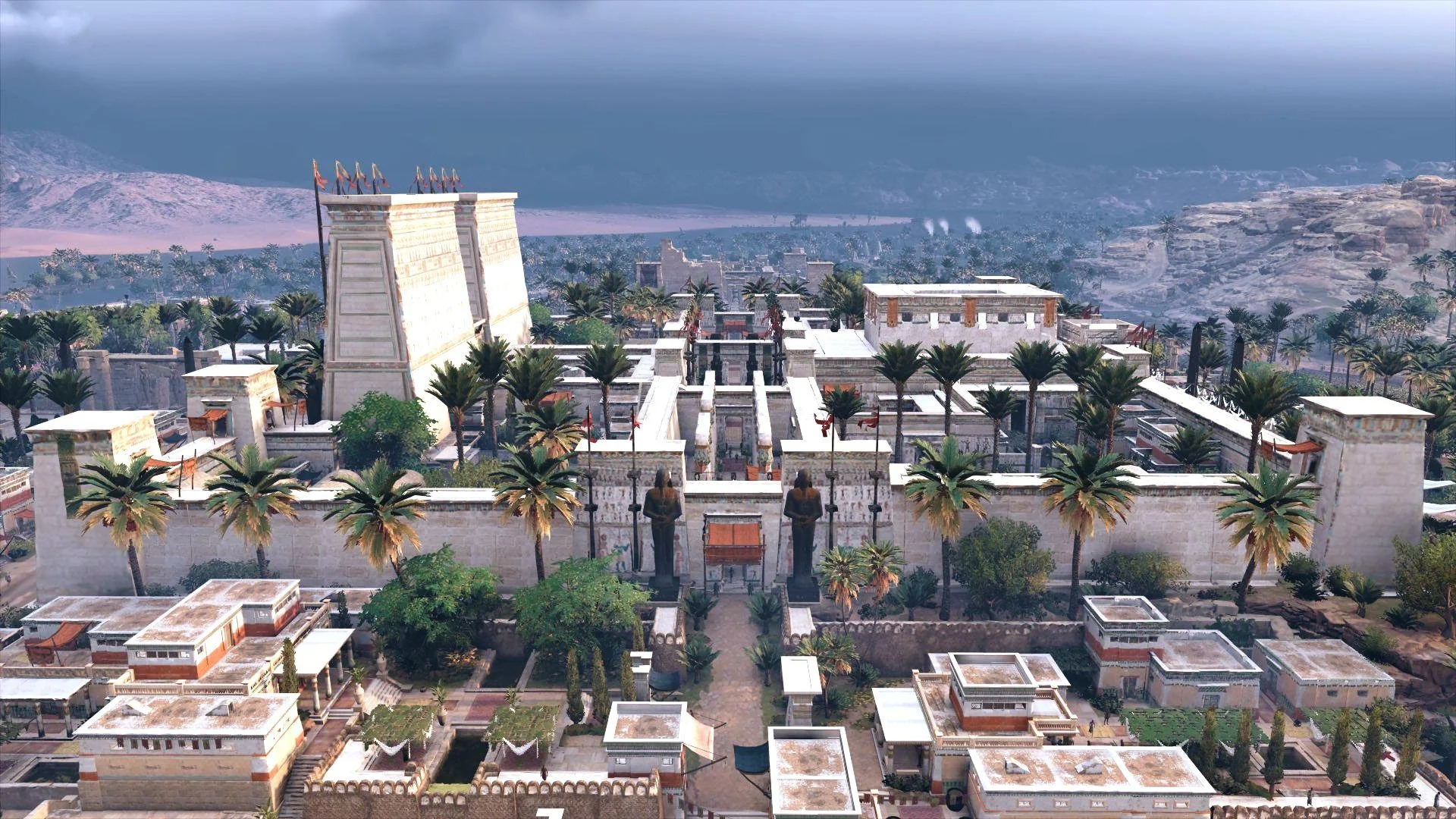
The Pyramids of Giza, the Great Sphinx, Saqqara, Memphis and Dahshur — all sit within the wider Cairo region. The only surviving Wonder of the Ancient World, plus the world’s largest archaeological museum (the GEM), make Cairo the global heart of Egyptological fascination.

Islamic & Coptic Splendour

UNESCO-listed Islamic Cairo with its 1,000+ minarets, the famous Khan el-Khalili bazaar (founded in 1382) and Al-Azhar (the world’s oldest continuously operating university). Alongside it: Coptic Cairo with the Hanging Church and 16 centuries of Christian tradition.

Pulsing Megacity

With 22 million people in its metropolitan area, Cairo is the largest city in Africa and the Arab world. The mighty Nile splits the city in two; the Cairo Tower, the Opera House and the riverside walks of Zamalek showcase a contemporary side — framed by 4,500 years of history.

4,500+Years of history
22MMetro population
1,000+Minarets
50 haGrand Egyptian Museum

Extend your Egypt journey: Luxor, Aswan, Alexandria or browse our full range of Cairo tours.

Discover Guided Cairo Tours

Hand-picked tours of the Pyramids of Giza, the Grand Egyptian Museum, Saqqara, Khan el-Khalili and beyond — led by licensed English-speaking Egyptologists.

Makadi Bay: Cairo and Giza Highlights Day Trip with Lunch Top Rated
4.6 (233 reviews)

Makadi Bay: Cairo and Giza Highlights Day Trip with Lunch

Take a day trip from Makadi Bay to Cairo and discover Egypt’s most iconic ancient landmarks. Travel in a comfortable air-conditioned minivan, either in a small group or on a private tour, as you journey across the des…

1-day Instant confirmation Free cancellation
From €67 / person
Book now
Sharm El Sheikh: Day Trip to the Giza Plateau and Egyptian Museum Free cancellation

Sharm El Sheikh: Day Trip to the Giza Plateau and Egyptian Museum

4.4 (850)

You came to Sharm for the reef. But there is a morning on this coast when the water is not enough — when you realise the thing you have r…

1-day historical Instant confirmation
From €59
Book
Makadi Bay: Cairo and Giza Highlights Day Trip with Lunch Free cancellation

Makadi Bay: Cairo and Giza Highlights Day Trip with Lunch

4.6 (233)

Take a day trip from Makadi Bay to Cairo and discover Egypt’s most iconic ancient landmarks. Travel in a comfortable air-conditioned mini…

1-day historical Instant confirmation
From €67
Book
From El Gouna: Cairo and Giza Highlights Day Trip with Lunch -6%

From El Gouna: Cairo and Giza Highlights Day Trip with Lunch

4.6 (95)

Take a day trip from El Gouna to Cairo and discover Egypt’s most iconic ancient landmarks. Travel in a comfortable air-conditioned miniva…

1-day historical Instant confirmation
€67 From €63
Book
Sahl Hasheesh: Cairo and Giza Highlights Day Trip with Lunch Free cancellation

Sahl Hasheesh: Cairo and Giza Highlights Day Trip with Lunch

4.8 (88)

Take a day trip from Sahl Hasheesh to Cairo and discover Egypt’s most iconic ancient landmarks. Travel in a comfortable air-conditioned m…

1-day historical Instant confirmation
From €67
Book
Cairo: Full-Day Pyramids, Sakkara, & Memphis Tour with Lunch -9%

Cairo: Full-Day Pyramids, Sakkara, & Memphis Tour with Lunch

4.8 (83)

Stand where human ambition first touched the sky. In a single private day, this tour traces the entire dawn of the pyramid age — from the…

7-hours historical Instant confirmation
€45 From €41
Book
Cairo: Citadel of Saladin, Egyptian Museum & Khan El Khalili Bazaar Private Tour -7%

Cairo: Citadel of Saladin, Egyptian Museum & Khan El Khalili Bazaar Private Tour

4.9 (81)

You've seen the Pyramids in a hundred photographs. But Cairo keeps its greatest treasures indoors and downtown — and today they belong en…

8-hours historical Instant confirmation
€64 From €60
Book
Hurghada: Cairo Highlights Tour with Giza Pyramids & Egyptian Museum -2%

Hurghada: Cairo Highlights Tour with Giza Pyramids & Egyptian Museum

4.8 (74)

Take a day trip from Hurghada to Cairo and discover Egypt’s most iconic ancient landmarks. Travel in a comfortable air-conditioned miniva…

1-day historical Instant confirmation
€57 From €56
Book
From Safaga: Pyramids & Egyptian Museum Day Tour Free cancellation

From Safaga: Pyramids & Egyptian Museum Day Tour

4.8 (74)

Take a day trip from Safaga to Cairo and discover Egypt’s most iconic ancient landmarks. Travel in a comfortable air-conditioned minivan,…

1-day historical Instant confirmation
From €68
Book
See all Cairo tours

Cairo’s Must-See Sights

Six unmissable sights — from the 4,500-year-old pyramids to the 16th-century Khan el-Khalili. Click any sight for details.

Pyramids of GizaLast Wonder of the Ancient World · 4,500 years old
Cairo – Pyramids of Giza

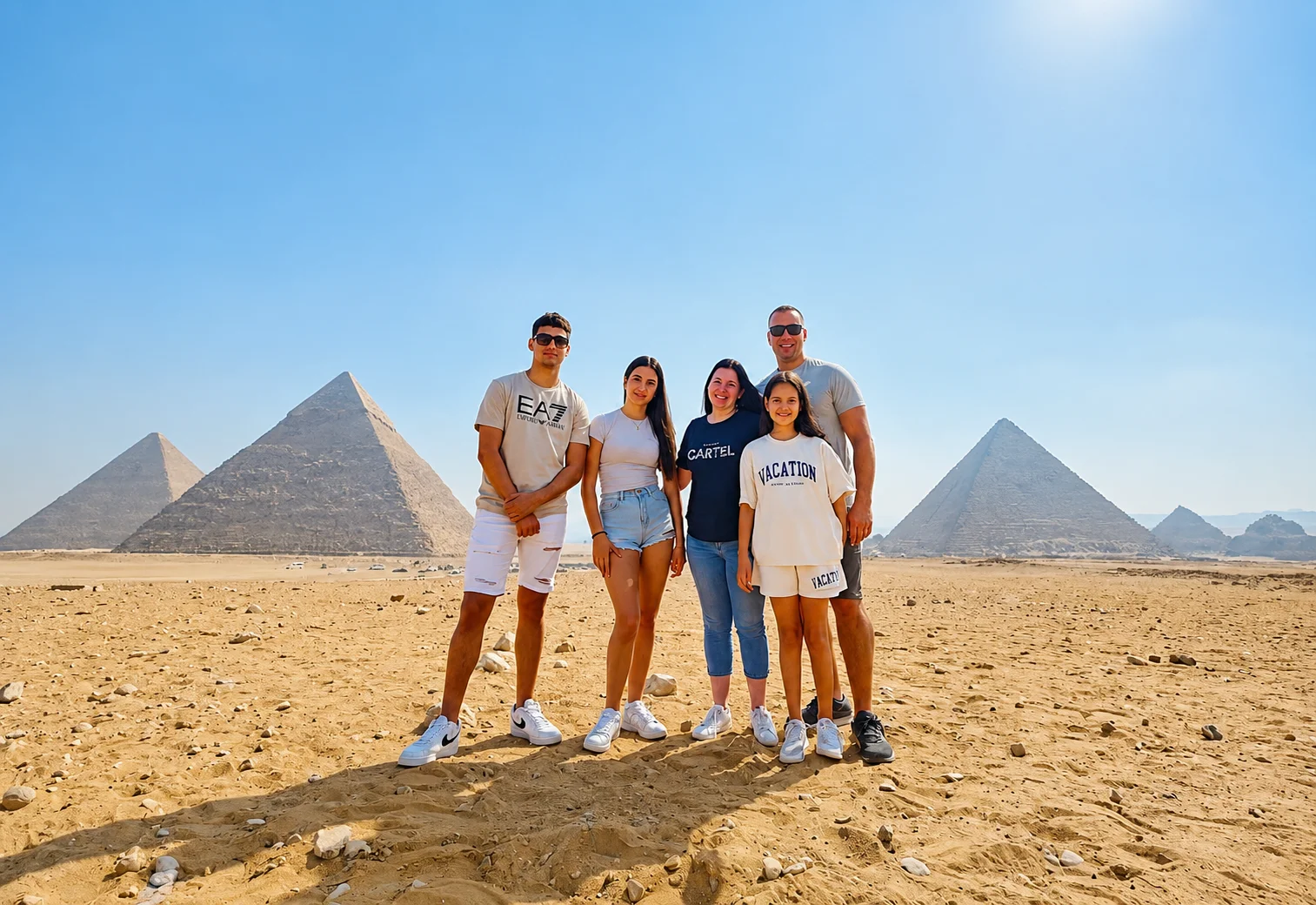
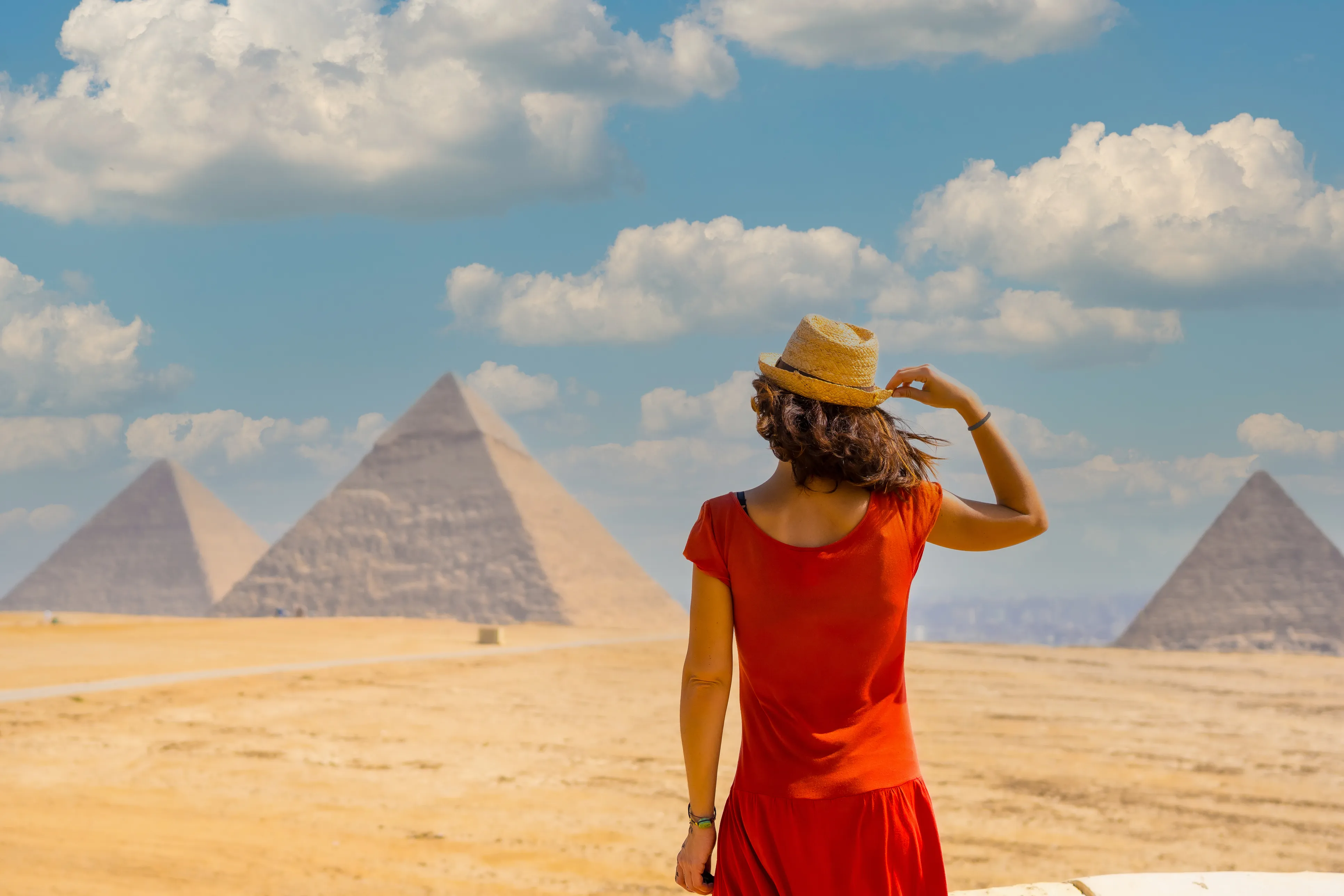
The Giza Plateau is home to Egypt’s most iconic landmark: the pyramids of Khufu (Cheops), Khafre and Menkaure — the only one of the Seven Wonders of the Ancient World still standing. The Great Pyramid of Khufu was the tallest man-made structure on Earth for over 3,800 years and is built from roughly 2.3 million stone blocks weighing 2.5 to 15 tonnes each. Constructed about 4,500 years ago during the 4th Dynasty as royal tombs, the pyramids are a UNESCO World Heritage Site and welcome more than 14 million visitors annually.

Great Sphinx of GizaGuardian of the Nile plateau
Cairo – Great Sphinx of Giza

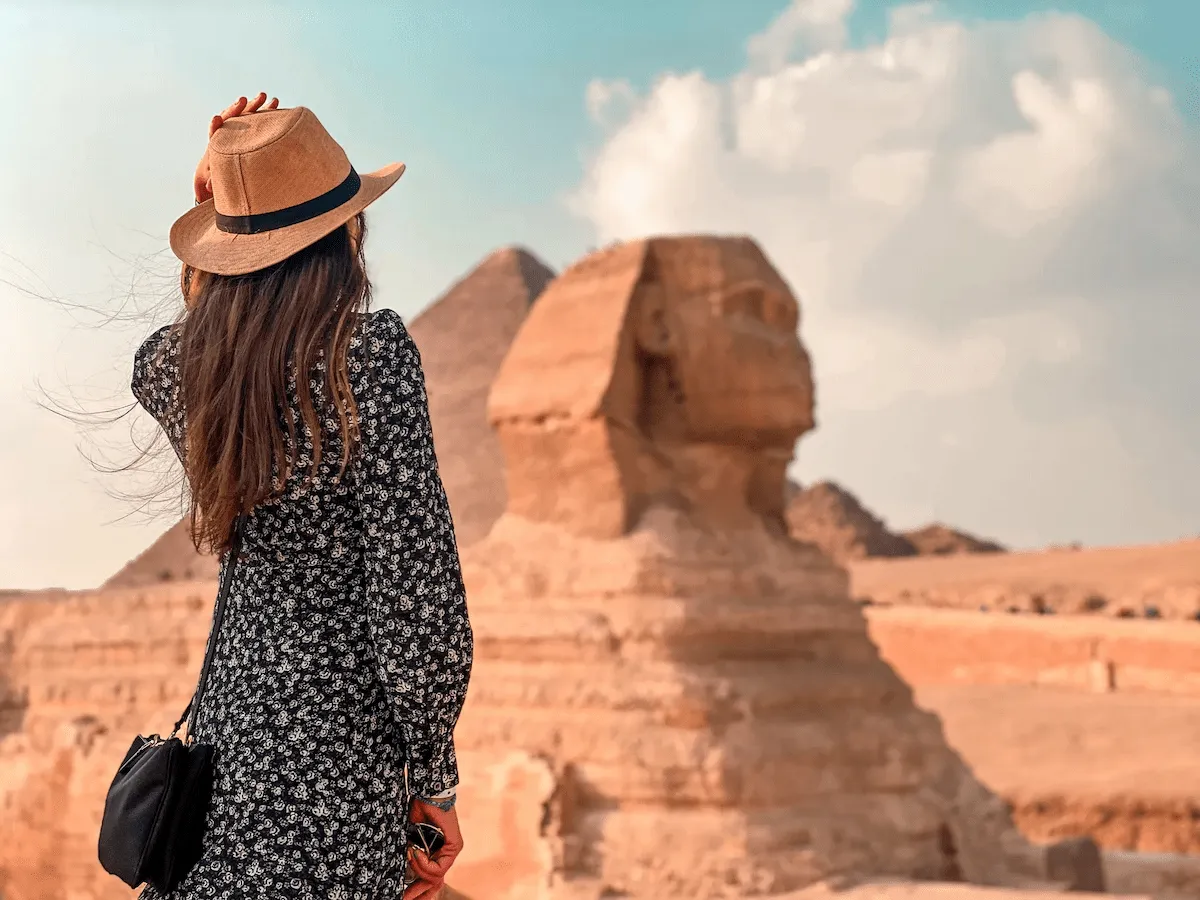
With the body of a lion and the head of a pharaoh, the Great Sphinx is the largest monolithic statue in the world — 73 metres long and 20 metres high. It is believed to have been carved from a single limestone outcrop during the reign of Pharaoh Khafre around 2500 BCE. The enigmatic guardian, one of Egypt’s most recognisable symbols, has gazed east toward the rising sun for millennia. Its famous missing nose and ceremonial beard are now displayed in the British Museum and the Egyptian Museum, respectively.

Egyptian Museum & GEMOver 170,000 artefacts
Cairo – Egyptian Museum & GEM

The Egyptian Museum on Tahrir Square holds the world’s largest collection of Pharaonic antiquities, with more than 170,000 artefacts — including the spectacular treasures of Tutankhamun’s tomb and his iconic golden funerary mask. In 2024–2025 many headline pieces moved to the new Grand Egyptian Museum (GEM) at the foot of the Pyramids — the largest archaeological museum on Earth, spanning 50 hectares of exhibition space. The GEM displays the complete Tutankhamun collection for the first time, plus a 3,200-year-old, 11-metre statue of Ramses II.

Khan el-Khalili BazaarMedieval souk since 1382
Cairo – Khan el-Khalili Bazaar

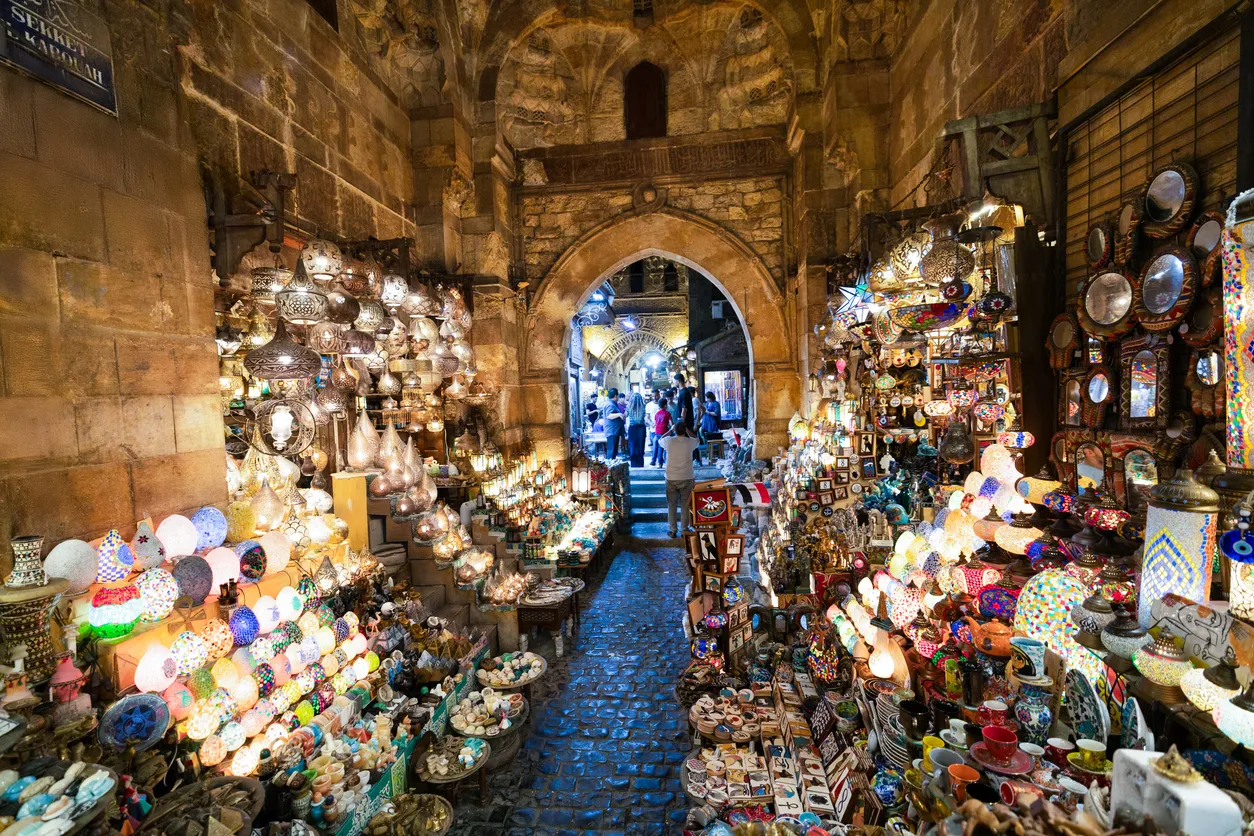
Khan el-Khalili is Cairo’s most famous bazaar and one of the oldest markets in the Middle East, founded in 1382 by the Mamluk sultan Jaharkas el-Khalili. In its narrow alleys you’ll find gold and silversmiths, spice merchants, perfume houses, carpet dealers, antiques, traditional brass lamps and Egyptian handicrafts. Don’t miss the legendary El-Fishawy Café (in continuous operation since 1769) and the surrounding medieval mosques, madrasas and caravanserais of the Fatimid quarter.

Citadel of SaladinHilltop fortress with panoramic views
Cairo – Citadel of Saladin

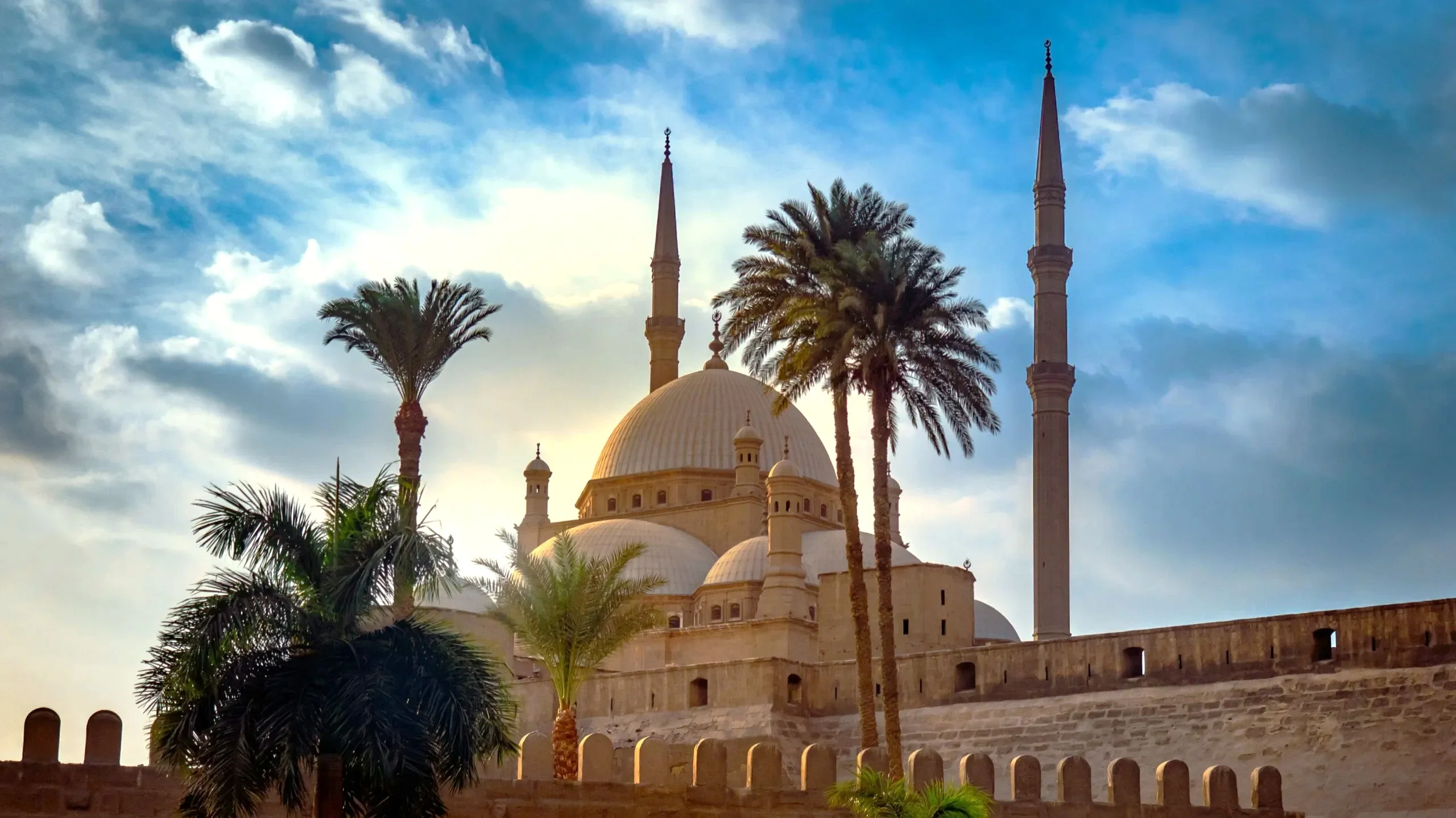
Perched high above Cairo on the Mokattam Hills, the Citadel of Saladin was built in 1176 by Sultan Salah al-Din to defend the city against Crusader armies. The medieval fortress remained the seat of Egypt’s rulers for nearly 700 years. Inside its walls stand the imposing Muhammad Ali Mosque (also known as the Alabaster Mosque) with its slender Ottoman minarets, the Military and Police museums, and the Sultan an-Nasir Mosque. From the terrace, visitors enjoy a sweeping panorama across the Cairo skyline all the way to the Pyramids of Giza.

Coptic Cairo & Hanging ChurchChristian heritage since the 4th century
Cairo – Coptic Cairo & Hanging Church

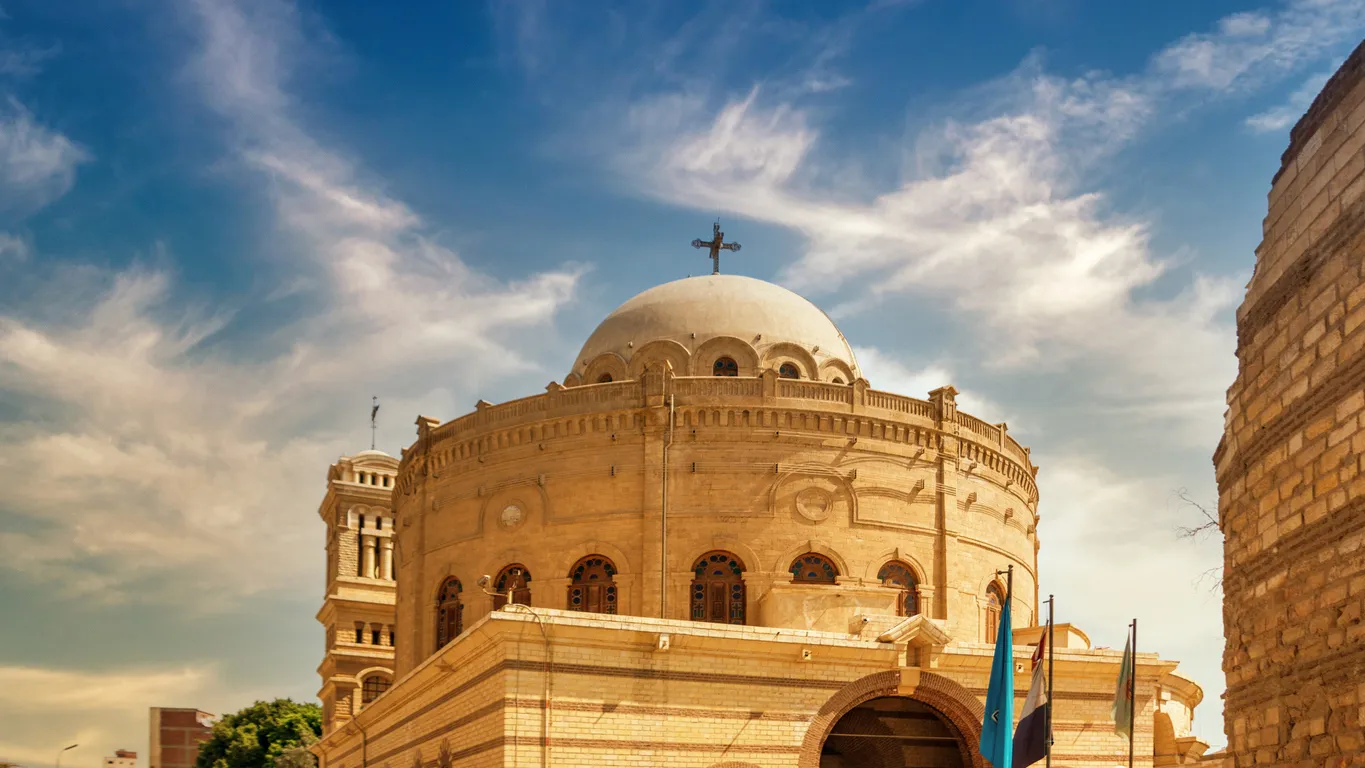
Coptic Cairo (Old Cairo) is the spiritual heart of Egyptian Christianity and home to some of Africa’s oldest churches. Its highlight is the Hanging Church (Al-Muallaqa), built atop the gatehouse of the Roman fortress of Babylon and tracing its origins back to the 3rd century. Other treasures include St. Sergius Church (where the Holy Family is said to have sheltered during their flight into Egypt), the Ben Ezra Synagogue (one of the world’s oldest synagogues) and the Coptic Museum, with over 16,000 artefacts of Coptic art and history spanning the 3rd to 18th centuries.

Sultan Hassan Mosque & MadrasaMamluk masterpiece from 1356
Cairo – Sultan Hassan Mosque & Madrasa

The Sultan Hassan Mosque, built between 1356 and 1363, is regarded as one of the greatest masterpieces of Mamluk architecture and was ranked by UNESCO among the seven most significant medieval buildings in the world. The monumental mosque-madrasa complex served simultaneously as a Friday mosque, a four-madhhab religious school and a mausoleum for Sultan Hassan and his family. The central courtyard with its unique fountain dome, the elaborately decorated iwans, the 81-metre minarets (the tallest of their time) and the marble mihrab and minbar work rank among the highlights of medieval Islamic art. The enormous stone blocks of the entrance portal are believed to have been quarried from the Pyramids of Giza, underscoring the Mamluks’ connection to Egypt’s pharaonic heritage.

Al-Muizz StreetLongest open-air museum of Islamic architecture
Cairo – Al-Muizz Street

Al-Muizz Street, named after the Fatimid caliph al-Muizz li-Din Allah, is widely considered the longest open-air museum of Islamic architecture anywhere in the world. The roughly 1 km main axis of historic Cairo connects the city gates of Bab al-Futuh and Bab Zuweila and concentrates an extraordinary density of monuments from 1,000 years of Islamic history into one walking route: the Al-Aqmar Mosque (1125), the Qalawun complex with its mausoleum and hospital (1284), the Sultan Barquq Madrasa (1386) and Beit Suhaymi (a 17th-century residence). After comprehensive restoration the street is now largely car-free and offers ideal conditions for strolling on foot through a millennium of Mamluk and Ottoman building art.

Cairo Tower & Gezira Island187-metre Nile-side landmark
Cairo – Cairo Tower & Gezira Island

The 187-metre Cairo Tower on the Nile island of Gezira was the tallest structure in Africa from its inauguration in 1961 until the rise of the Burj Khalifa. Designed in the form of a stylised lotus, the reinforced concrete tower is one of Cairo’s modern landmarks and offers, from its observation deck at 160 metres, the widest panorama over the city — on clear days reaching all the way to the Pyramids of Giza. The revolving restaurant at 145 metres completes one full rotation in 70 minutes and is a favourite spot for romantic dinners. Surrounding Gezira Island is also home to the Cairo Opera House, the Museum of Modern Art, the Andalusian Garden and exclusive residential districts with elegant Nile-side promenades.

Ben Ezra SynagogueEgypt’s oldest synagogue
Cairo – Ben Ezra Synagogue

The Ben Ezra Synagogue in the heart of Coptic Cairo is among the oldest and most historically significant synagogues in the world. Originally built in the 9th century as a Coptic church, it was acquired in 882 by the Jewish community of Cairo and converted into a synagogue. According to tradition, it stands on the very spot where the infant Moses was found in the Nile by the Pharaoh’s daughter. The synagogue became world-famous through the Cairo Geniza — an extraordinary trove of more than 280,000 medieval Jewish manuscripts that had been preserved in a hidden chamber. Discovered in the 19th century, this collection is regarded as the most important source for the history of the medieval Jewish diaspora and is now studied at Cambridge, Princeton and Oxford.

Cairo’s History & Culture

Seven eras, one city — from Memphis (3,000 BCE) to today’s 22-million metropolis. A journey across 4,500 years of civilisation.

Ancient Memphis — Cradle of the PharaohsFounded around 3,000 BCE
Cairo – Ancient Memphis — Cradle of the Pharaohs

Memphis was the first capital of unified Egypt, founded around 3,000 BCE by the legendary King Menes (Narmer). The city remained a religious and political centre for more than 3,500 years and was, at its peak, one of the largest cities in the world. Today it is a UNESCO World Heritage Site and open-air museum, featuring the famous 11-metre colossus of Ramses II, an alabaster sphinx (the fourth largest in Egypt), the remains of the Temple of Ptah and a unique mummification platform once dedicated to the sacred Apis bull.

Memphis lies just 25 km south of Cairo and is most often combined with Saqqara, Dahshur and the Pyramids of Giza on a single day tour. A visit offers rare insight into the very beginnings of Egyptian civilisation and the fusion of early religion, hieroglyphic writing and dynastic kingship that would later flower into the high culture of the Middle and New Kingdoms.

Saqqara & Dahshur — Pyramid FieldsHome of the world’s oldest pyramid
Cairo – Saqqara & Dahshur — Pyramid Fields

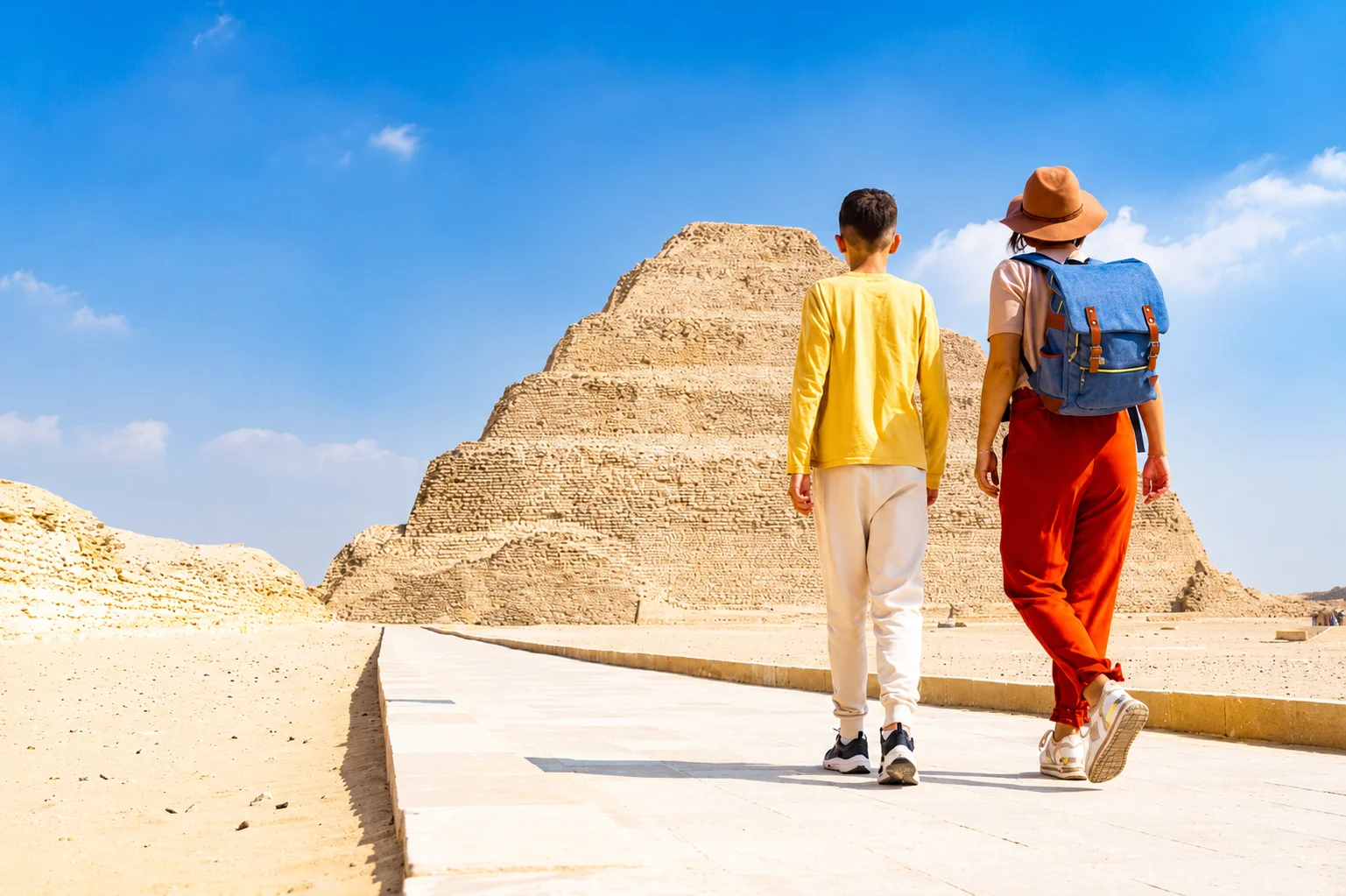
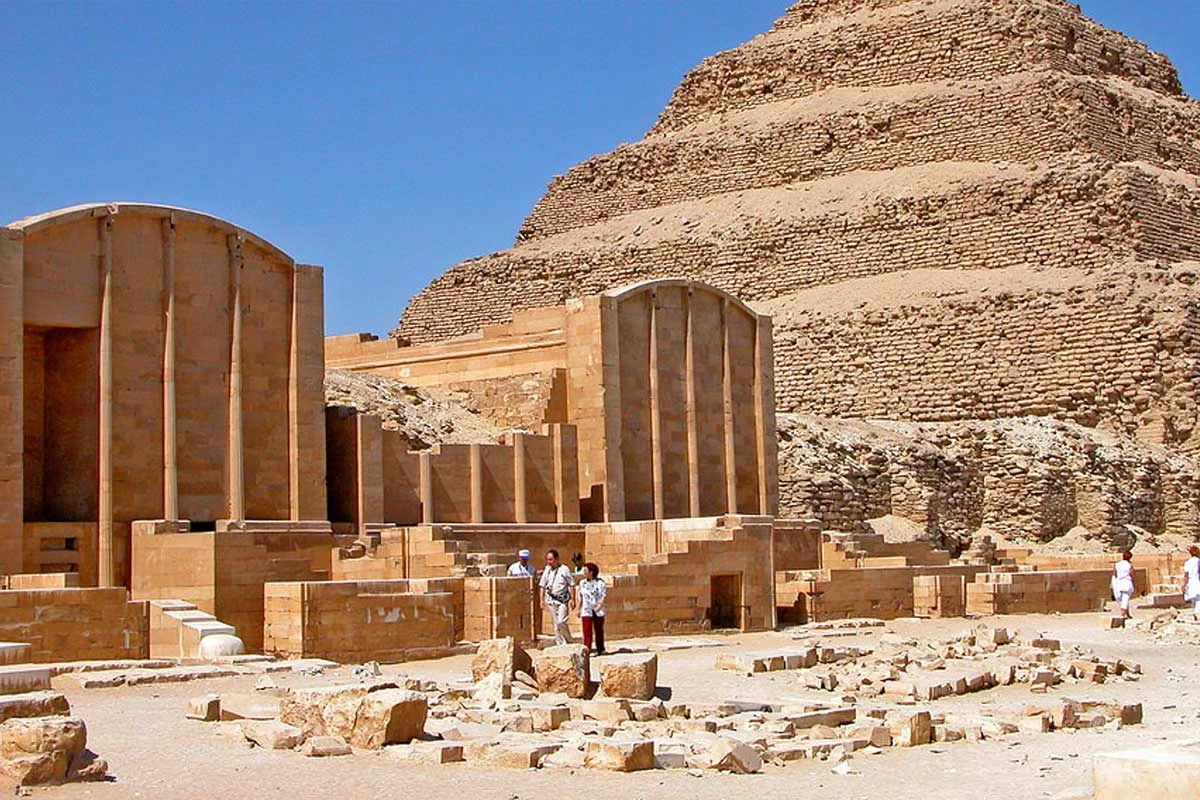
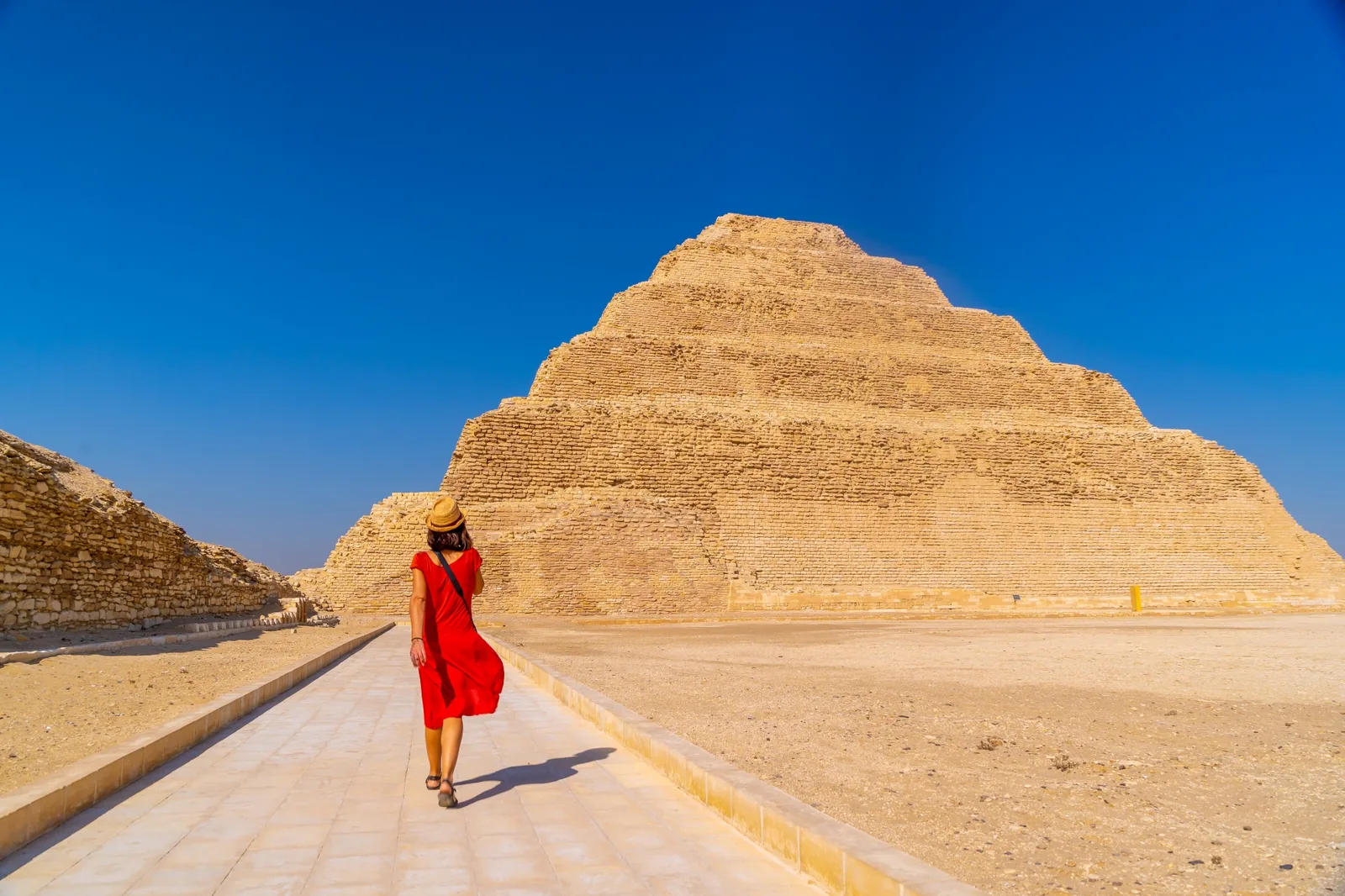
Saqqara served as the principal necropolis of Memphis for more than 3,000 years and is home to the Step Pyramid of Djoser, built around 2,670 BCE by the brilliant architect Imhotep. It is widely regarded as the oldest large-scale stone structure on Earth and represents the evolutionary leap from mastaba tombs to the smooth-sided pyramids of Giza. Saqqara also contains the awe-inspiring underground Serapeum, with its giant granite sarcophagi for the sacred Apis bulls, and countless mastaba tombs of royal officials.

Further south, Dahshur holds the Bent Pyramid and the Red Pyramid of King Sneferu — Egypt’s first true pyramids. The Bent Pyramid, with its distinctive change of angle midway up, is a unique transitional monument, while the Red Pyramid (105 m tall) was the first successfully smooth-sided pyramid and a direct prototype for those at Giza. The UNESCO-protected pyramid fields make the Saqqara–Memphis–Dahshur region the most significant archaeological complex in the world.

Islamic Cairo — City of a Thousand Minarets1,200 years of history
Cairo – Islamic Cairo — City of a Thousand Minarets

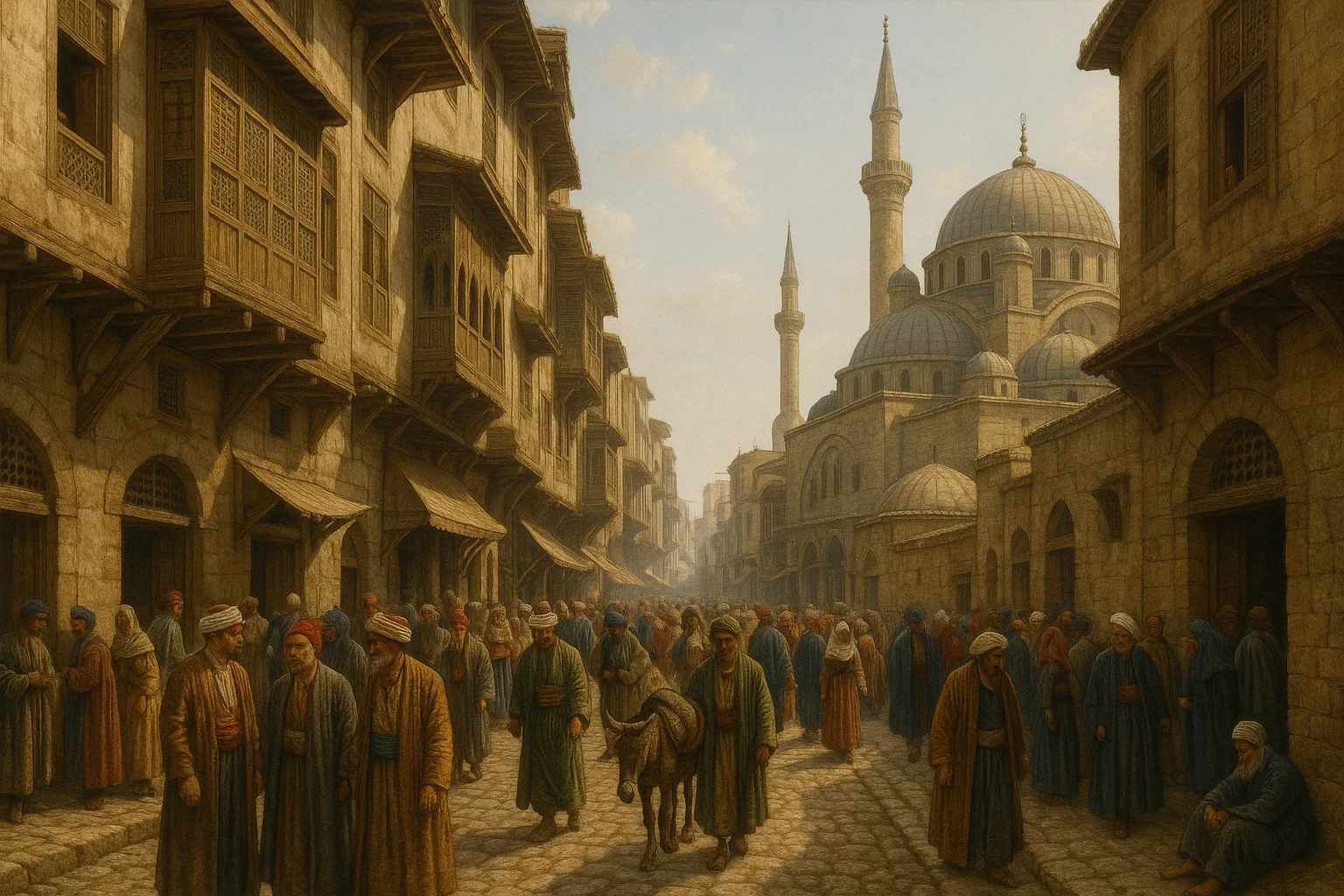
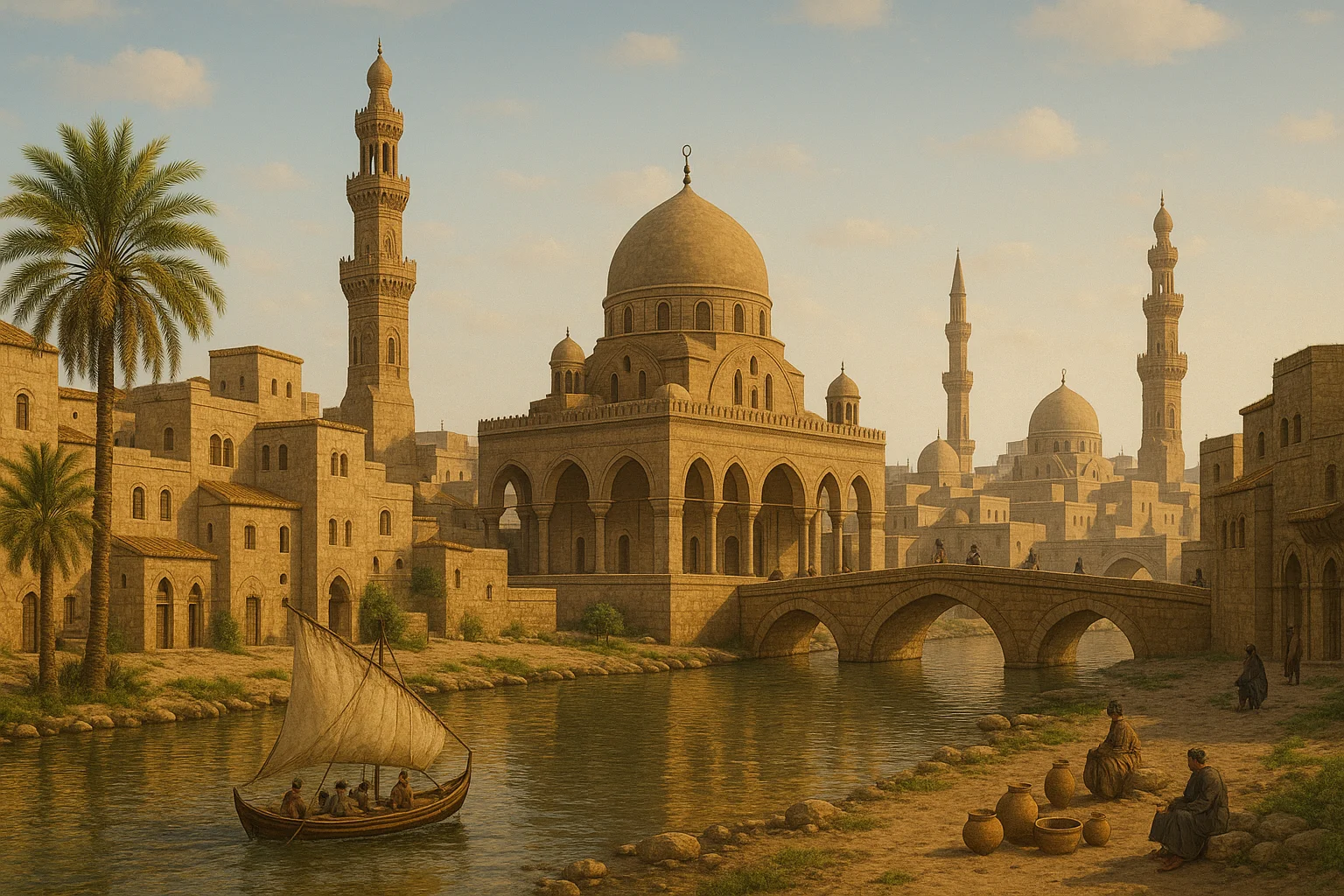
Islamic Cairo, founded in 969 CE as Al-Qahira by the Fatimid dynasty, is a UNESCO World Heritage Site and one of the oldest and best-preserved Islamic urban landscapes in the world. The historic core, with more than 600 protected monuments, contains masterpieces of Fatimid, Ayyubid, Mamluk and Ottoman architecture. Famous landmarks include the Al-Azhar Mosque (970 CE, the world’s oldest continuously operating university), the Sultan Hassan Mosque (1356, the apogee of Mamluk gothic), the Ibn Tulun Mosque (879, Cairo’s oldest fully preserved mosque) and the medieval Bab Zuweila gate.

The nickname “City of a Thousand Minarets” comes from the unique skyline of historic Cairo: more than 1,200 mosques, madrasas, caravanserais and mausoleums punctuate the quarter. Khan el-Khalili, the Sultan Hassan complex and Al-Muizz Street (the longest open-air museum of Islamic architecture in the world) give travellers a deep window into 1,200 years of Islamic culture, art and science — from calligraphy and craftsmanship to Islamic astronomy and medicine.
Coptic & Christian HeritageHome of the Coptic Orthodox Church
Cairo – Coptic & Christian Heritage

Coptic Christianity is one of the oldest Christian traditions in the world, dating to the 1st century CE after the apostle Mark’s mission to Alexandria. Today, around 10 million Coptic Christians live in Egypt — roughly 10% of the population. Coptic Cairo, with the Roman fortress of Babylon at its heart (2nd century CE), is the spiritual centre of the community. According to long-standing tradition, this is where Mary, Joseph and the infant Jesus sheltered during the Holy Family’s flight from Herod into Egypt.

Key monuments include the Hanging Church (Al-Muallaqa, 3rd century), St. Sergius Church (with its crypt of the Holy Family), St. Barbara Church, the Ben Ezra Synagogue (the oldest synagogue in Egypt, founded in the 9th century), and the Coptic Museum, which holds the world’s largest collection of Coptic art. The Coptic liturgy — still celebrated today in the ancient Egyptian-Greek language — is a direct heir to the Pharaonic-Hellenistic culture of late antiquity and a living thread of the ancient world.

Medieval & Ottoman CairoMamluk & Ottoman splendour
Cairo – Medieval & Ottoman Cairo

Under the Mamluks (1250–1517) Cairo entered its architectural golden age: lavishly decorated mosques, monumental madrasas, magnificent mausoleums and vast caravanserais rose across the city. Mamluk architecture fuses Islamic, Persian and European influences into a unique style, marked by intricate stone inlay, virtuoso wood carving, muqarnas (stalactite) ceilings and polychrome marble mosaics. Highlights include the Sultan Hassan Mosque, the Qalawun complex and the famous Mamluk City of the Dead.

The Ottomans (1517–1798) absorbed Cairo into their empire and stamped it with their own architectural signature: slender “pencil” minarets, half-domed mosques and Ottoman gardens. They restored many Mamluk monuments and added landmark buildings, most notably the Muhammad Ali Mosque inside the Citadel (1830–1848), whose alabaster cladding and central dome-and-minaret silhouette plays a leading role in the modern Cairo skyline. The quarter survives today as a living, open-air museum of Islamic architectural history.

Modern Cairo — A 22-Million MetropolisThe largest city in Africa
Cairo – Modern Cairo — A 22-Million Metropolis

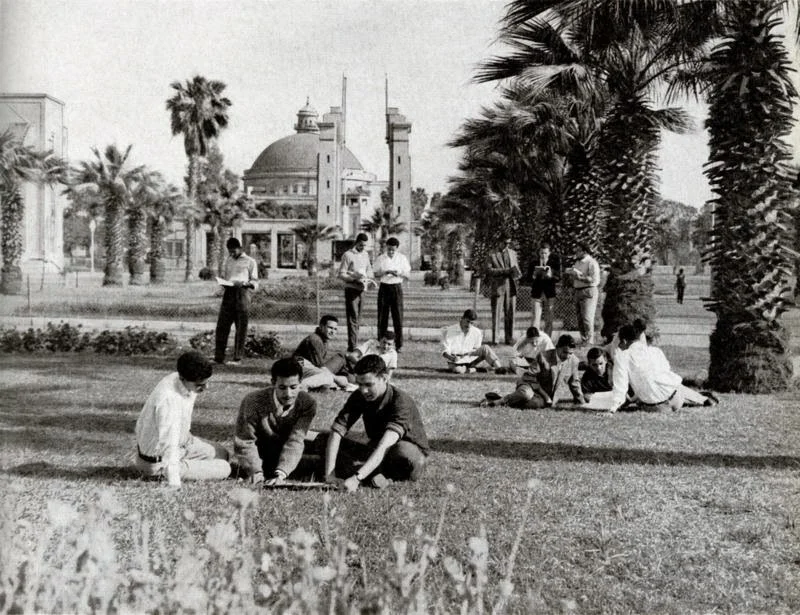
With more than 22 million inhabitants in its metropolitan area, Cairo is the largest city in Africa and the Arab world and the 17th-largest megacity on the planet. Modern Cairo stretches across the entire Nile Valley, encompassing buzzing downtown districts such as Tahrir, Downtown and Garden City, alongside elegant suburbs such as Heliopolis, Maadi and Zamalek on its Nile island. The 187-metre Cairo Tower, the Opera House and a wave of contemporary skyscrapers shape the skyline alongside the timeless Pyramids of Giza.

New Cairo, a planned satellite city to the east, is home to international universities, upscale residential districts and modern shopping centres. The New Administrative Capital — currently rising 35 km east of central Cairo — will house government ministries, the diplomatic quarter and a central rail hub, alongside the planned tallest building in Africa (the Iconic Tower, 393.8 m). Despite its breakneck growth, Cairo retains a singular character: the marriage of 4,500 years of history with raw, modern megacity energy makes it one of the most fascinating destinations on Earth.

The Nile — Cairo’s LifelineThe world’s longest river, 6,650 km
Cairo – The Nile — Cairo’s Lifeline

The Nile — at 6,650 km the longest river in the world — has been the lifeline of Egypt for thousands of years. In Cairo it flows majestically through the heart of the metropolis, dividing the city into east and west banks. Fertile strips of black silt along its shores fuelled the rise of ancient Egyptian civilisation: every pyramid, temple and capital was built within sight of the river. The annual Nile flood — controlled since 1970 by the Aswan High Dam — deposited rich silt that powered the highly productive agriculture sustaining Egyptian society.

Today the Nile in Cairo is an attraction in its own right. Traditional felucca sailboats, many still built to historic designs, glide between the islands of Gezira, Roda and Zamalek. Nile dinner cruises offer evening voyages with traditional Egyptian music, belly dancing, the spinning Tannoura folk dance and a multi-course buffet. The Nile-side promenades in Zamalek and Maadi are popular leisure spots packed with restaurants, cafes and parks. A boat ride is also the most beautiful way to take in the Cairo skyline — minarets, modern towers and the pyramids in the distance.

Predynastic Egypt — The Roots5500–3100 BCE
Cairo – Predynastic Egypt — The Roots

Long before the first pyramids were built, one of humanity’s earliest high cultures flourished along the Nile. Predynastic Egypt (roughly 5500 to 3100 BCE) encompasses the Naqada I, II and III cultures, in which the foundational elements of the later pharaonic civilisation took shape: precursors to hieroglyphic script, irrigation agriculture, pottery with characteristic black-and-red vessels, copper metallurgy, and the first city-states along the Nile. Major excavation sites such as Hierakonpolis, Naqada and Abydos have produced tools, grave goods and cult objects that have revolutionised our understanding of this formative epoch.

The high point of the predynastic period is the unification of Upper and Lower Egypt under King Narmer (also called Menes) around 3100 BCE. The famous Narmer Palette, on display today in the Egyptian Museum in Cairo, depicts this pharaoh wearing the white crown of Upper Egypt and the red crown of Lower Egypt, and is regarded as Egypt’s oldest historical document. With this unification began the era of dynastic pharaohs, which would endure for over 3,000 years with only brief interruptions. A visit to the predynastic hall of the Egyptian Museum guides you to the very origins of a civilisation that has shaped our world.

Roman & Byzantine Egypt30 BCE – 642 CE
Cairo – Roman & Byzantine Egypt

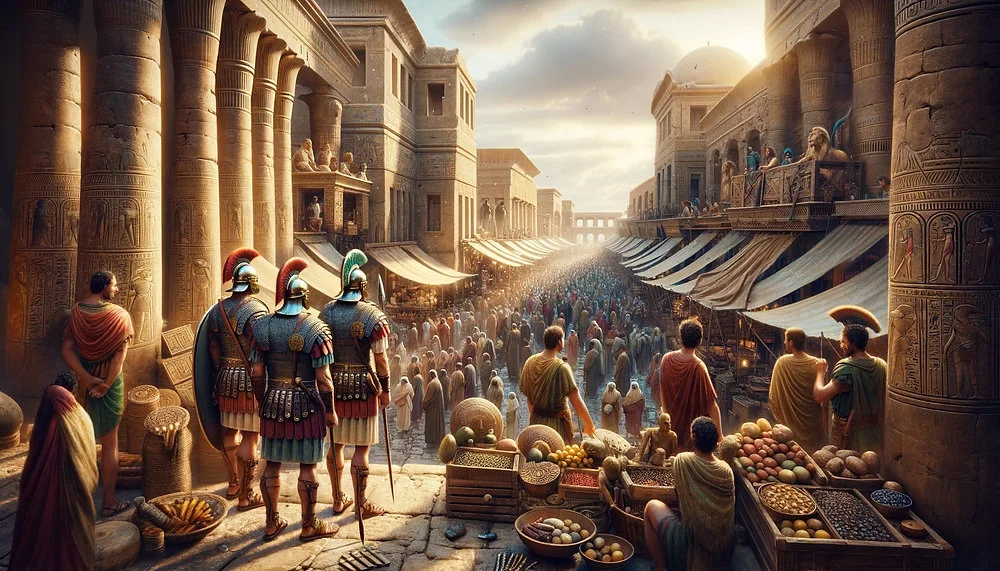
With the defeat of Cleopatra VII and Mark Antony by Octavian (later Augustus) at the Battle of Actium in 31 BCE the Ptolemaic kingdom ended and Egypt became a Roman province. The Romans regarded Egypt as the most important breadbasket of their empire and shipped vast quantities of grain each year to Rome and Constantinople. Even so, they left Egyptian culture, religion and language largely untouched — many pharaonic temples continued to be built, and Roman emperors had themselves depicted in hieroglyphs as Egyptian pharaohs. The temples of Edfu, Kom Ombo, Dendara and Philae were completed or expanded during this era.

The most consequential development of this period was the Christianisation of Egypt. By tradition, the Apostle Mark founded the Christian community in Alexandria in 42 CE. The Coptic Orthodox Church, one of the oldest churches in the world, developed its own theological and liturgical tradition. During the Byzantine era (395–642 CE) Egypt was an important Christian centre with great desert monasteries — the Monastery of St. Anthony (4th c.) and the Monastery of St. Paul are among the oldest in the world. With the Arab-Islamic conquest in 642 the Byzantine rule ended and a new chapter of Egyptian history began.

Modern Egypt from 1952Free Officers Revolution to today
Cairo – Modern Egypt from 1952

On 23 July 1952 a group of young military officers led by Mohammed Naguib and Gamal Abdel Nasser overthrew Egypt’s last king, Farouk, and ended the monarchy. The Free Officers Revolution marked the beginning of modern Egypt as an independent republic. Nasser became president in 1956 and shaped the country with pan-Arab socialism, the nationalisation of the Suez Canal (which led to the Suez Crisis with Britain, France and Israel) and ambitious infrastructure projects such as the construction of the Aswan High Dam (1960–1970). UNESCO’s rescue operation to relocate the temples of Abu Simbel and Philae before the rising waters of Lake Nasser became an international symbol of cultural protection.

Anwar Sadat (1970–1981) steered Egypt in a pro-Western direction and signed the first peace treaty between an Arab state and Israel in 1979 — a step that earned him the Nobel Peace Prize but cost him his life in 1981 when he was assassinated. Hosni Mubarak ruled for 30 years until the Arab Spring of 2011, when mass protests on Tahrir Square forced his resignation. After turbulent years Abdel Fattah al-Sisi became president in 2014 and has shaped the country with megaprojects: the new Administrative Capital, the expansion of the Suez Canal (2015) and the opening of the Grand Egyptian Museum (GEM) in 2024 — all monuments that have further cemented Cairo’s skyline and its status as a world-class travel destination.

Cairo — UNESCO World Heritage

Three UNESCO World Heritage Sites in or near Cairo make it the most significant archaeological centre in the world. A snapshot of its standout achievements:

  • Memphis & its Necropolis (Saqqara, Dahshur, Giza) — UNESCO since 1979
  • Historic Cairo (the Islamic old city) — UNESCO since 1979
  • Abu Mena (early Christian pilgrimage site) — UNESCO since 1979
  • Over 600 protected Islamic monuments
  • 14 million annual visitors at the Pyramids
  • 50-hectare Grand Egyptian Museum (the largest on Earth)
  • 4,700+ Tutankhamun artefacts on display in full for the first time
  • 1,000+ mosque minarets shape the city skyline

Verified sources: UNESCO Memphis & Necropolis, UNESCO Historic Cairo, Egyptian Ministry of Antiquities, Encyclopædia Britannica, Egypt Tourism Authority.

Activities & Unique Experiences

From Pyramid tours to a Nile dinner cruise — six experiences that make Cairo unforgettable.

Egyptologist-Led Pyramids ToursHalf-day & full-day guided experiences

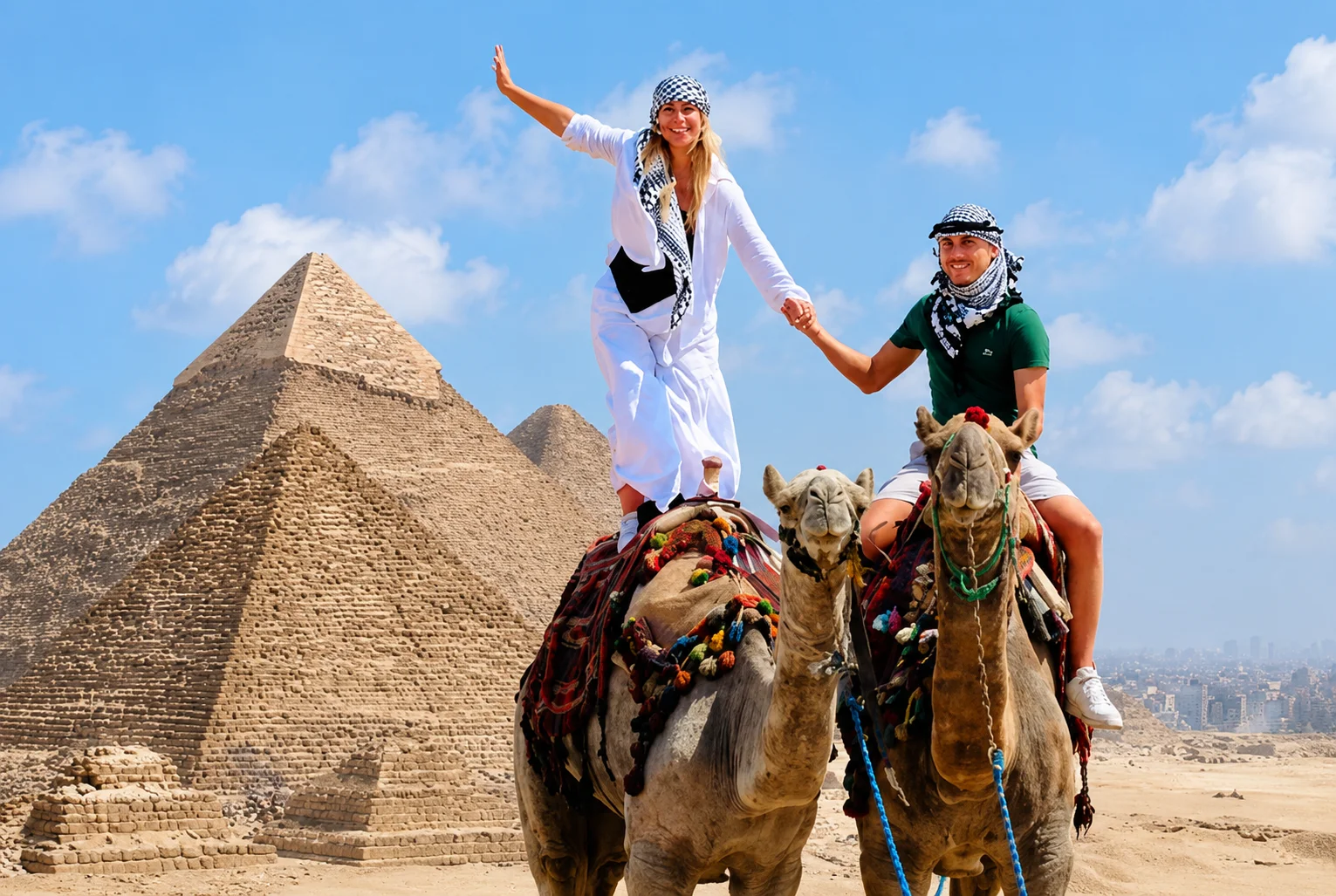
Explore the Pyramids of Giza with a certified Egyptologist who brings the history and engineering wonders of these 4,500-year-old monuments to life. Half-day tours run 4–5 hours and focus on the three great pyramids, the Sphinx and the Valley Temple. Full-day tours extend the experience with Saqqara, Dahshur or the Egyptian Museum. Premium options include going inside the Great Pyramid of Khufu or a traditional camel ride to the panoramic viewpoint for unforgettable sunset photos.

Museum Visits & the GEM ExperienceSee the Tutankhamun treasures up close

Step into 5,000 years of history at the new Grand Egyptian Museum (GEM) and the historic Egyptian Museum on Tahrir Square. The GEM, the largest archaeological museum on Earth, finally displays Tutankhamun’s complete collection — over 5,000 artefacts including the famous golden funerary mask, the boy-king’s gilded coffins and his royal chariot. Guided tours with English-speaking experts include skip-the-line tickets, expert commentary on Egyptian mythology, hieroglyphs and burial practices, plus highlights such as the Royal Mummies Hall.

Nile Dinner Cruises with Live ShowBelly dance, Tannoura & buffet dinner

Spend a magical evening on the Nile with a 2- to 3-hour dinner cruise: panoramic views of Cairo’s illuminated skyline, a multi-course buffet of Egyptian specialities and live entertainment. The show typically features traditional belly dancers, the hypnotic Tannoura whirling dance (a Sufi-inspired performance with brilliantly coloured skirts), live oud, tabla and nay music, and often a folkloric dance troupe. Premium cruises with air-conditioned decks and outdoor terraces are especially spectacular at sunset. Hotel transfers and open-bar upgrades are optional.

Felucca Rides on the NileTraditional Egyptian sailboats

Feluccas are traditional Egyptian sailboats with triangular lateen sails that have plied the Nile since Pharaonic times. A one- to two-hour felucca cruise around the islands of Gezira and Roda offers a peaceful, romantic perspective on Cairo’s landmarks — the Cairo Tower, the Opera House and the riverside palaces. Sunset sails are especially popular and often paired with a glass of traditional Egyptian tea. Longer three-hour outings sometimes include snacks, Egyptian sweets and live music on board. An authentic experience far from the urban bustle.

Khan el-Khalili Bazaar ExperienceSouvenir shopping & coffee culture

Lose yourself in the labyrinthine alleys of Khan el-Khalili, founded in 1382 and one of the oldest markets in the Middle East. Guided shopping tours help you find authentic handicrafts: handmade brass lamps, papyrus paintings, alabaster figurines, Egyptian cotton, gold cartouches engraved with your name in hieroglyphs, spices and essential oils. Pause at the legendary El-Fishawy Café (in operation since 1769) for a traditional karkadeh (hibiscus tea) or a cardamom-spiced Arabic coffee. Bargaining is part of the culture — the art of negotiation makes the whole visit come alive.

Culinary Tours & Cooking ClassesAuthentic Egyptian cuisine

Dive into Egypt’s rich culinary heritage with guided food tours or hands-on cooking classes. Sample koshari (Egypt’s national dish of rice, lentils and pasta in spicy tomato sauce), ful medames (slow-cooked fava beans with olive oil), molokhia (jute-leaf soup), mahshi (stuffed vine leaves and vegetables), grilled kofta and sweet konafa for dessert. Street-food walks lead you to beloved local hangouts in Downtown Cairo, while in-home cooking classes offer an intimate experience — Egyptian home cuisine is surprisingly varied and often overlooked in Western travel guides.

Sound & Light Show at the PyramidsMultimedia experience after sunset

The evening Sound & Light Show on the Giza plateau is a unique experience that brings the pyramids and the Sphinx to life through spectacular light projections. The roughly one-hour show is performed in multiple languages — English, German, French, Spanish, Italian, Arabic, Japanese and more — and tells the story of the pharaohs, the pyramid builders and ancient Egyptian mythology. The Sphinx serves as the narrator, while the pyramids are illuminated in shifting colours and laser plus projection sequences visualise 4,500 years of history. The show takes place daily after dusk; premium front-row seats and hotel transfer can be booked separately. A magical close to a day at the pyramids that delights adults and children alike.

Hot Air Balloon over GizaPremium sunrise from a bird’s-eye view

A hot air balloon flight at sunrise over the Giza plateau ranks among the most exclusive experiences Cairo has to offer. With take-off in the early morning hours, you ascend to 300–500 metres while the first rays of sunlight bathe the three Great Pyramids, the Sphinx and the entire Nile valley in golden light. The roughly 45-minute flight allows for spectacular photographs from a perspective only a handful of travellers will ever witness — the entire pyramid field, the surrounding desert, the fertile Nile riverbanks and, in the distance, the Cairo skyline. Premium packages frequently combine the balloon ride with a champagne breakfast after landing and hotel transfer. Weather-dependent (best October–April), but unforgettable.

Photography Tours with Pro PhotographersGolden hour at the pyramids & Khan by night

Specialised photography tours guide you to Cairo’s best photo locations at the optimal times of day. The sunrise pyramid tour brings you, ahead of the mass tourists, to the most iconic shooting positions — the panoramic point with all three pyramids in line, the Sphinx front view at sunrise lighting and hidden corners only local pros know. The Khan el-Khalili night tour reveals the bazaar in its most mystical atmosphere — lantern light, reflections on brassware, café silhouettes. Experienced Egyptian photographers offer tips on exposure, composition, image stabilisation and culturally respectful street photography. Tripods and memory cards are provided on request; both smartphone and DSLR tours are available.

Book Your Ultimate Cairo Tour

Premium full-day tour to the Pyramids of Giza, the Great Sphinx and the new Grand Egyptian Museum — led by certified English-speaking Egyptologists, with traditional lunch and all entrance fees included.

Pyramids of Giza and the Great Sphinx Most Booked

Cairo Private Full-Day Tour: Pyramids + Sphinx + Grand Egyptian Museum

The most comprehensive Cairo experience in a single day: the Giza Plateau with the pyramids of Khufu, Khafre and Menkaure, the Great Sphinx, and the new Grand Egyptian Museum with the complete Tutankhamun collection. Optional add-ons: a camel ride, entry inside the Great Pyramid, and the Solar Boat Museum.

8–9 hrs Private (1–6 pax) Lunch EN guide Hotel transfer

Your complete experience includes:

  • Hotel pickup & drop-off
  • Air-conditioned private transport
  • Licensed English-speaking Egyptologist
  • Entry: Pyramids area & Sphinx
  • Entry: Grand Egyptian Museum (GEM)
  • Tutankhamun gallery access
  • Traditional Egyptian lunch
  • Water & refreshments
  • Entrance gratuities included
Was €65
From €40 per person
Book now
Early-Bird Discount — Save 38%!

Book today — free cancellation up to 12h before tour.

Day Trips & Tour Options

Six hand-picked tour options for every budget and interest — from compact half-day visits to a premium multi-day adventure.

Pyramids & Sphinx Half-DayBestseller

Pyramids & Sphinx Half-Day

Classic half-day tour to the Pyramids of Giza and the Great Sphinx with a licensed Egyptologist. Hotel pickup, entrance fees and transport included. Ideal as an introduction to the world of the Pharaohs — perfectly combinable with lunch or a bazaar visit afterwards.

Khufu/KhafreSphinx4-5 hrsEN guide
€27per person
Half-Day
Pyramids + GEM Full-DayPopular

Pyramids + GEM Full-Day

The most comprehensive Cairo experience in a single day: Pyramids of Giza, the Great Sphinx and the new Grand Egyptian Museum with the complete Tutankhamun collection. Includes traditional Egyptian lunch, entrance to all sites and a certified English-speaking Egyptologist.

PyramidsGEMLunch8 hrs
€40per person
Full-Day
Saqqara, Memphis & DahshurUNESCO Heritage

Saqqara, Memphis & Dahshur

Full-day exploration of the three UNESCO-protected pyramid fields south of Cairo: Saqqara with the Step Pyramid of Djoser (the oldest pyramid in the world), the ancient capital Memphis with its colossus of Ramses II, and Dahshur with the famous Bent Pyramid and Red Pyramid.

3 sites3,000 BCEBuffetEN guide
€82per person
Saqqara
Citadel, Old Cairo & Khan el-KhaliliCulture Tour

Citadel, Old Cairo & Khan el-Khalili

Full-day cultural tour through medieval Cairo: the imposing Citadel of Saladin with the Muhammad Ali Mosque, Coptic Old Cairo with the Hanging Church and the Coptic Museum, plus the historic Khan el-Khalili bazaar for authentic souvenir shopping. Perfect for lovers of Islamic and Christian architecture.

CitadelCopticKhan8 hrs
€50per person
Culture Tour
Nile Dinner Cruise with ShowEvening Experience

Nile Dinner Cruise with Show

A magical Nile dinner cruise with panoramic views of Cairo’s illuminated skyline. Multi-course buffet of Egyptian specialities, live belly dance, Tannoura whirling and traditional music. Includes hotel transfers and a 2-hour cruise. The perfect way to round off a busy day of sightseeing.

2 hr cruiseBuffetLive showOpen bar opt
€45per person
Cruise
Luxor & Abu Simbel 2-DayPremium Experience

Luxor & Abu Simbel 2-Day

Extend your Cairo trip with a premium 2-day tour to Luxor and the famous Abu Simbel temples of Ramses II. Includes return flights, 1 night in a 4* hotel, the Valley of the Kings, Karnak and Luxor temples, the Temple of Hatshepsut and the UNESCO-protected Abu Simbel complex on Lake Nasser. A once-in-a-lifetime taste of Pharaonic architecture.

2× flights4* hotelAbu Simbel2 days
€350per person
Luxor 2-Day

Cairo Tour Reviews

Real experiences from travellers who explored the Pyramids, the GEM and historic Cairo with Egyptra.

4.6
7,981 reviews
from 88 countries
5
68%
4
23%
3
7%
2
2%
1
0%

Transport

4.6/5

Value for money

4.6/5

Overall

4.6/5
Daniele
Italia

Esperienza tutto sommato positiva. Non iniziata bene a causa del gruppo di persone molto numeroso che eravamo, di diverse nazionalità ed hotel, che ha reso estremamente difficile l'organizzazione della partenza, circa…

September 2026
Ehsan
Deutschland

Very well organized tour. The step by step plan was well thought of. The tour bus was very clean and brand new. Our tour leader (Mr. Yahya) was great and explained many interesting facts and took amazing pictures. T…

September 2026
Dan
România

De la preluarea din hotel și până la întoarcere, totul la superlativ! Prețul cel mai bun și cea mai bună echipă! Mulțumim tuturor!

August 2026
Krzysztof
Polska

Super wycieczka polecam wszystkim zainteresowanym. Przewodnik tez sie super sprawdził i dowiedzieliśmy sie dużo interesujących rzeczy. Dziękujemy!

August 2026
Tatjana
Deutschland

Organisation und alle Fahrer waren sehr nett gewesen. Wir wurden im Hotel abgeholt zum Flughafen Hurghada gebracht und nach Kairo geflogen. Auf dem Weg zu Pyramiden haben wir unseren Reiseführer Nabil eingesammelt und…

August 2026
Roy
United Kingdom

Trip was fantastic, pyramids, sphinx and grand museum were all incredible. Perfume shop and papyrus stop should be exchanged for more time in the grand museum

August 2026
Nadine
Deutschland

War super schön.Kleine Gruppe und netter Guide.

July 2026
Lothar
Deutschland

Trip in total was super! Please not too much People in the Bus, over Night you Need two Place wach Person to feel comfortable. The Egyptian Guide was very good (Amal)!

July 2026
Manon
France

Une aventure fantastique ! Sensations fortes et paysages sublimes. Le désert et les pyramides, un décor de rêve. Je recommande vivement.

July 2026

Frequently Asked Questions About Cairo

The most important answers, from trip planning and visas through to safety, transport and insider tips.

How many days should I plan for a trip to Cairo?

For Cairo’s essential sights you should plan at least 3–4 full days. Day 1: Pyramids of Giza and the Sphinx (morning) plus the Grand Egyptian Museum (afternoon) — the absolute headline. Day 2: Saqqara and Memphis (half-day tour) plus the historic Egyptian Museum on Tahrir Square (afternoon). Day 3: Islamic Cairo with Khan el-Khalili bazaar, the Sultan Hassan Mosque and the Citadel of Saladin. Day 4: Coptic Cairo with the Hanging Church, St. Sergius Church and the Coptic Museum, finishing with a Nile dinner cruise in the evening. With more time, consider extensions to Dahshur (more pyramids), the New Administrative Capital or a day trip to Alexandria (3 hours each way). A full week lets you take in Cairo without rushing.

When is the best time to visit Cairo?

The best time to visit Cairo is October to April, when temperatures are an agreeable 18–28°C and ideal for sightseeing. Peak season runs December to February, with cool weather (12–22°C) perfect for long pyramid explorations — but it also means the highest tourist numbers and prices. Spring (March–May) and late autumn (October–November) bring warm but bearable temperatures (20–30°C) and thinner crowds. Summer (June–September) brings extreme heat (35–42°C) and intense sun, which can make sightseeing on the exposed Pyramid and Saqqara plateaus exhausting — the upside is significantly lower prices and shorter queues. During Ramadan (dates vary each year) many restaurants close during the day and city life shifts to the evening.

What are the must-see sights in Cairo?

Cairo’s essential highlights: Pyramids of Giza and the Great Sphinx – the only surviving Wonder of the Ancient World; Grand Egyptian Museum (GEM) – the world’s largest archaeological museum, with the complete Tutankhamun collection; Egyptian Museum on Tahrir Square – over 170,000 artefacts; Khan el-Khalili Bazaar – a medieval souk dating to 1382; Citadel of Saladin and Muhammad Ali Mosque – a hilltop fortress with sweeping views; Islamic Cairo – UNESCO heritage with the Sultan Hassan Mosque, Al-Azhar and Bab Zuweila; Coptic Cairo – the Hanging Church, St. Sergius Church and the Ben Ezra Synagogue; Saqqara – home of the world’s oldest pyramid (the Step Pyramid of Djoser); Memphis – ancient capital with the colossus of Ramses II; Nile dinner cruise – an evening of music, food and folklore. Insider tip: don’t skip the new GEM and a traditional coffee at the historic El-Fishawy Café.

How do I get to Cairo from Hurghada, Sharm el-Sheikh or Marsa Alam?

There are several ways to reach Cairo from the Red Sea resorts: By plane – the fastest option (1-hour flight) from Hurghada (HRG), Sharm el-Sheikh (SSH) or Marsa Alam (RMF) to Cairo International Airport (CAI). EgyptAir, Air Cairo and Nile Air run several daily flights. Day trips by plane are popular — departures around 5–6 a.m., returning late evening. By bus – the most affordable option (5–7 hours, depending on route) with GoBus, Blue Bus or Egypt Bus from central terminals. Comfortable VIP coaches with air-conditioning and snacks. By private driver – the most flexible option (5–7 hours) with hotel-to-door service, ideal for families and small groups. Guided 1- or 2-day tours – all-inclusive packages covering transport, entrance fees, lunch and an Egyptologist guide; 2-day options include an overnight stay in Cairo.

Is Cairo safe for tourists in 2026?

Yes, Cairo is a safe destination for tourists in 2026. Tourist areas such as Giza, Tahrir, Zamalek, Maadi, Heliopolis and Khan el-Khalili are heavily monitored by tourist police and security personnel. The Egyptian government has invested significantly in tourism security in recent years, including checkpoints, hotel police and 24/7 surveillance at archaeological sites. Standard precautions are advised: carry copies of important documents, leave valuables in the hotel safe, use licensed taxis (Uber, Careem), and dress conservatively in public — especially women, with a headscarf required at religious sites. Petty crime such as pickpocketing can occur in tourist areas — stay aware. Travel insurance is strongly recommended. Foreign-office travel advice is currently positive for tourist routes; only the Sinai Peninsula border zones and remote western desert areas warrant extra caution.

Do I need a visa for Egypt and how much does it cost?

Most tourists, including US, UK, EU, Canadian and Australian citizens, need a tourist visa for Egypt. There are three options: e-Visa (recommended) – apply online at visa2egypt.gov.eg for around USD 25 (about €23) for a single-entry visa or USD 60 for multiple-entry. Processing takes about 7 working days; valid for 90 days from arrival. Visa on arrival – available at Cairo, Hurghada, Sharm el-Sheikh and Luxor International Airports for USD 25 in cash (USD or euros accepted), issued instantly. Consulate visa – apply at the Egyptian embassy or consulate in your home country. Your passport must be valid for at least 6 months from your arrival date and have 2 blank pages. On all-inclusive day trips from the Red Sea (e.g. Sharm el-Sheikh) the special “Sinai-only visa” is free but is not valid for Cairo — a full tourist visa is required.

How much does a typical Cairo tour cost and what is included?

Cairo tour pricing varies with duration and content: Half-day pyramids tour – from €27 per person (transport, Pyramids area entrance); Full-day Pyramids + Egyptian Museum – from €40 per person (transport, entrance fees, Egyptologist, lunch); Pyramids + Saqqara + Memphis full-day – from €50 per person; Day trip from Hurghada/Sharm by plane – from €250 per person (return flight, transfers, tour, lunch, entrance fees); Day trip by bus or car – from €65 per person (12–14-hour day); 2-day packages from Hurghada – from €310 per person with hotel overnight; Private tour (4–6 people) – from €79 per person with a private guide. Typically included: hotel pickup and drop-off, air-conditioned transport, a licensed Egyptologist, entrance tickets to all listed sights, traditional Egyptian lunch. Optional extras: camel ride (€10–15), entry inside the Great Pyramid (€20), Solar Boat Museum (€10), skip-the-line GEM tickets.

What should I pack for my Cairo visit?

A recommended Cairo packing list: Clothing – conservative, breathable clothing (cover shoulders and knees, especially at religious sites); lightweight trousers or long skirts for women, sleeved shirts; comfortable walking shoes for the Pyramid and Saqqara plateaus (the sand can be hard going); a wide-brim sun hat and UV sunglasses; a light scarf or pashmina (for mosque visits and cool evenings); in winter (December–February) a light jacket or sweater for the evenings. Sun protection – SPF 30–50 sunscreen and lip balm with UV protection; Hydration – a reusable water bottle (1 litre minimum); Electronics – a travel adapter (Egypt uses European Type-C/F plugs, 220V), power bank, camera and memory cards; Medication – personal medications, anti-diarrhoeals, antacids, plasters; Other – a small bundle of cash in EUR or USD for visa fees, tipping and souvenir shopping (small notes preferred); a passport copy and spare passport photos for emergencies.

How does transport work in Cairo?

Cairo offers several transport options: Uber and Careem – by far the most convenient and safest option for tourists, with app-based booking, fixed prices, often English-speaking drivers and a rating system. A ride from the airport to downtown costs around €15–20. Private drivers – the easiest option for day tours, from €60–80 per day including driver, often arranged through your hotel or a tour operator. Metro – a modern 3-line system (Lines 1, 2 and 3) covering downtown, Heliopolis, Maadi and Helwan. Very cheap (around 5 EGP per ride), fast and avoids traffic. The first carriages are reserved for women. Taxis – white taxis are inexpensive, but agree on a price before setting off, or insist the meter is used. Traffic – Cairo’s traffic is famously chaotic; allow extra time between 8–10 a.m. and 4–7 p.m. Rental cars – not recommended for tourists due to aggressive driving styles and chaotic traffic. At the Pyramids – horse carriages, camel rides and small electric shuttle vehicles are available on site.

What food should I try in Cairo?

Egypt’s capital offers a wonderfully varied food scene: Koshari – the national dish, a hearty mix of rice, lentils, macaroni, chickpeas, fried onions and spicy tomato sauce (the legendary version is at Abou Tarek in Downtown); Ful medames – slow-cooked fava beans with olive oil, garlic, lemon and cumin, a classic breakfast; Tameya – Egyptian falafel made with fava beans, crisp and herb-rich; Molokhia – jute-leaf soup with chicken or rabbit; Mahshi – stuffed vine leaves, tomatoes or aubergines; Hawawshi – pita bread filled with spiced minced meat, baked in a stone oven; Grilled meats – kofta (seasoned mince skewers), shish tawook (chicken skewers), kebab; Sweets – konafa (shredded-pastry dessert with syrup), basbousa (semolina cake), umm ali (Egyptian bread pudding), mahalabia (milk pudding with rose water). Drinks – karkadeh (hibiscus tea, hot or cold), sahlab (a winter milk drink), fresh juices (mango, sugarcane). Hygiene tip – favour established restaurants over street stalls, and only drink sealed bottled water.

Is Cairo family-friendly? What does it offer for children?

Cairo is a surprisingly family-friendly city if you make a few sensible adjustments. Top family activities: a Pyramids tour with a camel ride (kids from age 5 love the Sphinx); the Mini Egypt Park (miniature replicas of every major Egyptian landmark, perfect for an overview); the kids’ gallery at the GEM (interactive exhibits and hands-on activities); the Cairo Tower with its panoramic deck and revolving restaurant; Al-Azhar Park with sprawling lawns and play areas; a felucca ride on the Nile (gentle motion and water views delight children); a Nile dinner cruise with live show (kids love the belly dance and Tannoura whirling). Practical tips: heat and sun are tiring — bring plenty of water and sun protection, and plan sightseeing for early morning or late afternoon; many tours offer child discounts (often 50% under 12, free under 5); pay attention to hygiene and use hand-sanitiser; hotels with pools are a welcome break. Pyramid-specific tips: for children under 8 the climb inside the Great Pyramid is not advised (narrow, dark and tiring); the Solar Boat Museum is fascinating for kids (a 4,500-year-old wooden boat); a camel ride is a guaranteed adventure highlight.

What currency is used in Egypt and how should I pay?

Egypt’s official currency is the Egyptian Pound (EGP, ج.م), divided into 100 piastres. Current rate: 1 € corresponds to about 50–55 EGP (as of 2026). Cash: EUR and USD are accepted in many tourist shops, hotels and restaurants, but exchange rates are often unfavourable — ideally exchange small amounts into EGP. ATMs are widespread in Cairo at airports, banks and hotels — they accept Visa, Mastercard and Maestro. Daily withdrawal limit usually 4,000–6,000 EGP (~€80–120). Credit cards are accepted in hotels, mid- to upper-tier restaurants and larger shops, but for small vendors, taxis, the Khan el-Khalili and street markets you’ll need cash. Tip: always keep smaller EGP notes for tipping. Travellers’ cheques are barely accepted any more; mobile payment (InstaPay, Vodafone Cash) is gaining popularity but is mostly used by locals.

How does tipping (Baksheesh) work in Egypt?

Tipping — in Arabic “Baksheesh” — is a central element of Egyptian service culture and is expected in many situations. Restaurants: 10–15 % of the bill, unless a service charge is already included. Hotels: bellboy 20–30 EGP per piece, housekeeping 30–50 EGP/day, concierge 50–100 EGP for special requests. Tours: guide 100–200 EGP/day per person, driver 50–100 EGP/day per person for half-day tours, 100–150 EGP for full-day — on multi-day tours give it on the last day in an envelope. Sites: security staff, cleaning crew and on-site helpers expect small tips of 10–20 EGP, especially at the pyramids and temples. Taxis: round up to the nearest 10 EGP. Tips for a smooth tipping experience: always carry small notes (10s, 20s, 50s EGP); larger notes are often met with “no change”. Tipping is voluntary, but withholding baksheesh after good service is considered rude. On full-package tours the most important tips are usually already included — ask your provider.

What about internet, SIM cards and data plans in Egypt?

Egypt has a well-developed mobile network. Three major carriers: Vodafone Egypt, Orange Egypt and Etisalat. Vodafone has the best coverage in tourist areas and the fastest 4G speeds. Tourist SIM: for around 200–300 EGP (~€4–6) you get a pre-loaded SIM with 10–25 GB of data for 28 days. Available at Cairo airport (arrivals hall, Vodafone & Orange counters), at major mobile shops and some souvenir stores. Required: passport (mandatory for registration). eSIM options: Airalo and Holafly offer data eSIMs from €6 for 7 days, which you can activate online before your trip — convenient, but data caps are smaller. Wi-Fi: hotels, cafés (Costa Coffee, Cilantro), restaurants and some attractions offer free Wi-Fi. Speeds vary widely — 4G data is often more reliable. Restricted services: WhatsApp and Skype calls are partly blocked; use a VPN (NordVPN, ExpressVPN) for full functionality. EU roaming: works but is expensive (~€2–5/day); a local SIM/eSIM is significantly cheaper.

How do I best combine Cairo with other Egyptian destinations?

Cairo combines beautifully with Egypt’s other top destinations. Classic combo: Cairo + Nile Cruise (Luxor & Aswan) — 7–10 days; after 2–3 days in Cairo, fly domestically to Luxor, 4–5 nights cruising between Luxor and Aswan, possibly extending to Abu Simbel. This route covers 5,000 years of pharaonic history. Cairo + Hurghada/Sharm El Sheikh — 10–14 days; combines culture (Cairo) with beach and diving on the Red Sea; 1-hour domestic flight. Cairo + Alexandria — 4–5 days; day trip or overnight in Alexandria (3-hour drive) for Mediterranean history and the Pompey’s Pillar. Cairo + Siwa Oasis — 6–8 days; an adventurous route into the western desert with the Oracle of Amun (which Alexander the Great once visited) and salt lakes. Cairo + Sinai — 7–10 days; combines pharaonic history with Mount Moses and St. Catherine’s Monastery (one of the oldest continuously inhabited monasteries in the world). Domestic flights between major destinations cost from €60–150 (EgyptAir, Air Cairo, Nile Air). Book 4–6 weeks in advance for the best fares and, where possible, book complete packages with hotels, transfers and guided tours — more convenient and often cheaper than booking individual elements.

Where are the best photo spots in Cairo?

Cairo offers countless iconic photo motifs. Pyramids & Sphinx: the classic panoramic point on the southern edge of the plateau shows all three pyramids in line — ideal at sunrise or sunset (golden hour). The Sphinx with the Great Pyramid in the background is THE postcard shot. Photograph from the east. Cairo Tower: the observation deck at 160 metres offers the best city panorama — Nile, islands and distant pyramids on a clear day. Khan el-Khalili: the narrow alley in front of the El-Fishawy café is legendary; lanterns at night, reflections on brassware, mountains of spices in the market stalls. Sultan Hassan Mosque: the courtyard with the fountain dome and the four iwans is breathtaking — best light through the high windows between 10am and 1pm. Al-Muizz Street at night: illuminated Mamluk façades, empty cobblestone lanes — perfect for architectural photography. Citadel & Muhammad Ali Mosque: exterior view from the terrace over downtown; the interior with its hanging lamps is spectacular. Coptic Cairo: Hanging Church, Saint Sergius Church — intimate atmosphere, especially in morning sun. Tips: tripods are often allowed in mosques (small tip on request); flash-free photography around wall paintings; always be respectful when photographing people, especially women — ask first.

What health preparations should I make for Egypt?

A trip to Cairo calls for careful health preparation. Standard vaccinations: tetanus, diphtheria, pertussis, polio, measles, mumps, rubella — all routine immunisations should be up to date. Travel vaccinations: hepatitis A & B (transmitted via contaminated food/water and blood respectively), typhoid (for longer stays or backpackers), rabies (for planned desert tours or animal contact). Consult a travel medicine specialist 4–6 weeks before departure. Water & hygiene: drink only sealed bottled mineral water — including for tooth-brushing. No ice in drinks outside hotels and premium restaurants. Food: piping-hot cooked dishes are safe; avoid unpeeled fruit and unwashed salad; only frequent street stalls that are heavily patronised by locals. Travel pharmacy: Imodium for traveller’s diarrhoea (common in the first days), painkillers, antacids, plasters, sun protection SPF 30–50, insect repellent with DEET (especially in the Nile valley at dusk), earplugs (Cairo is loud). Sun and heat protection: on pyramid tours often 35–42 °C in summer — hat, sunglasses, lots of water. Travel insurance: health insurance with a repatriation clause is essential; otherwise costs at private clinics can be very high. Emergency numbers: Tourist Police 126, Ambulance 123. The pyramid area and major hotels have their own 24/7 first-aid stations.

Still have questions?

Our team is happy to help — via WhatsApp, email or phone: +201011957868.

Show Cairo map
Click to load (Google Maps)

Experience the Magic of Cairo Today

The Pyramids of Giza, the Grand Egyptian Museum, the Khan el-Khalili bazaar and the medieval treasures of Islamic and Coptic Cairo. Book your Cairo experience now with our certified Egyptologists.

Related pages & tours

Sphinx Egypt Cairo day tours Khan el Khalili Grand Egyptian Museum