

Table of contents
Pyramids of Giza: Complete Overview
The Pyramids of Giza represent one of humanity's greatest architectural achievements. Located on the outskirts of Cairo (see exactly where Giza is on the map), these magnificent structures have stood as silent sentinels of ancient Egyptian civilization for over 4,500 years. The Giza pyramid complex, also known as the Giza Necropolis, is one of the most recognizable symbols of ancient Egypt and the last remaining wonder of the ancient world.

The Pyramids of Giza Complex
The complex includes three main pyramids (Khufu, Khafre, and Menkaure), the Great Sphinx, several cemeteries, a workers' village, and an industrial complex. The site covers approximately 9 kilometers of the Giza plateau.
Pyramids of Giza: Architectural Marvel
The Great Pyramid of Khufu originally stood 146.5 meters (481 feet) high and has a base width of 230.4 meters (756 feet). Each side of the pyramid was built to align precisely with the four cardinal points of the compass.
Pyramids of Giza: Engineering Excellence
The ancient Egyptians used advanced mathematical and astronomical knowledge to construct the pyramids. The stones were cut with such precision that the gaps between them are less than a millimeter wide, showcasing their extraordinary engineering capabilities.
The Great Sphinx at Giza Pyramids
The limestone statue of a mythical creature with a lion's body and human head measures 73 meters (240 feet) long and 20 meters (66 feet) high. It is believed to have been built during the reign of Khafre and may represent the pharaoh himself.
Pyramids of Giza: Preservation Status
While the pyramids have lost their smooth outer casing and golden capstones over millennia, their core structures remain remarkably intact. Ongoing conservation efforts focus on protecting these monuments from modern environmental challenges.
Pyramids of Giza: Cultural Significance
The pyramids serve as both a UNESCO World Heritage site and Egypt's most visited tourist attraction, drawing millions of visitors annually. They continue to be a symbol of human ingenuity and architectural excellence.
Pyramids of Giza: History & Ancient Construction
Built during the Fourth Dynasty of ancient Egypt, the pyramids were constructed as tombs for the pharaohs and their consorts. The Great Pyramid of Giza, built for Pharaoh Khufu, took approximately 20 years to construct, using about 2.3 million limestone blocks. These magnificent structures were built during Egypt's Old Kingdom period, representing the peak of pyramid building technology and ancient Egyptian engineering excellence.

Pyramids of Giza: Construction Period
Approximately 20 years (2580-2560 BCE)
The entire Giza complex was completed over three generations, starting with Khufu's pyramid around 2580 BCE.
Pyramids of Giza: Construction Materials
2.3 million limestone blocks, weighing 2.5 to 15 tons each
Granite, basalt, and fine white Tura limestone were used for specific elements. The outer casing was made of polished white limestone.
Pyramids of Giza: Original Dimensions
146.5 meters (481 feet)
The Great Pyramid remained the tallest man-made structure in the world for over 3,800 years until the completion of Lincoln Cathedral in 1311.
Pyramids of Giza: Ancient Construction Techniques
Transportation Methods
Blocks were transported from quarries using wooden sleds, rollers, and levered devices. The limestone came from nearby quarries, while granite was floated down the Nile from Aswan.
Engineering Precision
The base of the Great Pyramid is level to within 2.1 cm, with sides oriented to the cardinal directions with an accuracy within 0.15 degrees.
Internal Structure
Features sophisticated internal chambers, corridors, and structural elements including the Grand Gallery, King's Chamber, and Queen's Chamber, connected by precise shafts and passages.
Pyramids of Giza: Historical Significance
Religious Importance
The pyramids were part of a complex of mortuary temples and structures designed to help the pharaoh's spirit journey to the afterlife. Each pyramid was aligned with astronomical precision.
Workforce Organization
Built not by slaves but by paid laborers, with a workforce of approximately 20,000-30,000 skilled workers, organized into specialized teams responsible for different aspects of construction.
Archaeological Discoveries
Recent discoveries include worker's villages, bakeries, and workshops, providing insights into the social organization and daily life of ancient Egyptian society during construction.
The Great Pharaohs Behind the Pyramids of Giza
The Pyramids of Giza stand as eternal monuments to the ambitious vision of three Fourth Dynasty pharaohs during Egypt's Old Kingdom period (c. 2686-2181 BCE). Often called the "Golden Age of Pyramid Building," this era represents the pinnacle of ancient Egyptian architectural achievement and royal power.
The Dynasty That Built the Pyramids
The Fourth Dynasty of Egypt marked a revolutionary period in ancient Egyptian architecture and engineering. Under the reign of these powerful pharaohs, pyramid construction reached its zenith, with innovations in design, scale, and precision that would never be surpassed in ancient Egyptian history.

Pharaoh Khufu (Cheops)

The Great Pyramid Builder
Khufu (2589-2566 BCE) revolutionized Egyptian architecture with the Great Pyramid, the largest and most sophisticated pyramid ever built in ancient Egypt. With a base covering 13.1 acres and originally rising 481 feet, it remains a masterpiece of precision engineering.
Architectural Innovations
- Perfect square base with sides of 230.4 meters (756 feet)
- Original smooth limestone casing stones
- Complex internal structure with multiple chambers
- Sophisticated ventilation shafts aligned with celestial bodies
The Pyramid Complex
Khufu's pyramid complex includes:
- Three queens' pyramids
- Mortuary temple on the east side
- Causeway connecting to valley temple
- Five boat pits containing ceremonial solar barques
Pharaoh Khafre (Chephren)

The Sphinx Builder
Khafre (2558-2532 BCE), son of Khufu, created a magnificent pyramid complex that includes the Great Sphinx, the iconic symbol of ancient Egypt. Though his pyramid is slightly smaller than his father's, the strategic placement on higher ground creates an illusion of greater height.
Architectural Features
- Original height: 136.4 meters (447 feet)
- Steeper 53-degree angle of inclination
- Preserved limestone casing at pyramid apex
- Sophisticated mortuary temple with massive limestone blocks
The Sphinx Complex
Unique elements of Khafre's complex:
- The Great Sphinx carved from a single limestone outcrop
- Sphinx Temple with massive granite pillars
- Valley Temple with sophisticated drainage system
- T-shaped causeway connecting temples
Pharaoh Menkaure (Mykerinos)

The Innovator
Menkaure (2532-2503 BCE) constructed the smallest but most sophisticated of the three main Giza pyramids. His reign marked the transition toward more elaborate mortuary temples and religious complexity.
Unique Construction
- Original height: 65.5 meters (215 feet)
- Lower courses cased in red granite from Aswan
- Most complex internal chamber system of the three
- Unfinished granite casing provides insights into construction methods
Archaeological Significance
Menkaure's complex reveals important information about:
- Evolution of pyramid construction techniques
- Changes in religious practices and burial customs
- Advanced understanding of geometry and astronomy
- Transportation and logistics in ancient Egypt
Legacy and Historical Impact
The pyramids built by these three pharaohs represent more than just tombs; they embody the technological, organizational, and artistic achievements of ancient Egyptian civilization. Their construction required:
- Advanced knowledge of mathematics, astronomy, and engineering
- Sophisticated project management and logistics
- Highly skilled craftsmen and architects
- Complex social organization and resource management
Modern Archaeological Discoveries
Recent scientific studies of the Giza pyramid complex have revealed:
- Evidence of highly organized worker villages
- Sophisticated construction techniques using water as a leveling tool
- Complex internal structures discovered through cosmic ray muon detection
- Advanced understanding of geological features in site selection
Religious and Cultural Significance
The pyramids served multiple purposes in ancient Egyptian society:
- Physical transformation points for the pharaoh's journey to the afterlife
- Symbols of royal power and divine authority
- Centers of a complex mortuary cult that continued for generations
- Demonstrations of Egypt's architectural and engineering prowess
Pyramids of Giza: Mysteries & Scientific Discoveries
Astronomical Alignments and Ancient Knowledge

Stellar Alignment
The pyramids' sides are aligned with remarkable precision to the four cardinal directions, with an average error of less than 0.5 degrees. The shafts in the Great Pyramid point to key stellar positions, including:
- Northern shaft alignment with Alpha Draconis (Thuban)
- Southern shaft correspondence with Orion's Belt
- Perfect alignment with true north, indicating advanced astronomical knowledge
Solar Phenomena
The pyramids demonstrate sophisticated solar knowledge:
- Double sunset effect visible during equinoxes
- Shadow patterns marking seasonal changes
- Alignment with sunrise during summer solstice
Mathematical Precision
The Great Pyramid encodes several mathematical constants:
- Pi (π) represented in its dimensions
- Golden ratio (φ) in its proportions
- Geographic positioning reflecting Earth's dimensions
Construction Enigmas
Advanced Engineering Mysteries
- Perfect leveling across 13-acre base
- Precision-cut stones fitting within 0.5mm
- Transportation of 70-ton granite blocks
- Sophisticated internal temperature regulation
Debated Construction Methods
- Internal ramp theory vs external ramp hypothesis
- Use of water shaft locks for stone transport
- Copper saw marks on limestone blocks
- Evidence of advanced concrete technology
Tools and Technologies
- Copper chisels and stone hammers
- Wooden rollers and sleds
- Plumb bobs and set squares
- Water-based leveling systems
Modern Discoveries
Hidden Chambers
Recent scientific surveys have revealed:
- Large void above the Grand Gallery (2017)
- Thermal scanning anomalies suggesting cavities
- Previously unknown corridors and chambers
- Evidence of sophisticated ventilation systems
Archaeological Findings
Latest excavations have uncovered:
- Ancient harbor structures near pyramids
- Sophisticated workers' living quarters
- Tools and construction equipment
- Administrative papyri detailing construction
Scientific Analysis
Modern technology has revealed:
- Radiocarbon dating refinements
- Evidence of advanced copper smelting
- Sophisticated acoustic properties
- Complex electromagnetic properties
Unexplained Phenomena
Environmental Effects
- Constant internal temperature of 20°C
- Preservation properties in pyramid shape
- Effects on electrical and magnetic fields
- Unusual acoustic properties and resonance
Historical Enigmas
- Purpose of the Queen's Chamber shafts
- Function of granite "sarcophagus"
- Missing outer casing stones
- Purpose of specific internal features
Ongoing Research
- Cosmic ray muon detection studies
- Ground-penetrating radar surveys
- 3D modeling and simulation projects
- Archaeological dating refinements
Pyramids of Giza: Cultural Impact and Global Legacy
The Pyramids of Giza have left an indelible mark on human culture, inspiring generations of artists, architects, and storytellers while profoundly influencing civilizations across the globe.

Influence on World Architecture
The pyramids have inspired architectural designs worldwide, from ancient times to modern day:
- The Louvre Pyramid in Paris, designed by I.M. Pei
- Luxor Hotel in Las Vegas, featuring a modern interpretation
- Pyramidal skyscrapers like The Shard in London
- Memphis Pyramid in Tennessee
- Influences in Mayan and Aztec pyramid designs
Representations in Art and Literature
The pyramids have been a source of inspiration across various art forms:
- Romantic era paintings by David Roberts
- Percy Bysshe Shelley's "Ozymandias"
- Contemporary photography and digital art
- Archaeological illustrations and technical drawings
- Countless travel literature and historical accounts
Pop Culture Appearances
Featured prominently in modern entertainment:
- Films: "The Mummy" series, "Transformers"
- Video games: "Assassin's Creed Origins"
- Documentary series and TV shows
- Music videos and album artwork
- Comic books and graphic novels
Impact on Modern Egyptian Identity
National Symbol
- Featured on Egyptian currency
- Central to tourism marketing
- Symbol of national pride and heritage
- Used in government logos and branding
Economic Impact
- Major tourism revenue generator
- Employment opportunities
- Cultural preservation industry
- International cultural exchange
Cultural Heritage
- Educational resource for Egyptian history
- Center for archaeological research
- Focus of cultural preservation efforts
- Symbol of technological achievement
Influence on Pyramid Designs Worldwide
Ancient Civilizations
The Egyptian pyramids influenced pyramid construction across various cultures:
- Nubian pyramids in Sudan
- Step pyramids of Mesopotamia
- Mesoamerican pyramid temples
- Chinese tomb pyramids
Modern Architecture
Contemporary buildings inspired by pyramid design:
- Walter Pyramid in California
- Ryugyong Hotel in North Korea
- Shimizu Mega-City Pyramid concept
- Transamerica Pyramid in San Francisco
Architectural Principles
Lasting influence on architectural concepts:
- Geometric precision in design
- Monumental scale construction
- Use of natural lighting effects
- Integration of astronomical alignments
Ancient Egyptian Life Around the Pyramids of Giza
The construction of the Pyramids of Giza wasn't just a massive architectural project—it was the center of a vibrant community that developed its own unique culture, social structure, and daily routines. Recent archaeological discoveries have revealed fascinating details about how people lived and worked in this remarkable setting.

Worker's Daily Life
Archaeological evidence has revealed detailed insights into the lives of pyramid builders:
- 10-hour workdays with regular rest periods
- State-provided housing and medical care
- Organized into teams of 20-200 workers
- Skilled craftsmen received higher rations and better quarters
- Evidence of accident care and basic healthcare
- Regular rest days and religious festivals
- Payment in bread, beer, and other provisions
Construction Village Layout
The worker's village was carefully planned and organized:
- Separate quarters for skilled and unskilled workers
- Dedicated bakeries and breweries
- Copper workshops and tool maintenance areas
- Storage facilities for food and materials
- Administrative buildings for overseers
- Main street dividing living and working areas
- Communal cooking and dining spaces
Food and Supply Systems
A sophisticated system supported thousands of workers:
- Daily rations of bread, beer, and vegetables
- Cattle, sheep, and fish from the Nile
- Grain storage facilities and mills
- Water delivery system from the Nile
- Regular supply caravans from farming regions
- Local gardens for fresh produce
- Specialized bakeries producing daily bread
Social Organization
Work Teams
- Hierarchical structure with specialized roles
- Skilled craftsmen led smaller teams
- Rotating shift systems
- Competition between work gangs
- Regular performance evaluation system
Administrative System
- Detailed record-keeping of supplies
- Dedicated scribes for each project phase
- Overseer hierarchy and reporting system
- Payment and ration distribution network
- Quality control inspectors
Community Structure
- Family housing for permanent workers
- Seasonal worker accommodations
- Social mobility based on skill
- Community gathering spaces
- Entertainment and leisure areas
Religious Practices During Construction
Daily Rituals
- Morning offerings to sun god Ra
- Protection rituals before work
- Blessing of tools and materials
- Evening prayers for safety
- Regular purification ceremonies
Religious Festivals
- Celebrations of Nile flooding
- Seasonal harvest festivals
- Royal ceremony participation
- Monument dedication rituals
- Worker feast days
Sacred Spaces
- Worker shrines and temples
- Ritual preparation areas
- Priest quarters near construction
- Sacred tool storage
- Ceremonial pathways
The Great Sphinx of Giza: Guardian of the Pyramids
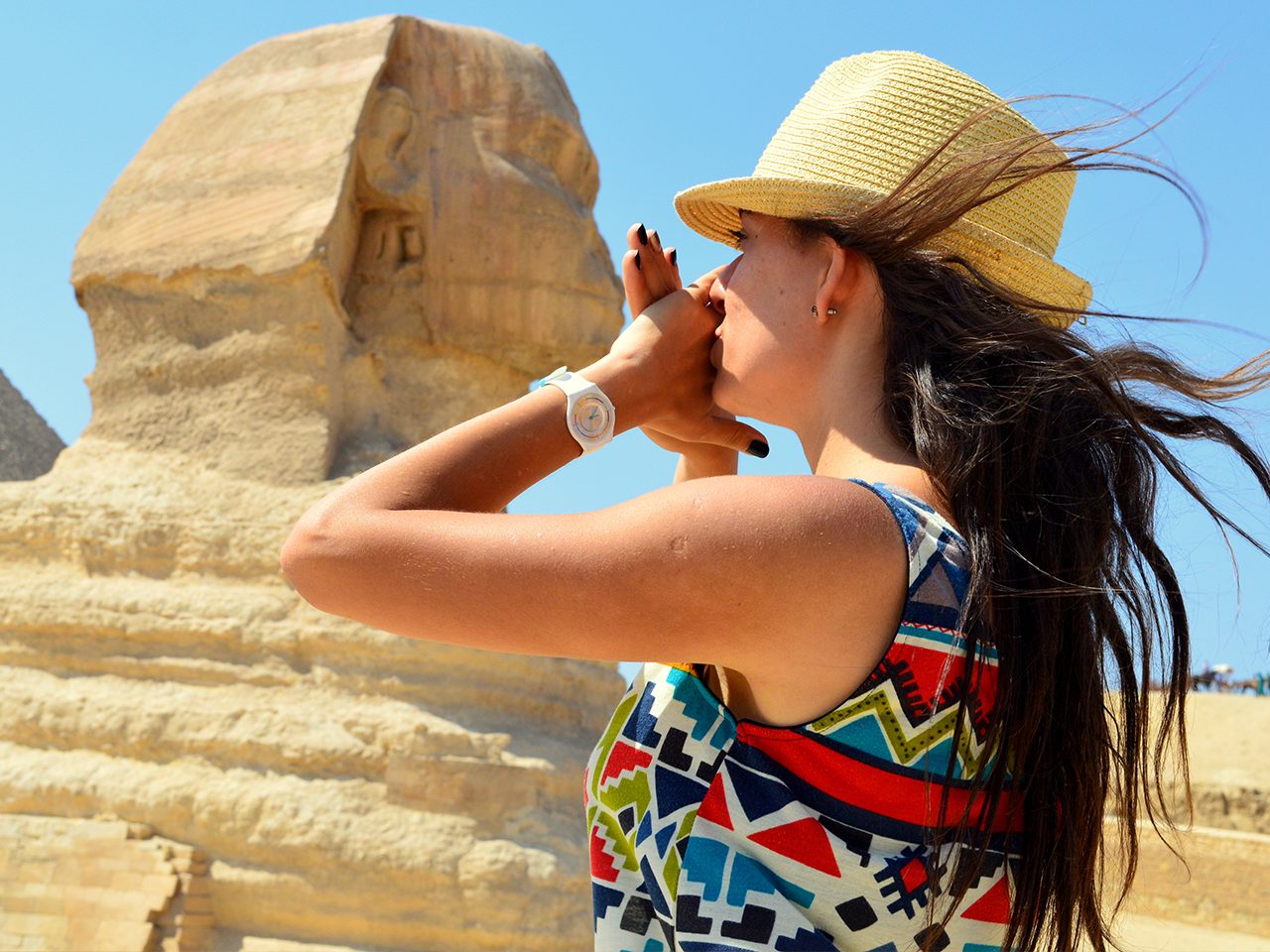
The Eternal Guardian
The Great Sphinx of Giza stands as one of the most enigmatic monuments of ancient Egypt. Carved from a single limestone outcrop, this colossal statue features the head of a human (believed to be Pharaoh Khafre) and the body of a lion, symbolizing the perfect union of human intelligence and physical strength. Read our complete Sphinx Egypt guide →
Physical Dimensions
- Length: 240 feet (73 meters)
- Height: 66 feet (20 meters)
- Face width: 13 feet (4 meters)
- Carved from natural limestone
- Originally painted in bright colors
Historical Context
- Built around 2500 BCE
- Part of Khafre's pyramid complex
- Oldest known monumental sculpture
- Faced the rising sun
- Guardian of the Giza necropolis
Symbolic Meaning
- Represents royal power and wisdom
- Guardian of sacred knowledge
- Connection to sun god Ra
- Symbol of divine protection
- Merger of human and animal powers
Archaeological Significance
Construction Methods
The Sphinx was carved from a single limestone outcrop, with additional blocks added where needed. The construction process involved:
- Careful bedrock excavation
- Precise sculptural techniques
- Multiple phases of carving
- Advanced engineering solutions
Restoration History
Throughout its history, the Sphinx has undergone several restoration efforts:
- Ancient repairs by Thutmose IV
- Roman-era restorations
- Modern conservation efforts
- Ongoing preservation work
Recent Discoveries
Modern archaeological studies have revealed:
- Hidden chambers beneath
- Water erosion patterns
- Original paint traces
- Ancient repair techniques
Mysteries and Debates
Age Controversy
- Traditional dating: 2500 BCE
- Alternative theories suggest older origin
- Water erosion debate
- Geological studies ongoing
The Missing Nose
- Lost during medieval period
- Various historical accounts
- Napoleonic era damage myths
- Conservation implications
Hidden Chambers
- Ground-penetrating radar studies
- Seismic survey findings
- Possible underground passages
- Ongoing investigations
Visitor Information
Viewing Tips
- Best photos at sunrise/sunset
- Panoramic viewing platform available
- Morning light ideal for photography
- Special viewing areas marked
Access Details
- Included in Giza plateau ticket
- Close-up viewing restricted
- Guided tours available
- Special permission for research
Conservation Notes
- Ongoing restoration work
- Climate impact monitoring
- Visitor impact management
- Protection measures in place
Visiting the Pyramids of Giza: Complete Travel Guide

Essential Visit Information
Opening Hours & Tickets
- Open daily: 8:00 AM to 5:00 PM
- General admission: 700 EGP
- Great Pyramid entry: Additional 1500 EGP
- Student discounts available with valid ID
- Credit cards accepted at main ticket office
- Just 2 km away: the new Grand Egyptian Museum houses the complete Tutankhamun collection — easy to combine in one day
Best Time to Visit
- Peak Season: October to April (cooler weather)
- Early morning: Less crowded, better photos
- Sunset visits: Beautiful golden hour views
- Avoid midday heat: 11 AM to 3 PM
- Special events during equinoxes
Getting There
- Location: 9km from central Cairo
- Taxi: ~100-150 EGP from downtown
- Uber/Careem: Available and convenient
- Tour bus: Many operators available
- Public bus: Line 355/357 from Tahrir
Visitor Tips
What to Bring
- Comfortable walking shoes
- Sun protection (hat, sunscreen)
- Water bottle (stay hydrated)
- Camera (no tripods inside pyramids)
- Cash for local vendors
Services Available
- Official guides at entrance
- Camel and horse rides
- Cafeteria and refreshments
- Restroom facilities
- Souvenir shops
Important Notes
- Dress modestly and comfortably
- Photography permits required
- Limited pyramid entry tickets daily
- Haggle for souvenirs/rides
- Book guides in advance
Tour Options
Guided Tours
- Official site guides available
- Private tours with Egyptologists
- Group tours with hotel pickup
- Photography tours available
- Special access tours (book ahead)
Additional Experiences
- Sound and Light Show (evenings)
- Camel tours around complex
- Solar boat museum visit
- Virtual reality experiences
- Desert adventure packages
Nearby Attractions
- Great Sphinx of Giza
- Valley Temple
- Solar Boat Museum
- Giza Plateau panorama point
- Local craft markets
Practical Information
Best Photo Spots
- Panorama viewing platform
- Desert viewpoint (south)
- Sphinx complex entrance
- Pyramid alignment point
- Sunset viewing area
Accessibility
- Wheelchair access to plaza
- Golf cart rentals available
- Rest areas throughout site
- Assisted tours available
- Medical services on-site
Safety Tips
- Stay with licensed guides
- Keep valuables secure
- Use official vendors only
- Carry identification
- Follow posted guidelines
Inside the Pyramids of Giza: Great Pyramid Interior
The interior of the Great Pyramid of Giza is a marvel of ancient engineering, featuring a complex system of passages, chambers, and architectural features that continue to amaze visitors and researchers alike. The internal structure was designed not only for its funerary purpose but also demonstrates the ancient Egyptians' remarkable understanding of architecture and geometry.

The Pyramid Entrance
The modern entrance to the Great Pyramid, located on the north face, leads visitors into the heart of this ancient wonder. Notable features include:
- Original entrance located 17 meters above ground level
- Modern access tunnel created by Al-Mamun in 820 AD
- Massive limestone blocks framing the entrance
- Sophisticated ventilation system
- Temperature-controlled environment

Internal Passages
The pyramid's internal structure features several remarkable passages and chambers:
- The Grand Gallery's impressive corbelled ceiling
- Ascending and descending corridors
- Precise geometric alignments
- Original builder's marks still visible
- Ancient graffiti from various periods
Main Interior Features
The Grand Gallery
- Length: 47 meters (153 feet)
- Height: 8.6 meters (28 feet)
- Corbelled walls with 7 overlapping layers
- Polished limestone surfaces
- Original handholds still visible
- Sophisticated air shaft system
King's Chamber
- Constructed entirely of granite blocks
- Dimensions: 10.47 × 5.234 × 5.858 meters
- Granite sarcophagus still in place
- Two air shafts for ventilation
- Five stress-relieving chambers above
- Precise geometric alignments
Queen's Chamber
- Located at the 25th course of masonry
- Mysterious niche in east wall
- Two unexplained shafts
- Gabled ceiling design
- Original purpose still debated
- Recent robot explorations
Architectural Details
Construction Techniques
- Precise stone fitting methods
- Advanced leveling systems
- Internal ramp theories
- Counterweight systems
- Acoustic properties
Environmental Controls
- Constant temperature maintenance
- Natural ventilation system
- Humidity regulation
- Air flow patterns
- Thermal stability
Modern Discoveries
- Void above Grand Gallery
- Hidden chambers detected
- Original tool marks
- Construction graffiti
- New passage systems
Visitor Information
Access Guidelines
- Limited daily tickets available
- Separate entrance fee required
- Morning visits recommended
- Physical fitness required
- Guided tours available
What to Expect
- Narrow passages
- Steep climbing required
- Warm temperature inside
- Limited ventilation
- No photography allowed
Preservation Efforts
- Visitor number restrictions
- Climate monitoring
- Structural integrity checks
- Conservation projects
- Research activities
The Saqqara Pyramid Complex: Beyond Giza's Pyramids
The Step Pyramid of Djoser at Saqqara represents the birth of pyramid architecture in ancient Egypt. Built during the Third Dynasty around 2630 BCE, this revolutionary monument marked the transition from simple mastaba tombs to the magnificent pyramids that would follow. The complex remains one of the most important archaeological sites in Egypt, offering unique insights into the evolution of ancient Egyptian architecture and burial practices.

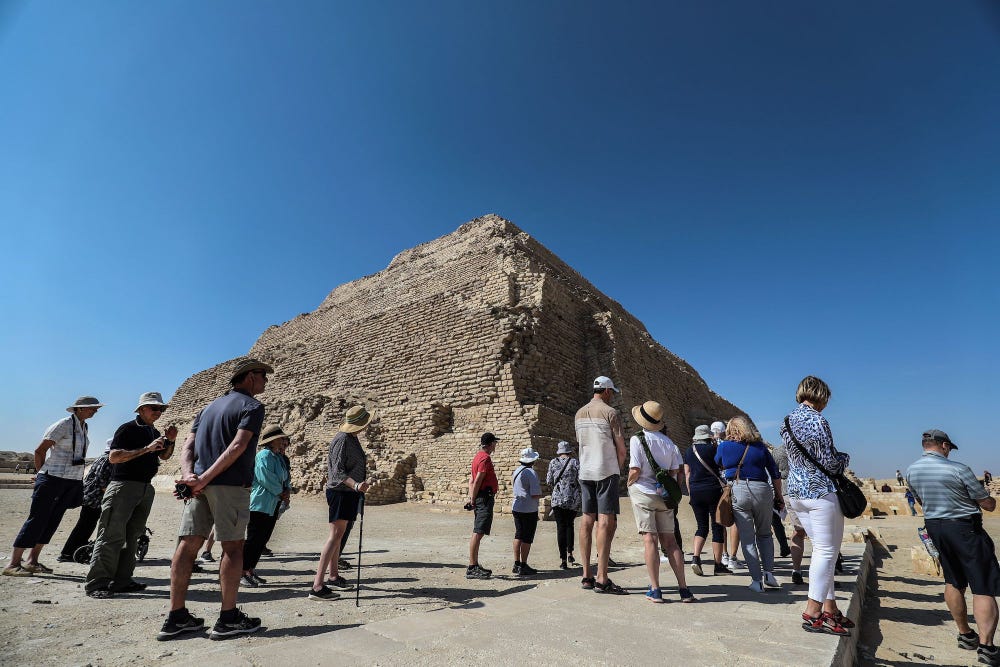
Revolutionary Architecture
The Step Pyramid complex demonstrates the rapid evolution of architectural knowledge in ancient Egypt:
- First large-scale stone building in the world
- Original height of 62 meters (203 feet)
- Six distinct steps or mastaba layers
- Complex of courtyards and ceremonial structures
- Innovative use of limestone blocks

Interior Structure
The internal structure reveals sophisticated engineering:
- Extensive network of underground tunnels
- Central burial shaft 28 meters deep
- Granite burial chamber
- Multiple storage galleries
- Early examples of corbelled roofing

The Necropolis
Saqqara served as the main necropolis for Memphis:
- Spans over 7 kilometers in length
- Continuous use for over 3,000 years
- Contains numerous mastabas and tombs
- Multiple pyramid complexes
- Vast archaeological importance
Interior Treasures

Hieroglyphic Inscriptions
- Pyramid Texts and religious inscriptions
- Royal titulary and declarations
- Ancient restoration records
- Builder's marks and notations
- Historical documentation

Burial Chamber
- Sophisticated burial arrangements
- Granite sarcophagus placement
- Ritual offering spaces
- Complex of underground galleries
- Evidence of ancient ceremonies
Archaeological Significance
- Oldest known large-scale stone building
- Blueprint for later pyramid development
- Evidence of architectural evolution
- Insights into burial practices
- Religious and cultural documentation
Complex Features
Architectural Elements
- Enclosure wall with 14 dummy gates
- Entrance colonnade
- Great South Court
- Heb-Sed festival courtyard
- North and South houses
Construction Details
- Local limestone blocks
- Fine limestone casing
- Reed-bundle columns
- Innovative corbelled ceilings
- Complex foundation system
Preservation Status
- Ongoing restoration projects
- Structural stabilization work
- Conservation of decorative elements
- Archaeological research
- Tourism management plans
Pyramids of Giza: Frequently Asked Questions
Quick answers to the most common questions about visiting the Pyramids of Giza.
How old are the Pyramids of Giza?
The Pyramids of Giza were built over 4,500 years ago during Egypt's Fourth Dynasty (c. 2580–2510 BCE). The Great Pyramid of Khufu was completed around 2560 BCE.
Can you go inside the Pyramids of Giza?
Yes, visitors can enter the Great Pyramid of Khufu with a separate ticket (1500 EGP additional to general admission). Access is limited daily and requires climbing through narrow passages.
What is the best time to visit the Pyramids of Giza?
The best time to visit is October to April for cooler weather. Early morning visits (8–10 AM) offer fewer crowds and better photography conditions.
How much does it cost to visit the Pyramids of Giza?
General admission costs 700 EGP. Entry to the Great Pyramid requires an additional 1500 EGP ticket. Student discounts are available with valid ID.
How do you get to the Pyramids of Giza from Cairo?
The Pyramids are 9km from central Cairo. You can take a taxi (100–150 EGP), Uber/Careem, tour bus, or public bus line 355/357 from Tahrir Square.
The Enduring Legacy of the Pyramids of Giza

The Pyramids of Giza stand as eternal sentinels of human achievement, their massive forms rising from the desert as testaments to ancient Egyptian ingenuity, determination, and spiritual devotion. For more than 4,500 years, they have inspired wonder, sparked imagination, and challenged our understanding of what ancient civilizations could achieve.
Fascinating Facts
- The Great Pyramid's stones would be enough to build a 2-foot-high wall around France
- The pyramids' bases are perfectly level, with corners that are almost exactly 90 degrees
- The structures have survived multiple earthquakes due to their unique architectural design
- Ancient Egyptians called the Great Pyramid "Ikhet," meaning "Glorious Light" due to its polished limestone surface
- The pyramids' orientation to true north is more accurate than the Paris Observatory
Enduring Mysteries
- The purpose of the Queen's Chamber's mysterious shafts remains unexplained
- How ancient Egyptians achieved such precise measurements without modern tools
- The exact method used to transport and lift the massive stone blocks
- The significance of various astronomical alignments within the structures
- The location of many of the original artifacts and treasures
Modern Significance
- Continues to be Egypt's most recognizable symbol and tourist attraction
- Provides ongoing insights into ancient engineering and astronomy
- Inspires modern architectural designs worldwide
- Serves as a crucial resource for archaeological research
- Represents humanity's eternal quest to leave lasting monuments
A Timeless Story
Perhaps the most remarkable aspect of the pyramids is not just their size or precision, but their ability to continue revealing new secrets. In 2017, scientists using cosmic ray technology discovered a previously unknown void above the Grand Gallery in the Great Pyramid. This discovery reminded us that even after centuries of study, these magnificent structures still hold mysteries waiting to be uncovered.
The pyramids also tell a deeply human story. They speak not just of pharaohs and monuments, but of the thousands of skilled workers who devoted their lives to creating something greater than themselves. Recent discoveries of workers' villages, complete with evidence of sophisticated medical care and well-organized labor, have helped us understand that the pyramids were built not by slaves, but by skilled craftsmen who took pride in their work.
As we continue to study and admire these magnificent structures, they remind us of humanity's potential for greatness and our eternal desire to leave something of ourselves for future generations. The Pyramids of Giza remain not just as tombs or monuments, but as bridges across time, connecting us to our ancient past while inspiring us to consider what legacy we will leave for the future.
Watch the Adventure
A Once-in-a-Lifetime Opportunity
Have you ever wondered what it would be like to have unrestricted access to the Great Pyramids of Egypt? To explore the hidden chambers, the underground tombs, and even swim beneath these ancient wonders? In this incredible adventure, MrBeast and his team did exactly that. With only 100 hours to uncover the mysteries of the pyramids, they embarked on a journey that took them to places very few have ever seen.
Unprecedented Access: Granted rare permission to explore restricted areas of the pyramids, including forbidden chambers and ancient tombs.
The Great Pyramid of Khufu
The journey began inside the Great Pyramid of Giza, also known as the Pyramid of Khufu, built approximately 4,500 years ago. As they maneuvered through its narrow corridors, they reached the Grand Gallery, an awe-inspiring passageway that leads to what Egyptologists believe is the King's Chamber, the supposed final resting place of Pharaoh Khufu.
Secret Chambers and Hidden Mysteries
The passageways of the Great Pyramid are like a labyrinth, and each turn left them wondering how much of this colossal structure remains unexplored. They ventured through steep corridors, some barely large enough to crawl through, and reached a massive chamber where it is believed Khufu's mummified body once rested.
The Underwater Tomb
Taking the adventure further, the team found themselves at an underground tomb, rumored to be the Tomb of Osiris, the Egyptian god of the underworld. To reach it, they had to descend a series of ladders before diving into deep, dark waters. The tomb was eerily silent, with an ancient sarcophagus at its center, believed to be a symbolic gateway to the afterlife.
The Pyramid of Khafre
The next stop was the Pyramid of Khafre, which still has remnants of its original casing at the top. Descending 100 feet below the surface, they found another burial chamber, once believed to be the resting place of Pharaoh Khafre. Ancient graffiti left by explorers who had entered the tomb centuries before added to the mystery.
The Highest Chamber
Climbing inside the Great Pyramid was an extreme challenge. The passageways are steep, narrow, and barely lit, making every step an effort. The team discovered remarkable inscriptions left by the very workers who built the pyramid, proving they were built by skilled laborers, not extraterrestrial beings as some conspiracy theories suggest.
The Workman's Tombs
A visit to the Workman's Tombs provided concrete evidence of human construction. These burial sites housed the remains of the workers who built the pyramids, their skeletons showing clear signs of intense manual labor. The team even participated in an active excavation, holding a 4,600-year-old skull.
Inside the Sphinx
With the guidance of Dr. Zahi Hawass, one of Egypt's leading archaeologists, the team entered a chamber inside the Sphinx. While the chamber was empty, they left their own mark—burying a golden artifact for future explorers to discover.
A Bird's Eye View
The team took a helicopter ride over the Giza Plateau, providing a new perspective on the pyramids' scale and precision. These structures, built thousands of years ago, still dominate the desert landscape.
Special Thanks & Credits
This unprecedented access was made possible through collaboration with:
- Egypt Film Commission (www.egyptfilming.com)
- Mr. Ahmed S. Badawi
- Mrs. Riham Elghazali
- Mr. Abdallah Kamel
- Ministry of Tourism and Antiquities
- Leslie Greif
- Nia Samara Paine
- Mostafa Lotfy