Port Said
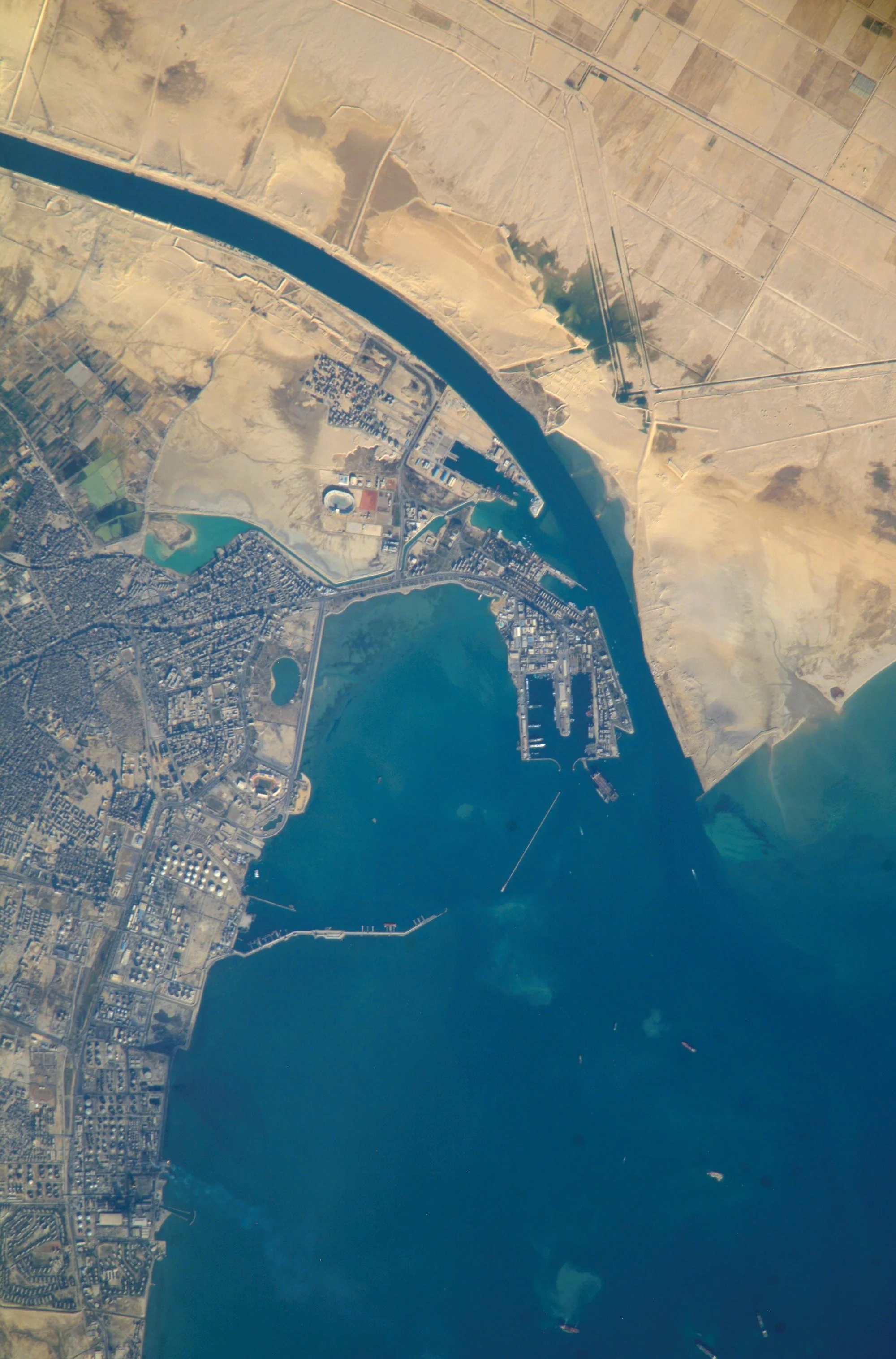
Northern terminus on the Mediterranean Sea. Founded 1859 specifically to serve the canal construction. Major shipping and free zone hub.
Egypt's man-made waterway connecting the Mediterranean and Red seas - 193km long, opened in 1869, and still one of the most important shipping routes in the world.
The Suez Canal is a 193-kilometre (120-mile) artificial sea-level waterway in Egypt that connects the Mediterranean Sea to the Red Sea via the Isthmus of Suez. It is one of the busiest shipping lanes in the world, carrying about 12% of global trade and roughly 30% of all container traffic.
Unlike most canals, the Suez Canal has no locks - the Mediterranean and the Red Sea sit at almost the same elevation, so ships pass directly through without being raised or lowered. The canal is operated by the Suez Canal Authority (SCA), an Egyptian state-owned body.
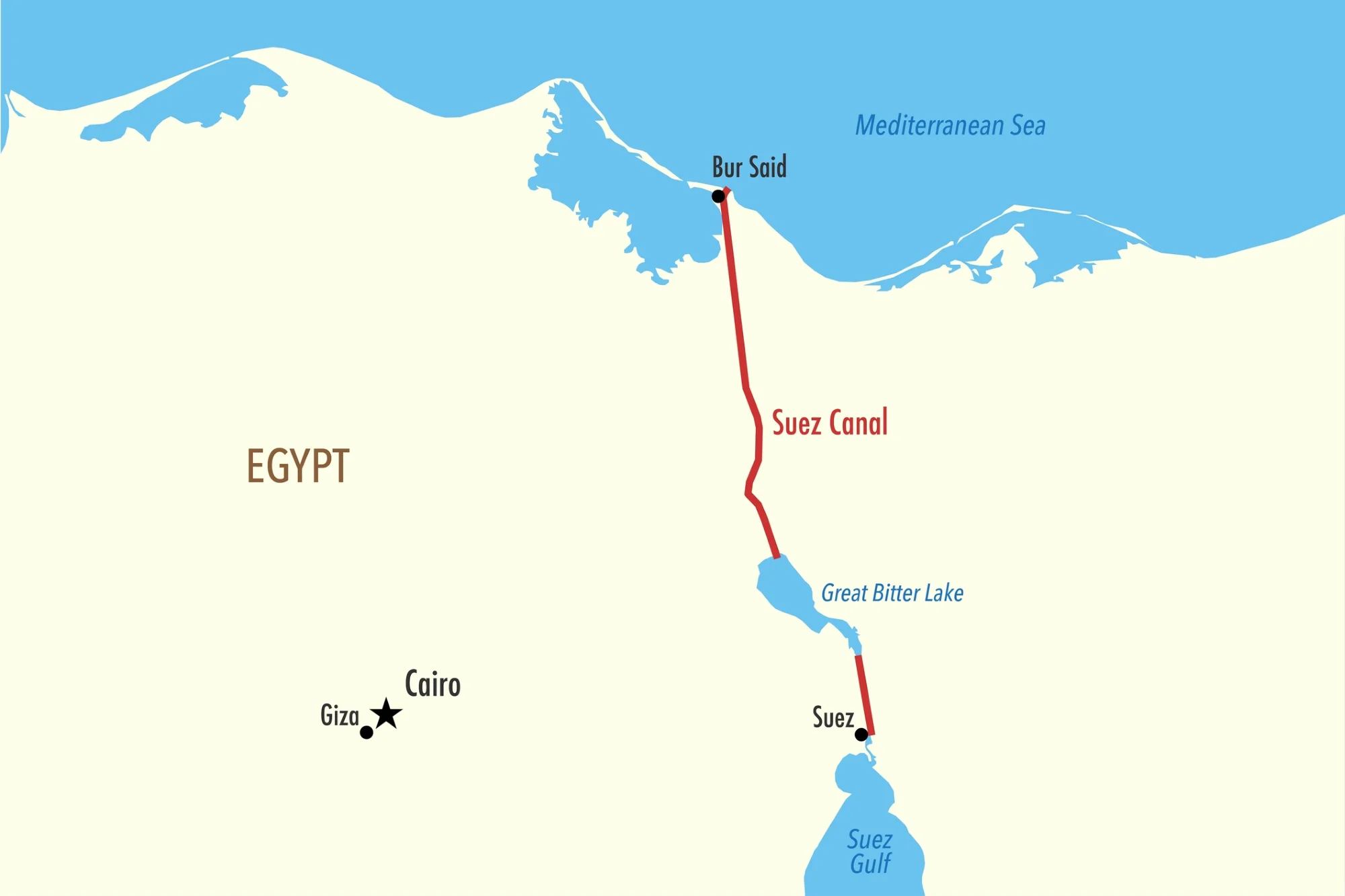
The Suez Canal is located in north-eastern Egypt, cutting across the Isthmus of Suez between the city of Port Said on the Mediterranean Sea and the city of Suez on the Red Sea. The midpoint city of Ismailia sits roughly halfway along the canal.
Geographic coordinates: 30.5852° N, 32.2654° E. The canal runs almost due north-south through the desert and connects four artificial lakes along its route, including the Great Bitter Lake.
Northern terminus on the Mediterranean Sea. Founded 1859 specifically to serve the canal construction. Major shipping and free zone hub.
Southern terminus on the Red Sea (Gulf of Suez). Ancient port city that gave the canal its name.
Midpoint city on the Great Bitter Lake. Founded 1863. Suez Canal Authority headquarters and center of operations.
Location of the Suez Canal Bridge (El Salam Bridge), the only road bridge crossing the canal.
All the numbers you might want to know about the Suez Canal at a glance.
| Fact | Value |
|---|---|
| Total length | 193.30 km (120.11 mi) |
| Width (surface) | 313 m (1,027 ft) |
| Depth | 24 m (79 ft) |
| Locks | None - sea-level canal |
| Opened | 17 November 1869 |
| Construction | 1859-1869 (10 years) |
| Workers | ≈ 1.5 million Egyptians |
| Operator | Suez Canal Authority (Egypt) |
| Average transit time | 12-16 hours |
| Ships per year | ≈ 18,000-20,000 |
| Share of world trade | ≈ 12% |
| Annual revenue | ≈ $8-9 billion (Egypt's third-largest source of foreign currency) |
The Suez Canal was conceived and built under the direction of the French diplomat and engineer Ferdinand de Lesseps. In 1854, de Lesseps obtained a concession from Sa'id Pasha, the Ottoman viceroy of Egypt, to form the Suez Canal Company. Construction began on 25 April 1859 and the canal opened on 17 November 1869.
Although de Lesseps directed the project and the engineering plans were largely the work of Austrian engineer Alois Negrelli, the canal was dug almost entirely by Egyptian labour. An estimated 1.5 million Egyptian workers took part in construction over the ten years, often under brutal conditions, and tens of thousands died from cholera, dehydration and accidents.
Funding came from a mixture of Egyptian state investment and shares sold mainly in France. The Egyptian government's stake was sold to Britain in 1875 to cover state debt, and the canal was operated by the Anglo-French Suez Canal Company until President Gamal Abdel Nasser nationalised it in 1956. Since then it has been owned and operated by the Suez Canal Authority, an Egyptian state body.
Ideas for a canal connecting the Mediterranean and the Red Sea date back as far as the pharaohs. A series of ancient canals between the Nile and the Red Sea were dug by the pharaoh Senusret III (around 1850 BC) and later by Darius I of Persia, but they fell into disrepair over time.
Pharaoh Senusret III dug ancient canals between the Nile and the Red Sea.
Darius I of Persia extended/rebuilt earlier ancient canals; later fell into disrepair over time.
Ferdinand de Lesseps obtained a concession from Sa'id Pasha (Ottoman viceroy of Egypt) to form the Suez Canal Company.
Construction started on the modern Suez Canal under Ferdinand de Lesseps.
Modern canal opens with a major celebration attended by Empress Eugénie of France.
Britain buys Egypt's shares in the canal company to cover state debt.
Declares the canal open to ships of all nations in war and peace.
President Gamal Abdel Nasser nationalises the canal, triggering the Suez Crisis (Britain, France and Israel attack Egypt; the U.S. and U.S.S.R. force a withdrawal).
Canal closed for eight years following the Six-Day War. Fifteen ships, the so-called Yellow Fleet, remain trapped in the Great Bitter Lake the entire time.
President Anwar Sadat reopens the canal in a televised ceremony, ending the longest closure in its history.
Egypt opens the New Suez Canal - a 35-km parallel channel that allows two-way traffic along part of the route.
The container ship Ever Given runs aground and blocks the canal for six days.
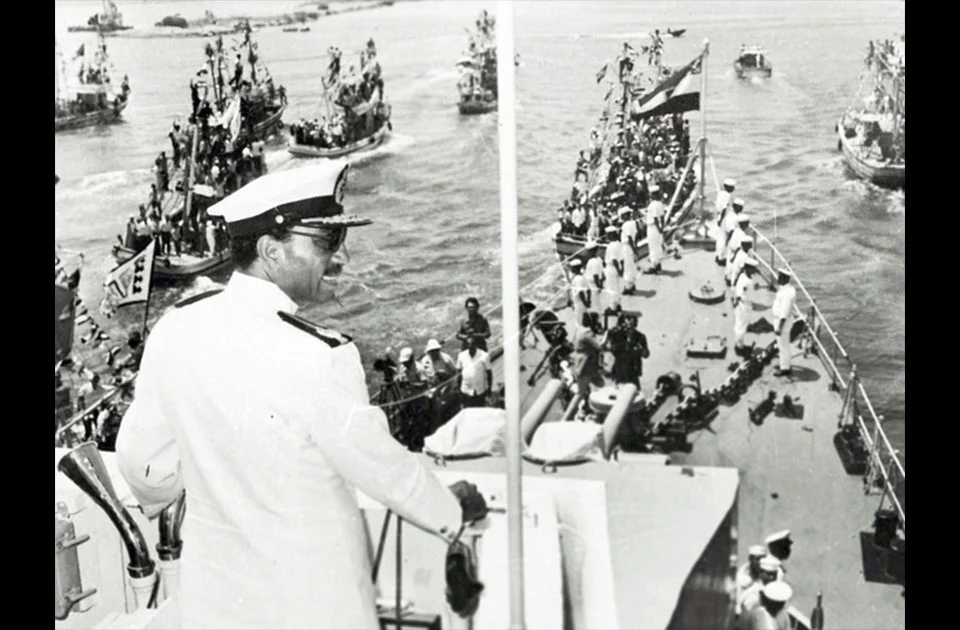
President Anwar Sadat at the official reopening of the Suez Canal in 1975 after eight years of closure following the Six-Day War.
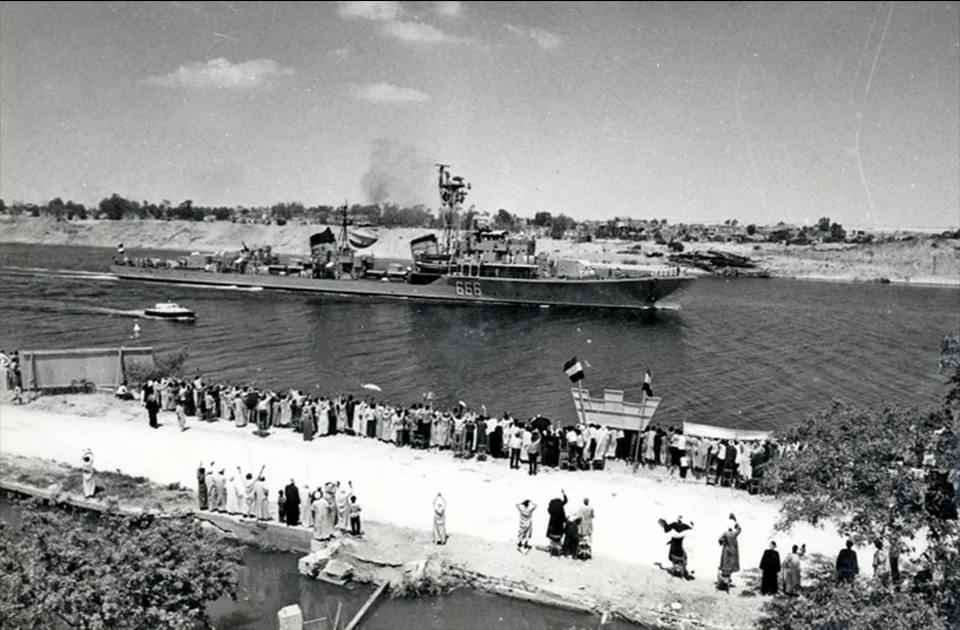
Egyptian Navy escort during the canal reopening ceremony in 1975.
The most famous incident in the canal's modern history - six days that disrupted global trade.
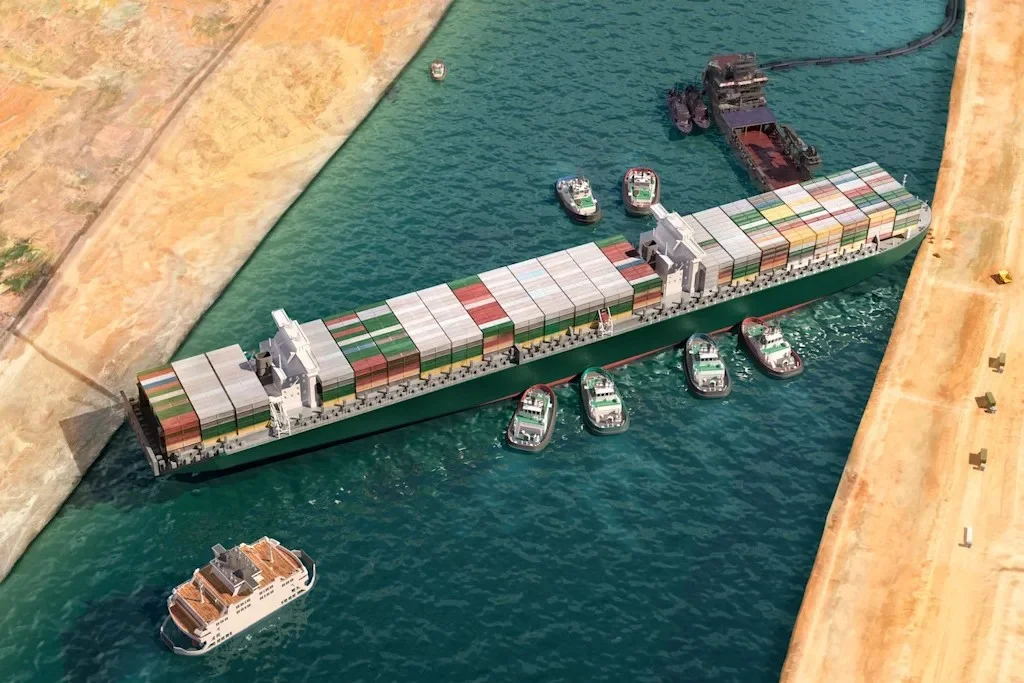
On 23 March 2021, the 400-metre-long Taiwanese-operated container ship Ever Given ran aground while transiting the canal in heavy winds and a sandstorm. The ship became wedged diagonally across the waterway, completely blocking traffic in both directions.
More than 400 ships queued at either end of the canal during the closure. Salvage teams from the Suez Canal Authority and the Dutch firm Smit Salvage worked around the clock with tugboats and dredgers.
The ship was finally refloated on 29 March 2021 after six days, with the help of a particularly high tide.
The blockage delayed an estimated $9.6 billion of trade per day and rippled through global supply chains for months. It is the most famous incident in the canal's modern history.
Earlier major closures include the 1956 Suez Crisis closure (a few months) and the longer 1967-1975 closure following the Six-Day War, when fifteen ships were stranded in the Great Bitter Lake for eight years.
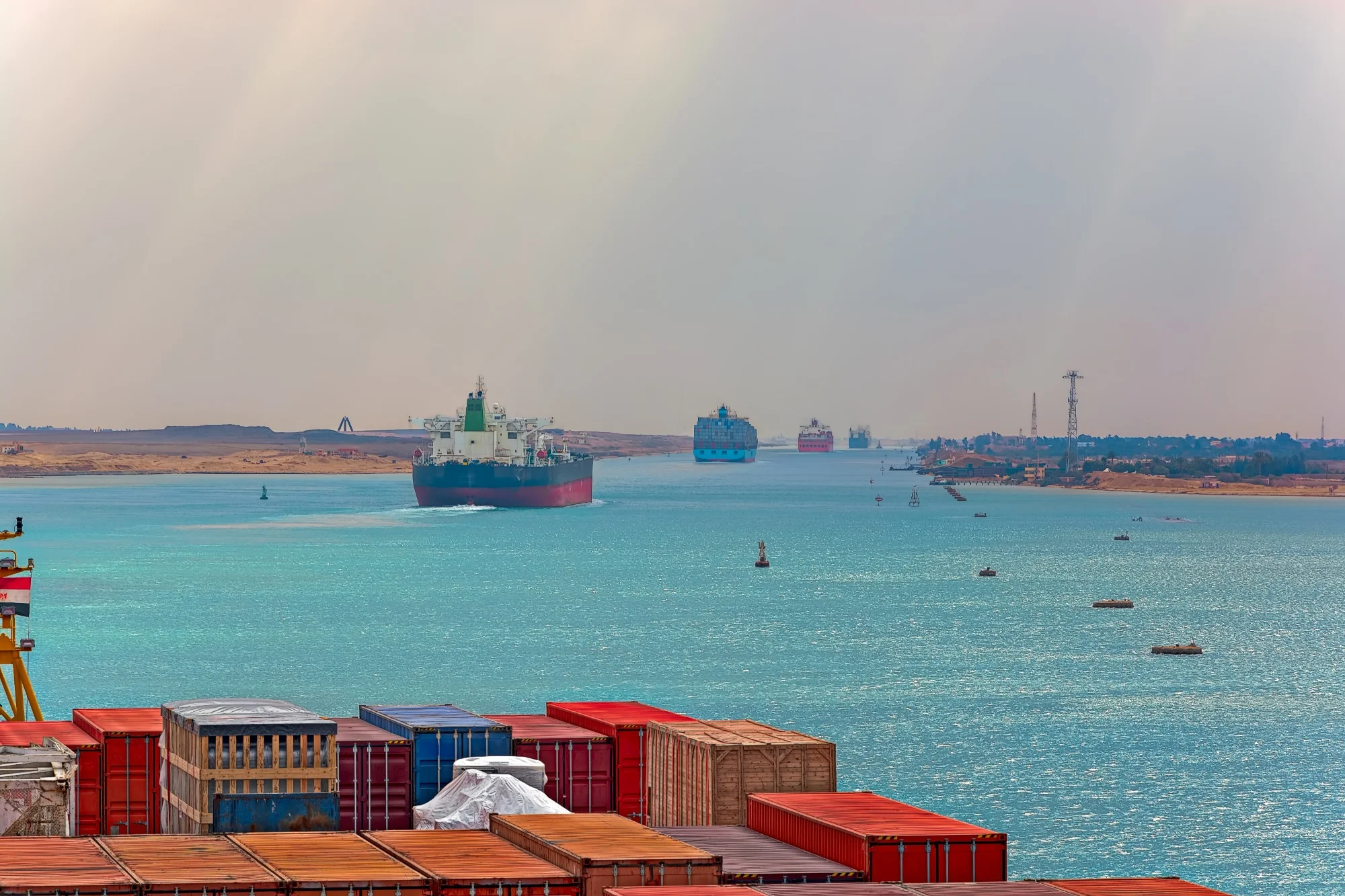
About 50 ships per day transit the Suez Canal - roughly 18,000-20,000 each year. A typical north-south transit takes 12 to 16 hours, organised into northbound and southbound convoys that pass each other in the two-way New Suez Canal section and in the Great Bitter Lake.
≈ 50 ships per day - roughly 18,000-20,000 each year. A typical north-south transit takes 12 to 16 hours, organised into northbound and southbound convoys.
Ships pay tolls based on tonnage, ship type and cargo. Average toll: roughly $300,000 to $700,000 per vessel. Largest container ships can pay over $1 million per transit.
Total toll revenue is the canal's main income - about $8-9 billion a year, making it Egypt's third-largest source of foreign currency after tourism and remittances.
All ships must use a Suez Canal Authority pilot during the transit, and large vessels are escorted by tugs in case of grounding or steering failure.
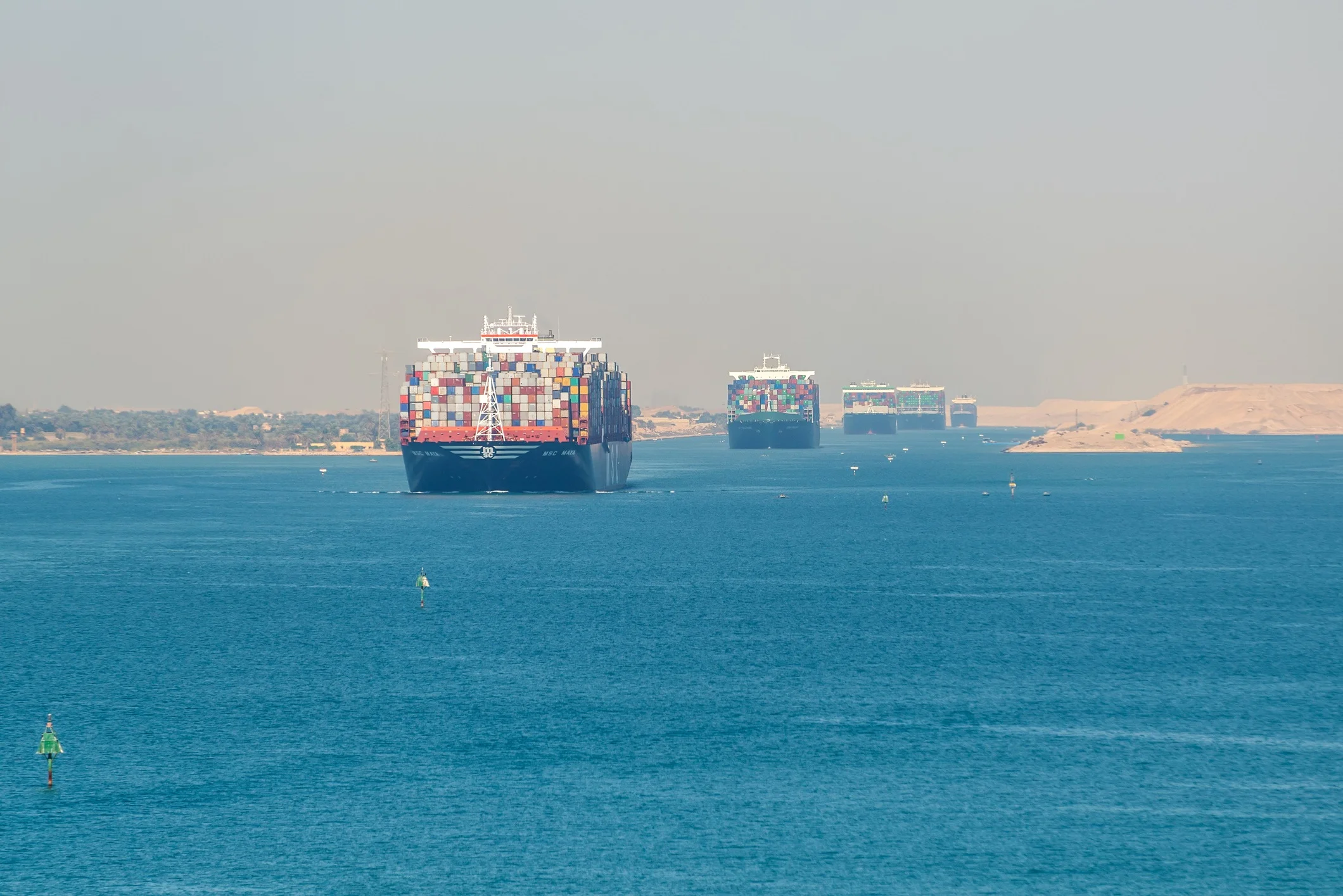
Container ships in convoy moving through the canal during daily operations.
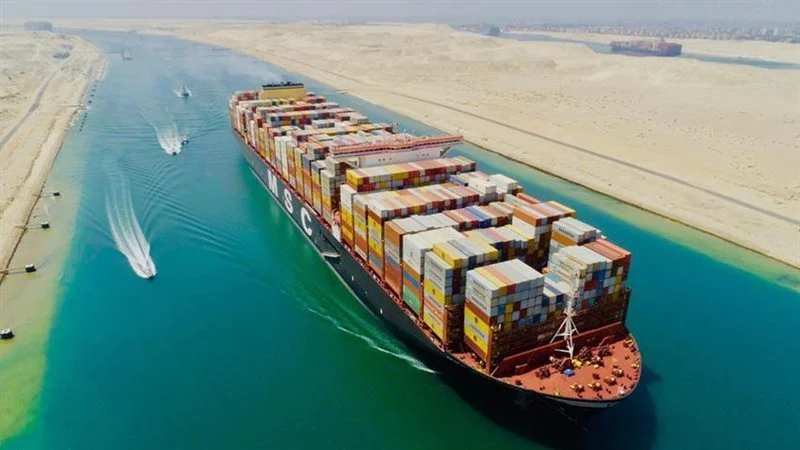
One of the largest container ships in the world transiting through the canal.
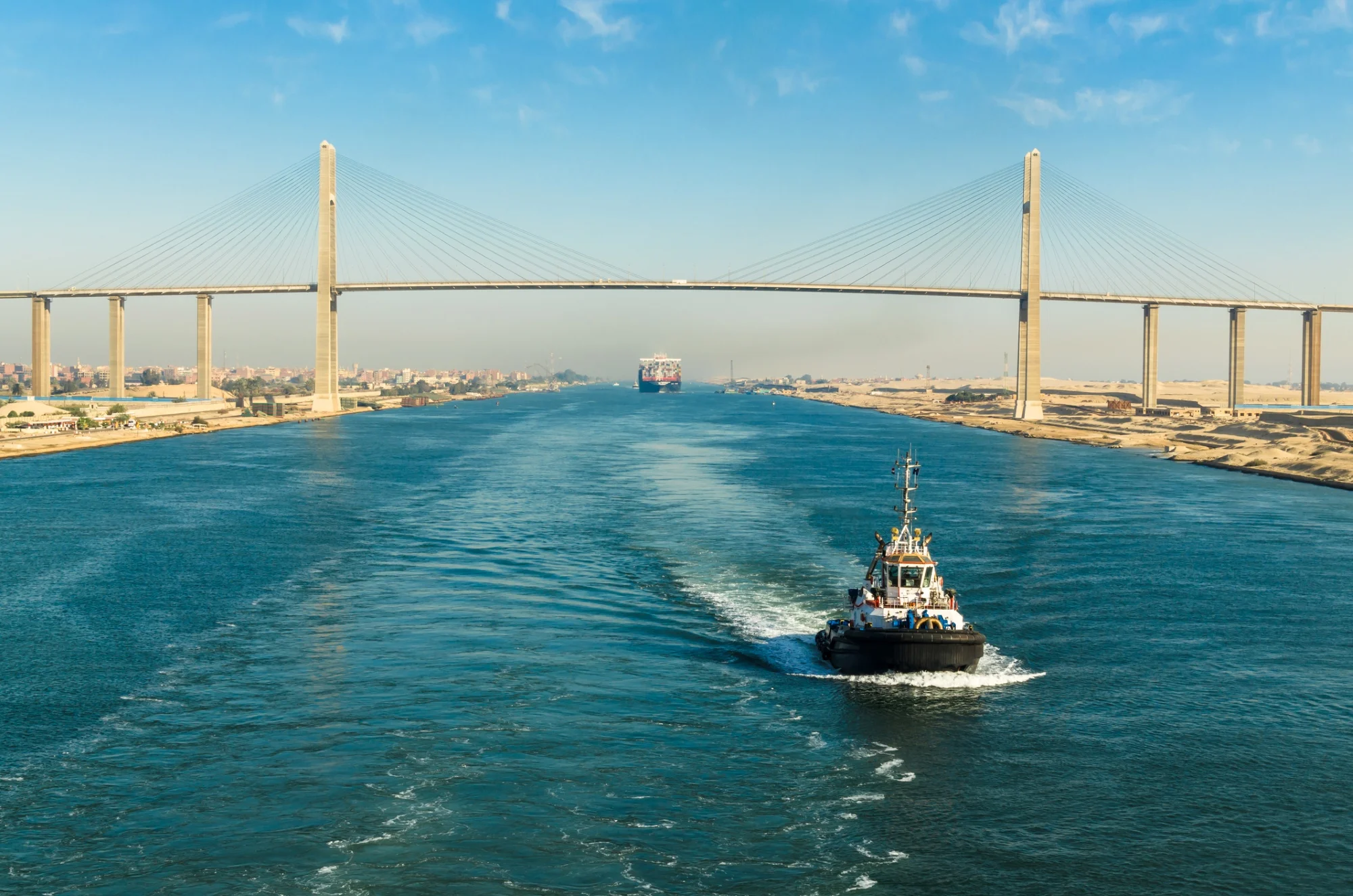
The canal is crossed by the Suez Canal Bridge (also called the Egyptian-Japanese Friendship Bridge or El Salam Bridge), a 70-metre-high cable-stayed road bridge near Qantara, opened in 2001. It is the only road bridge over the canal - at most other points, vehicles cross via underwater tunnels (the Ahmed Hamdi Tunnel near Suez) or vehicle ferries.
10 images showcasing the full story of the canal - from aerial overviews to the famous Ever Given incident.
Aerial view of the entire Suez Canal route
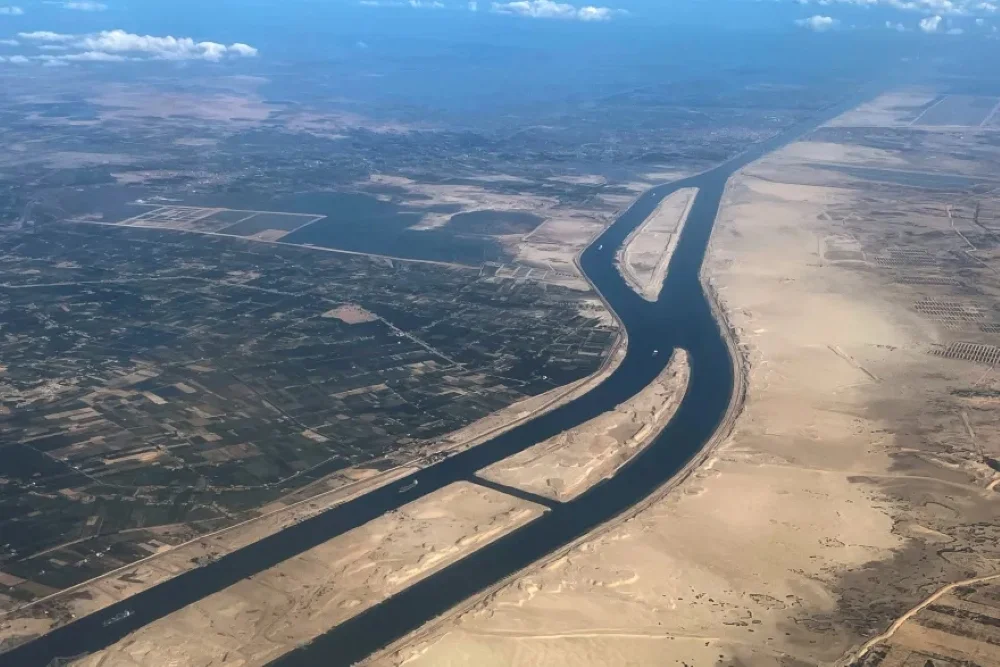
New Suez Canal allows two-way traffic
Canal cutting through the Egyptian desert
Container ships in convoy through the canal
The famous 2021 blockage that captured global attention
Massive container ship in transit
Egyptian-Japanese Friendship Bridge near Qantara
Suez Canal route from Port Said to the Gulf of Suez
President Anwar Sadat at the official reopening of the Suez Canal in 1975
Egyptian Navy escort during the canal reopening ceremony
Quick answers to the most common questions about the Suez Canal - 15 detailed Q&As.
The Suez Canal is located in north-eastern Egypt. It runs roughly north-south for 193 km across the Isthmus of Suez, connecting Port Said on the Mediterranean Sea to the city of Suez on the Red Sea, with Ismailia at its midpoint. Coordinates: 30.5852° N, 32.2654° E.
The Suez Canal is 193.30 kilometres long (about 120 miles). It is one of the longest sea-level canals in the world.
The Suez Canal is 24 metres deep (79 feet). The depth has been increased several times since it opened, and the channel is wide enough for the largest container ships and tankers in service today.
The Suez Canal is 313 metres wide at the surface and 121 metres wide at the bottom. The 35-km New Suez Canal section opened in 2015 is wide enough for two-way traffic.
The modern Suez Canal was built between 1859 and 1869 under the direction of the French diplomat Ferdinand de Lesseps, with engineering plans largely by Alois Negrelli. The canal was dug by an estimated 1.5 million Egyptian workers, tens of thousands of whom died during construction.
Construction began on 25 April 1859 and the canal opened on 17 November 1869, after roughly ten years of work.
The Suez Canal was built to provide a direct sea route between Europe and Asia without having to sail around Africa. Before 1869, ships from Europe to India or East Asia had to round the Cape of Good Hope - the canal cut that journey by roughly 7,000 km.
The Suez Canal is owned by Egypt and operated by the Suez Canal Authority (SCA), an Egyptian state body. It was nationalised in 1956 by President Gamal Abdel Nasser, ending Anglo-French control.
The canal is controlled by the Suez Canal Authority of Egypt. The Convention of Constantinople (1888) requires the canal to be open to ships of all nations in war and peace, but operational control rests with Egypt.
Yes. The Suez Canal is entirely man-made - an artificial sea-level waterway dug across the Egyptian desert between 1859 and 1869.
The Suez Canal connects the Mediterranean Sea (at Port Said in the north) with the Red Sea (at the Gulf of Suez in the south), via the Isthmus of Suez. It links Europe and Asia by sea without rounding Africa.
The Suez Canal is in Egypt. The entire length of the canal lies within Egyptian territory.
No. The Suez Canal has no locks. The Mediterranean and the Red Sea sit at almost the same elevation, so ships pass directly through without being raised or lowered.
The most famous recent blockage was caused by the container ship Ever Given, which ran aground on 23 March 2021 and blocked the canal for six days until 29 March 2021. Earlier closures include the 1956 Suez Crisis and the longer 1967-1975 closure following the Six-Day War.
Tolls vary by tonnage, ship type and cargo. The average toll is roughly $300,000-$700,000 per ship, but the largest container ships can pay over $1 million per transit. Total toll revenue is about $8-9 billion per year for the Suez Canal Authority.