Panoramic Cairo Views
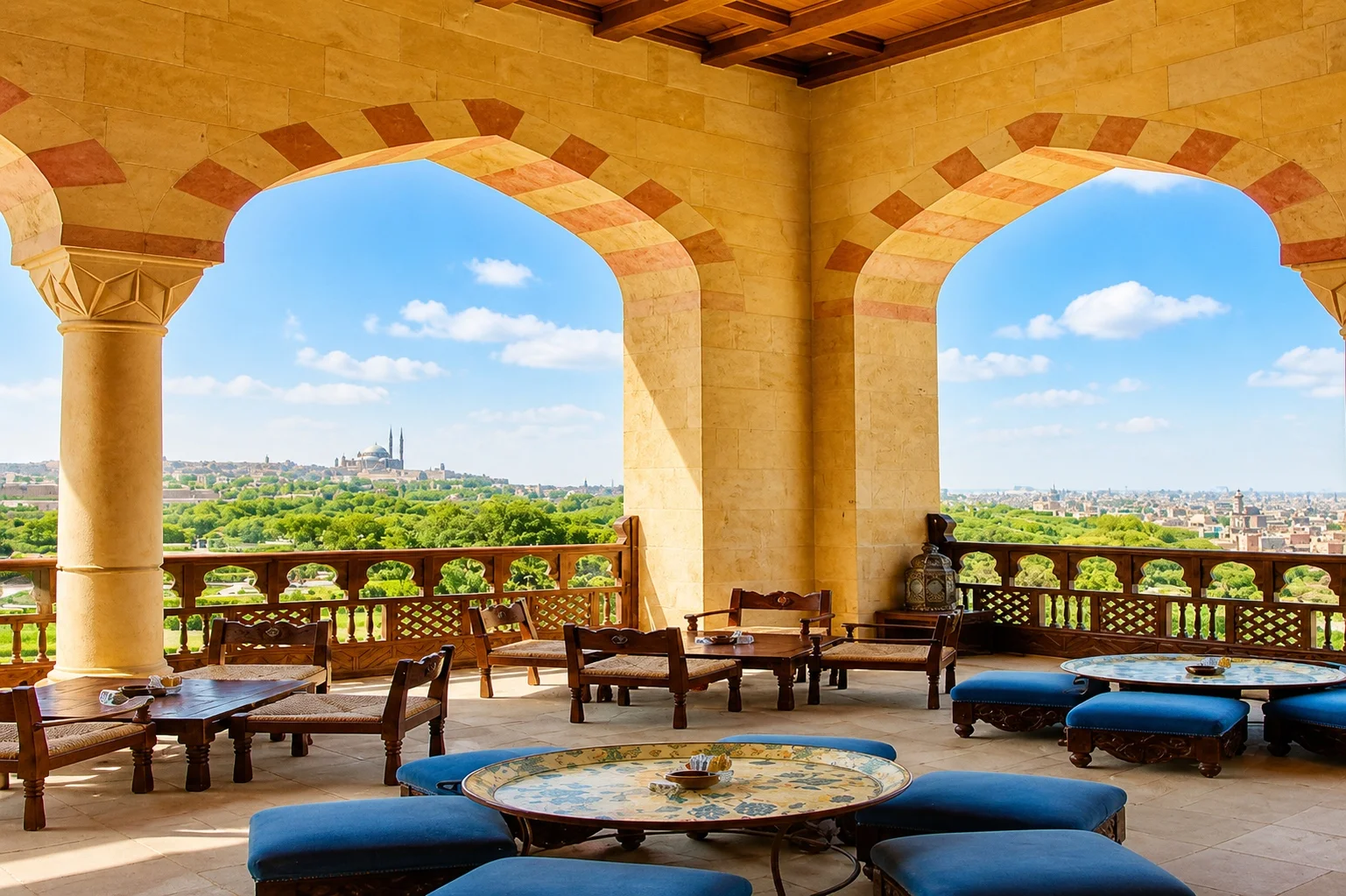
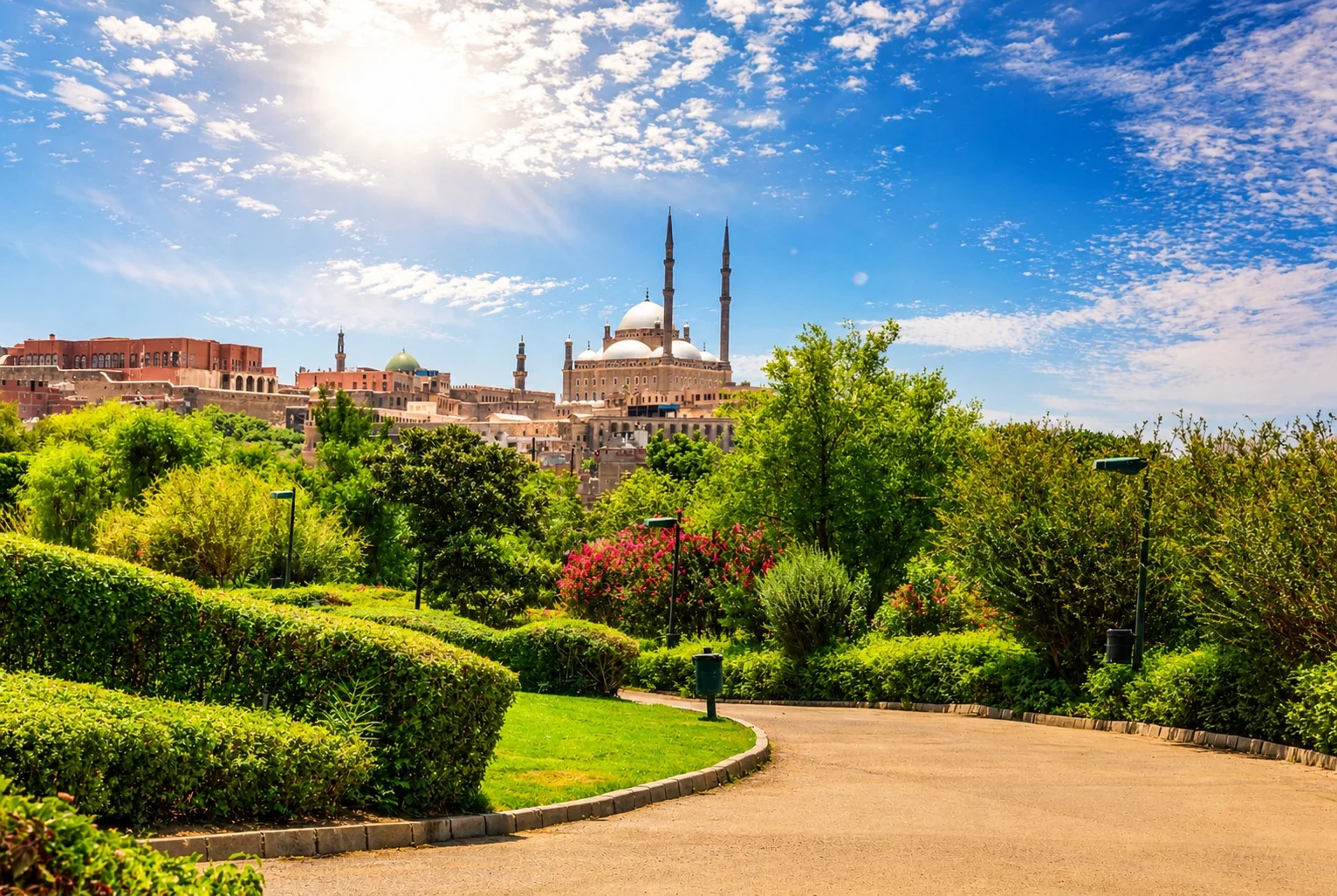
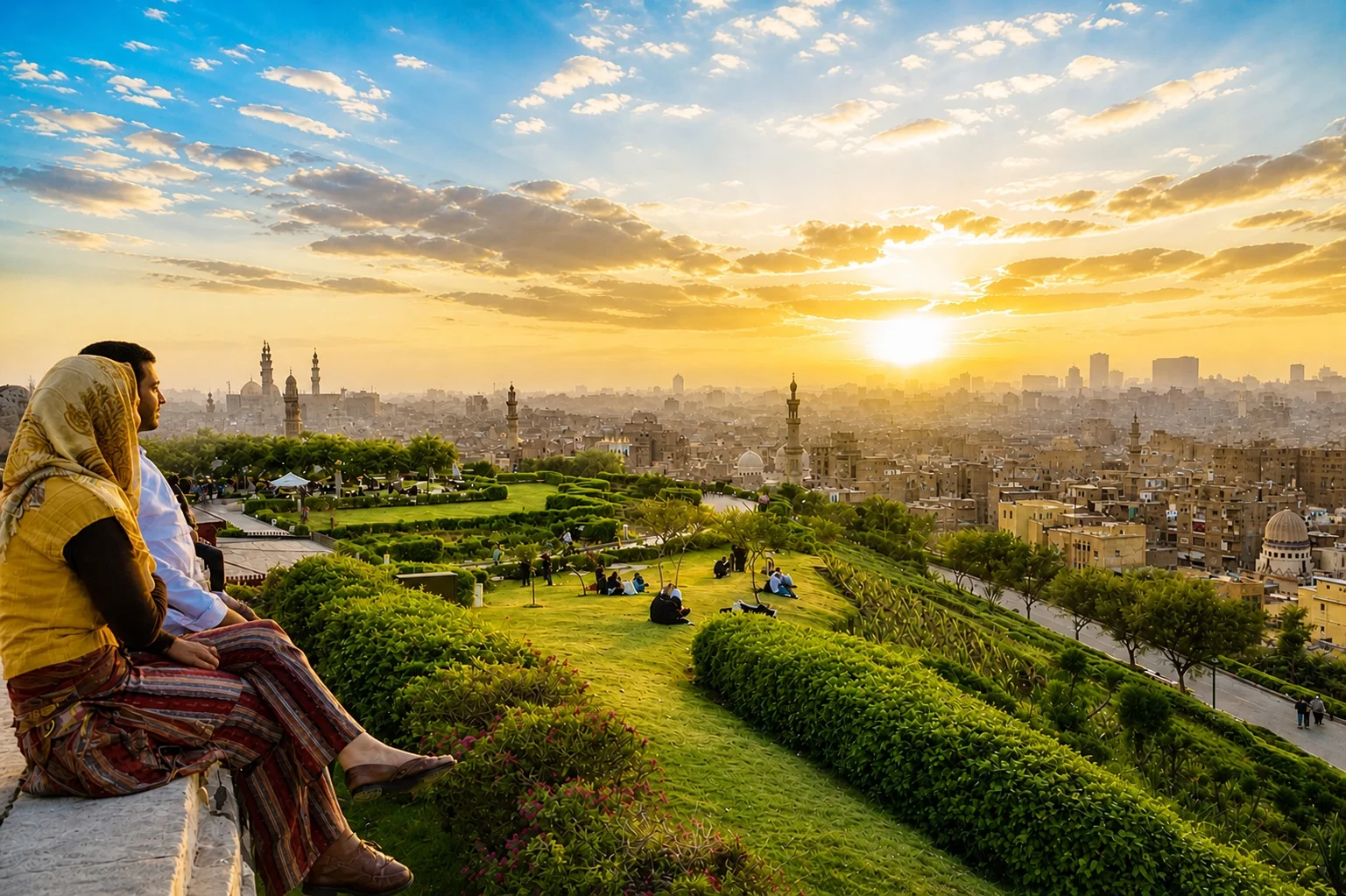
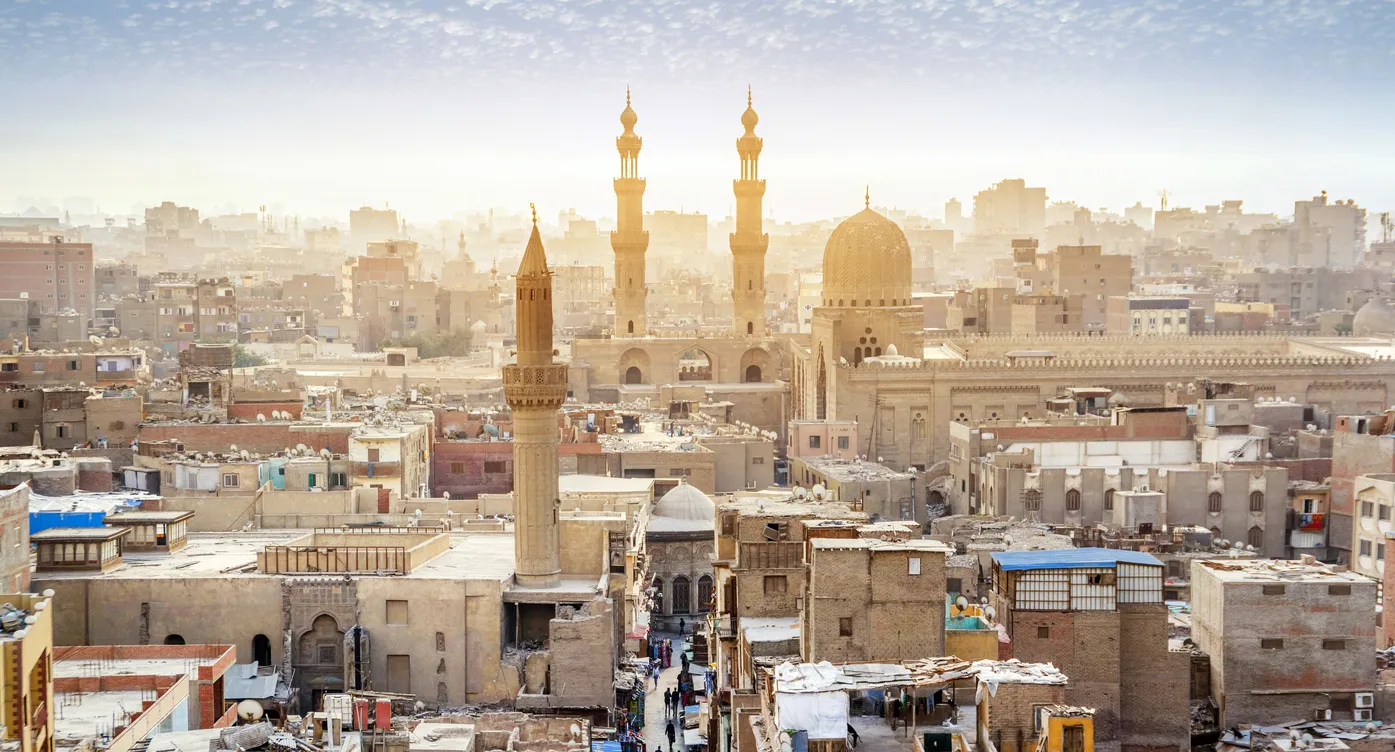
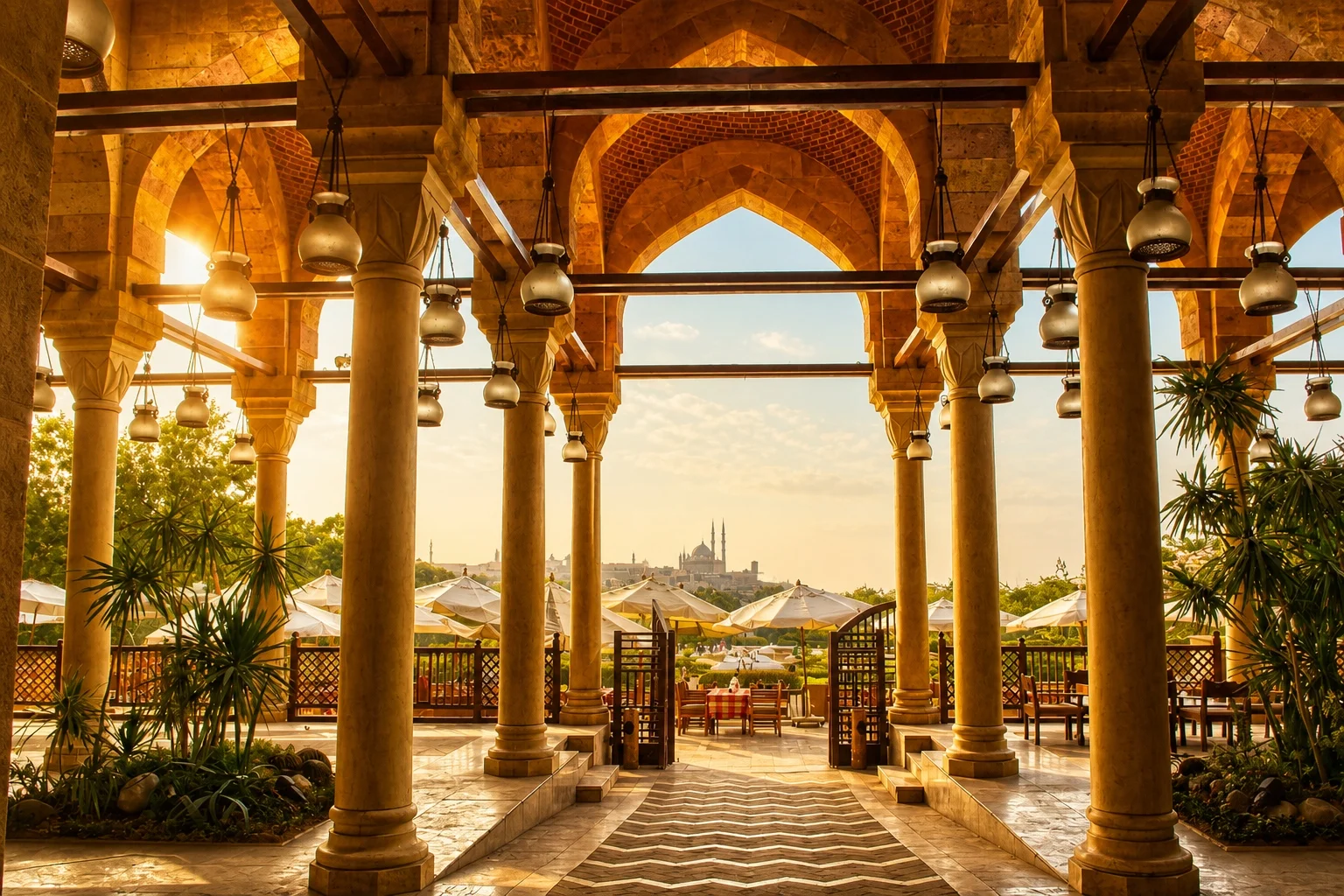
A hilltop balcony over the Citadel, Sultan Hassan Mosque, Al-Azhar, and the entire medieval city — the single best skyline view in Cairo.
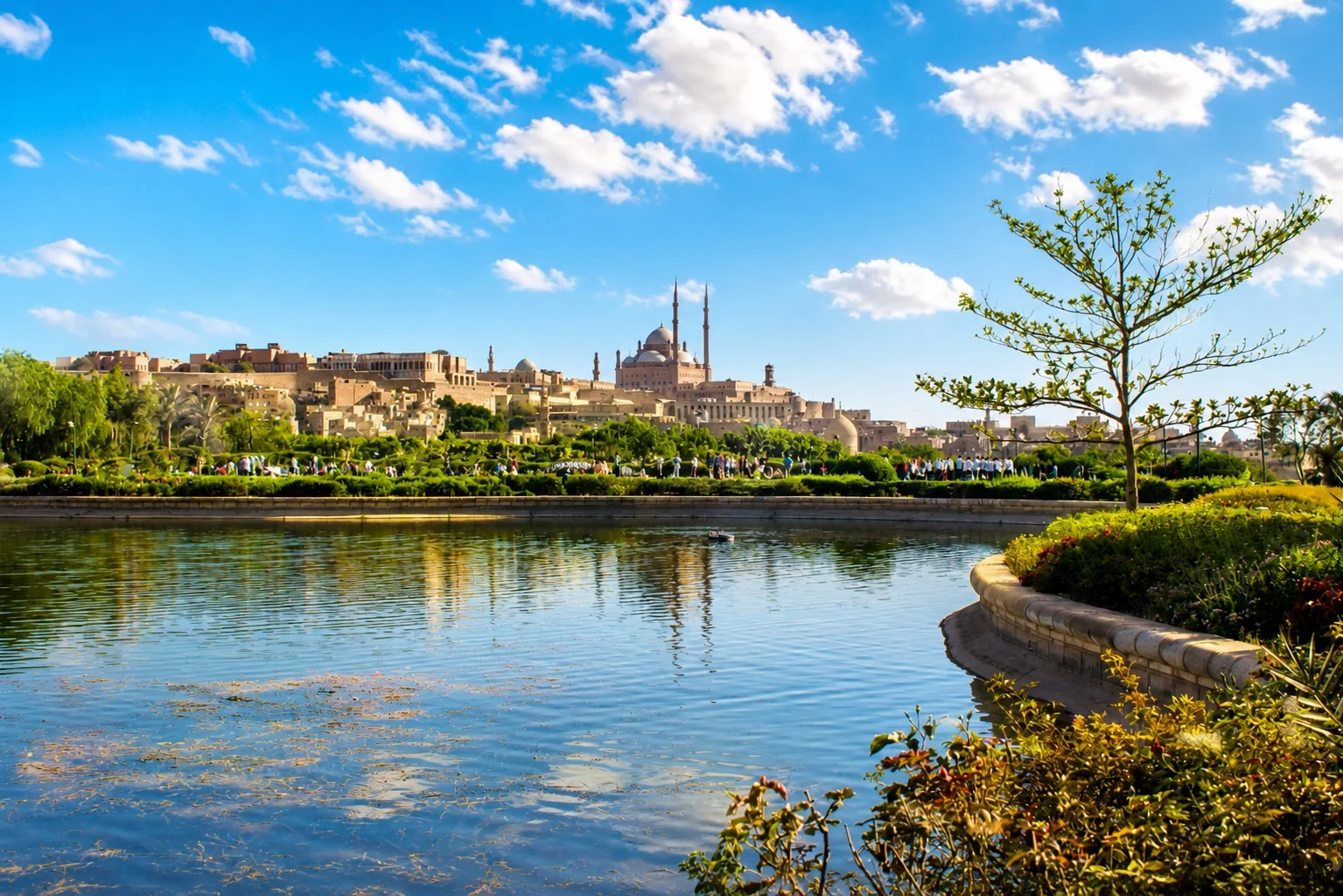
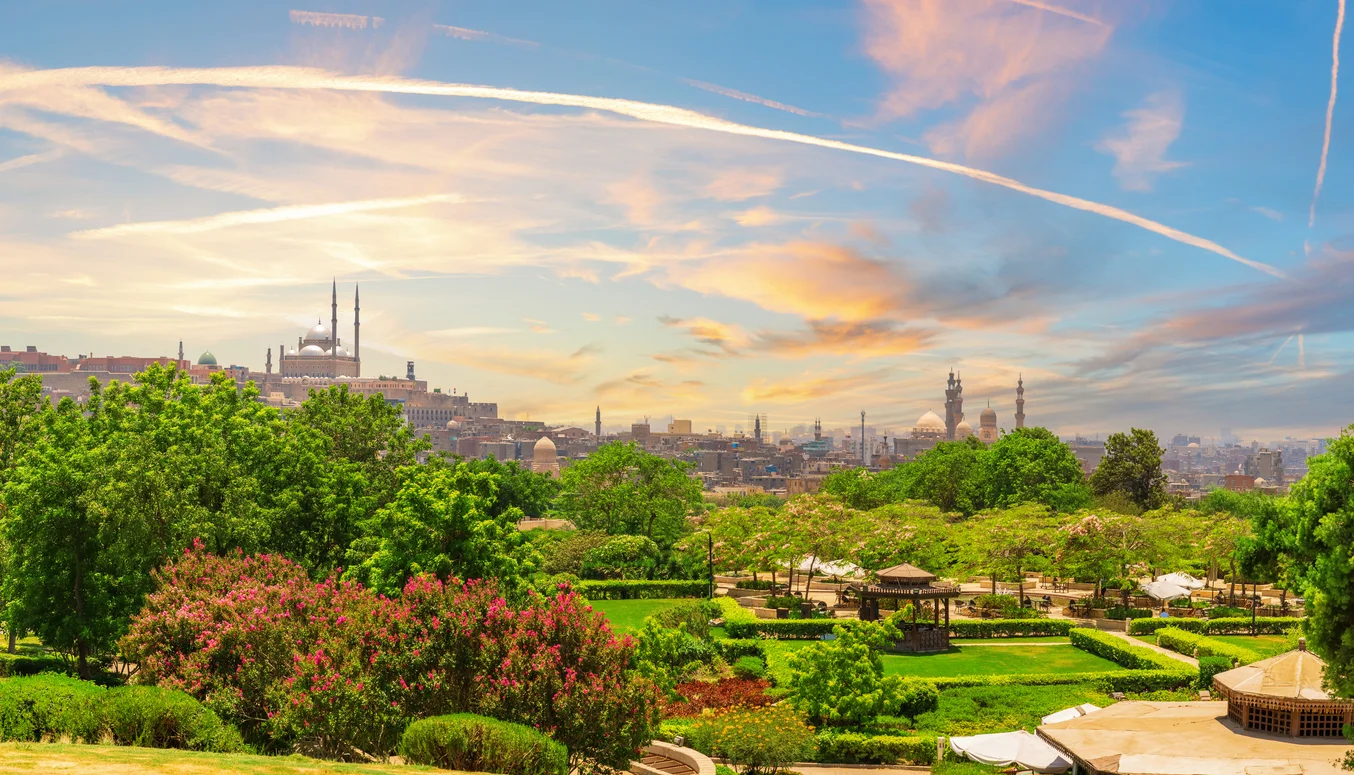
Cairo's green crown — Al Azhar Park is 30 hectares of restored gardens, Fatimid-era views, lakeside cafés and a panoramic balcony over Islamic Cairo, the Citadel and the Mokattam Hills.
Cairo's most beautiful public garden — and one of the world's great urban-renewal stories.
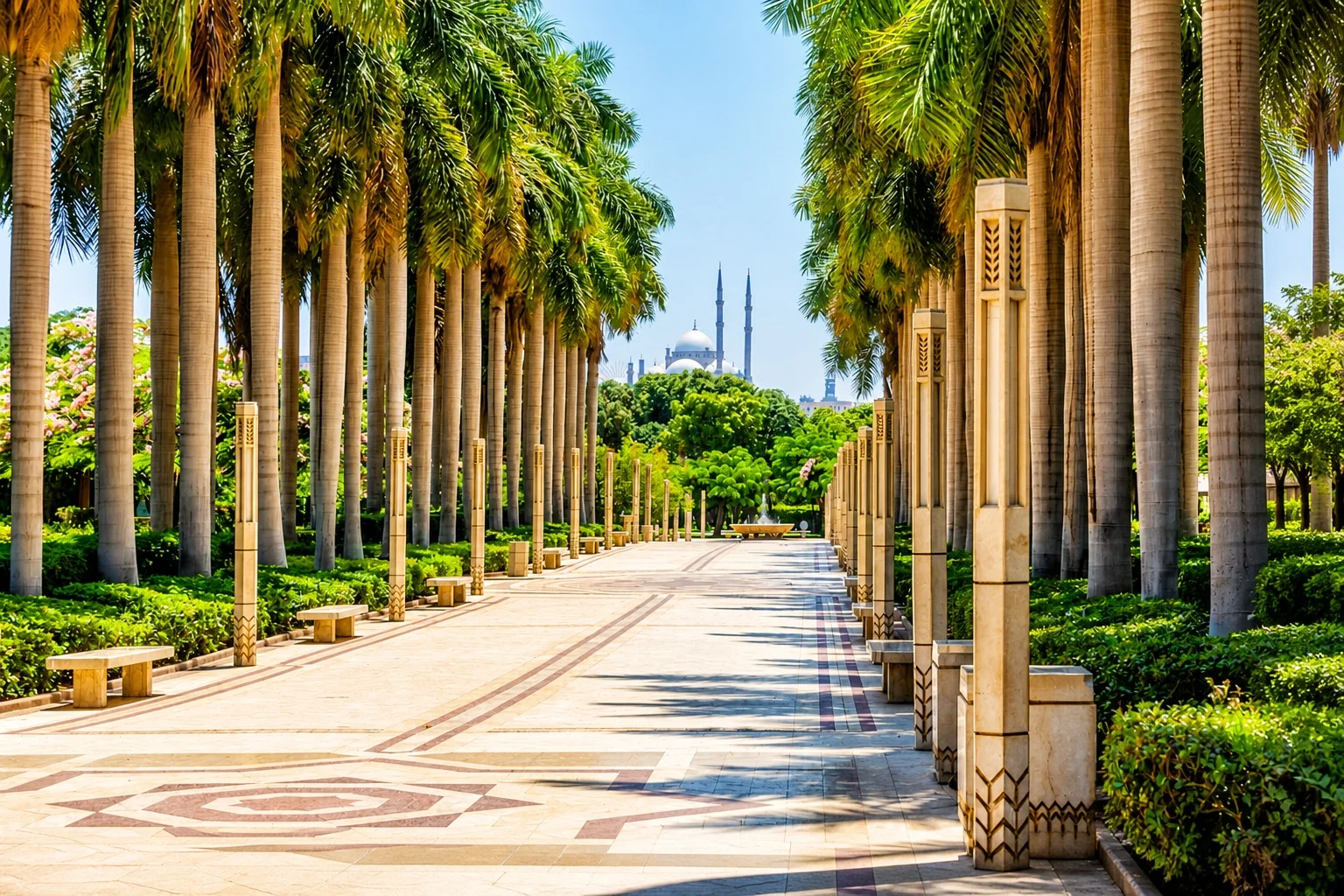
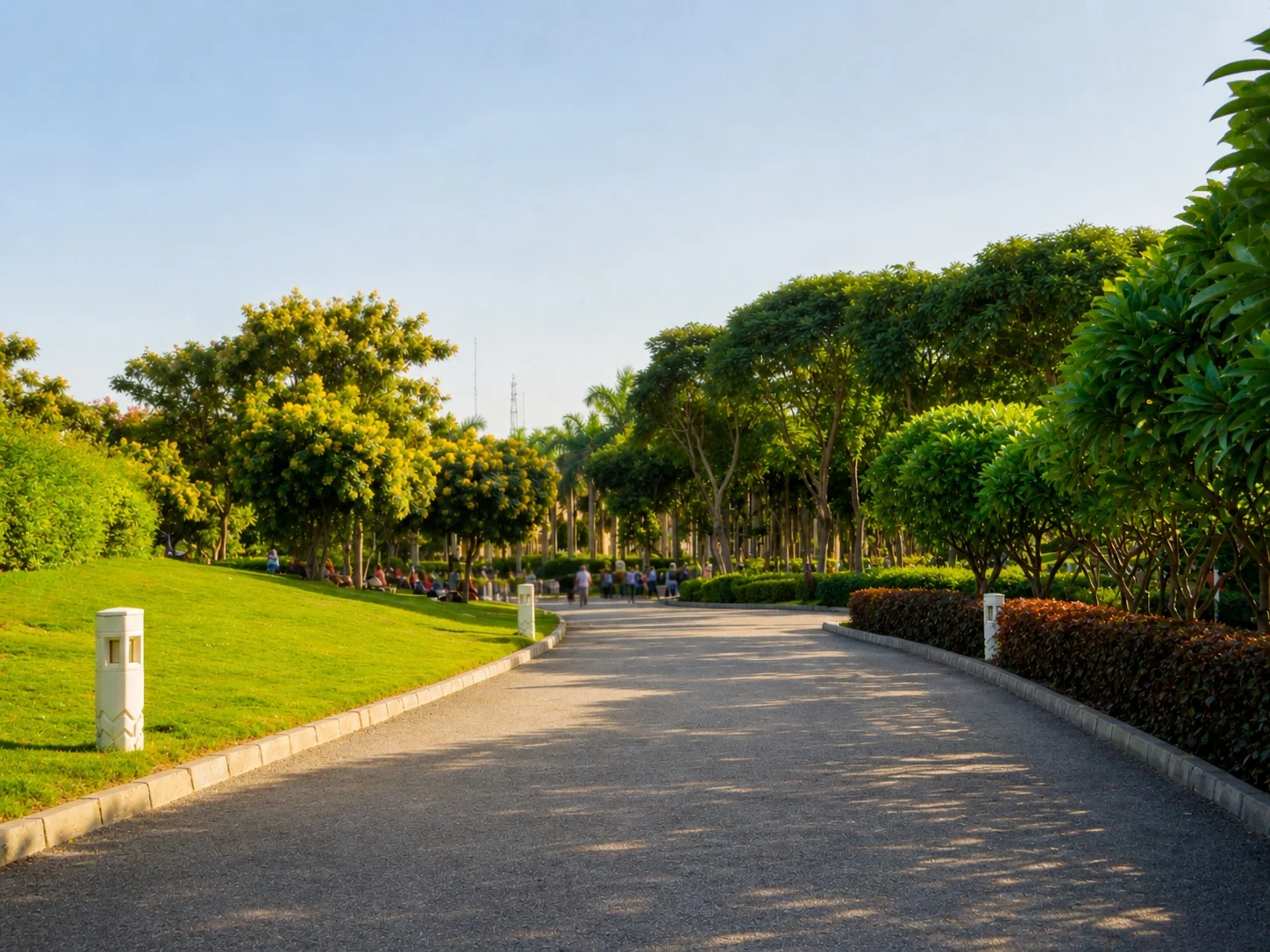
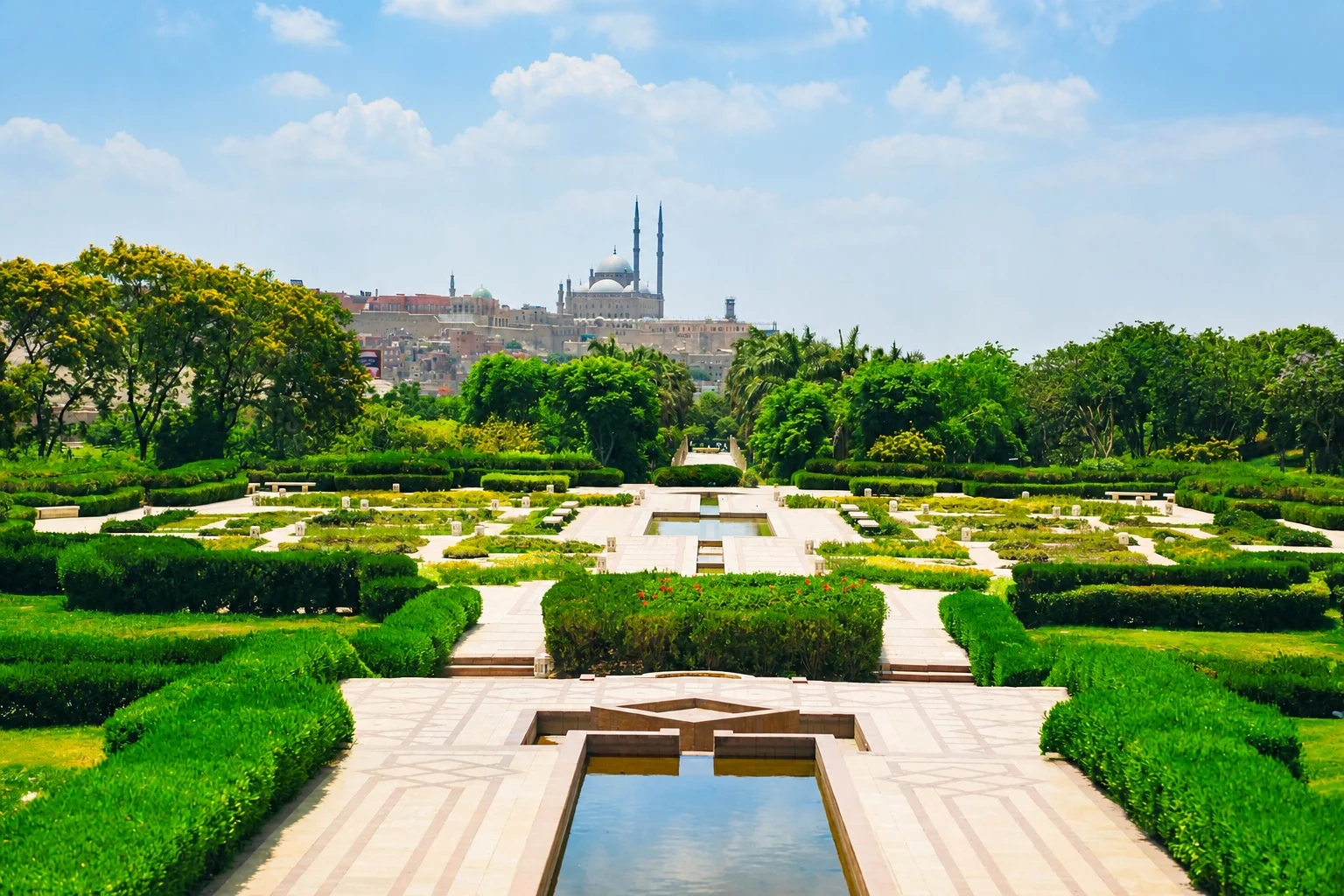
Al Azhar Park (officially Al-Azhar Park, also written Azhar Park or in Arabic حديقة الأزهر) is a 30-hectare landscaped park rising on a hill in the heart of Old Cairo, between the medieval Fatimid city and the Mamluk Citadel. Where five centuries of city refuse once piled up — the so-called Darassa Hills — today there are formal gardens, palm-lined promenades, fountains, a serpentine lake, an outdoor amphitheatre, and panoramic views of every minaret in Islamic Cairo. Al Azhar Park opened in March 2005 after a US$30 million gift from His Highness the Aga Khan, and it is consistently ranked among the world's 60 best public spaces.
Most travel guides describe Al Azhar Park as "a green oasis in Cairo." That undersells it. The park is a working monument: the construction unearthed a 1.5-km stretch of the 12th-century Ayyubid wall built by Salah al-Din (Saladin), now restored and walkable; the surrounding Darb al-Ahmar district was rehabilitated as part of the same project; and the famous Citadel View Restaurant inside Al Azhar Park sits on a terrace that — at sunset — gives you what photographers call the best skyline in the Arab world. Bring a camera, comfortable shoes, and an appetite.
A hilltop balcony over the Citadel, Sultan Hassan Mosque, Al-Azhar, and the entire medieval city — the single best skyline view in Cairo.
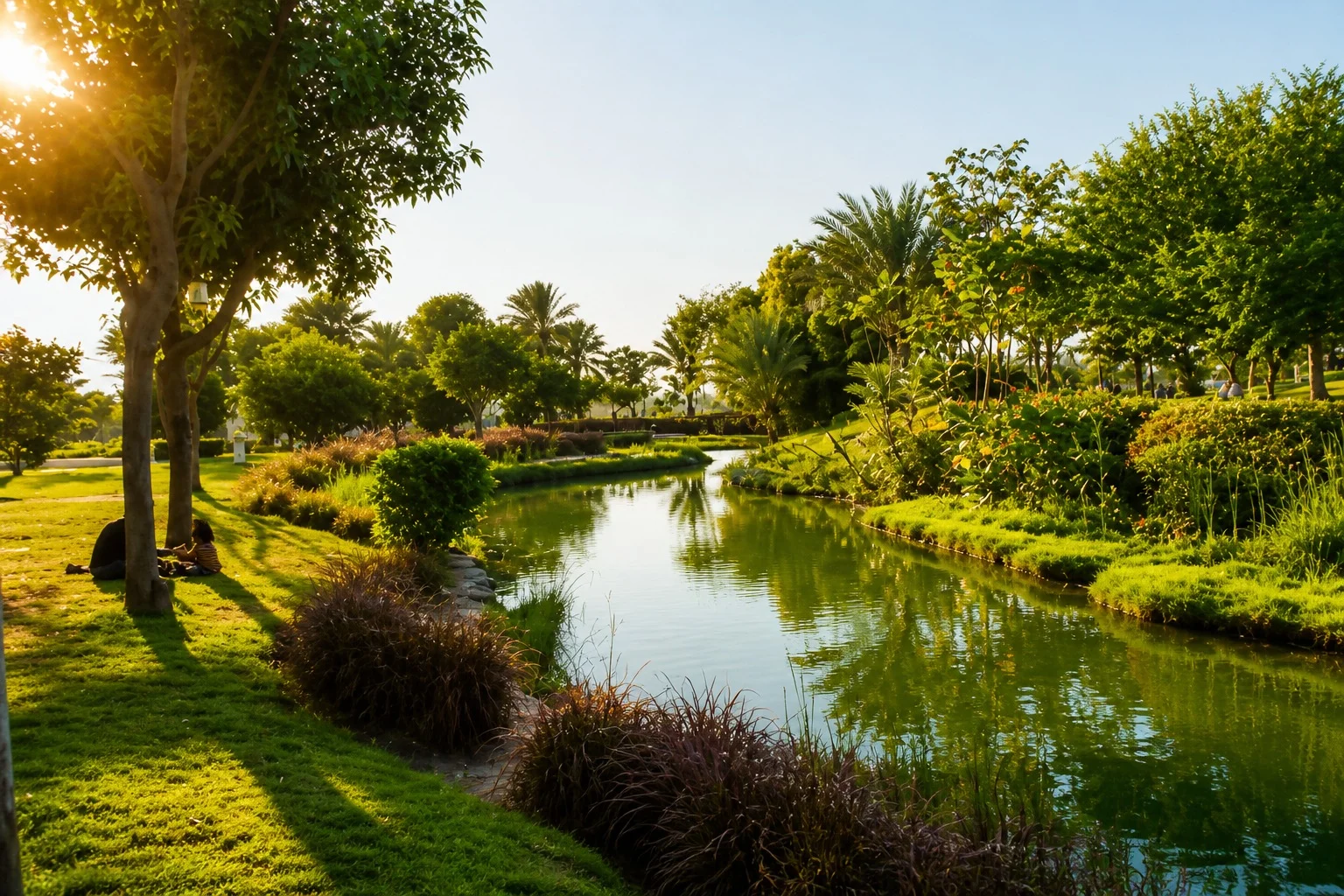
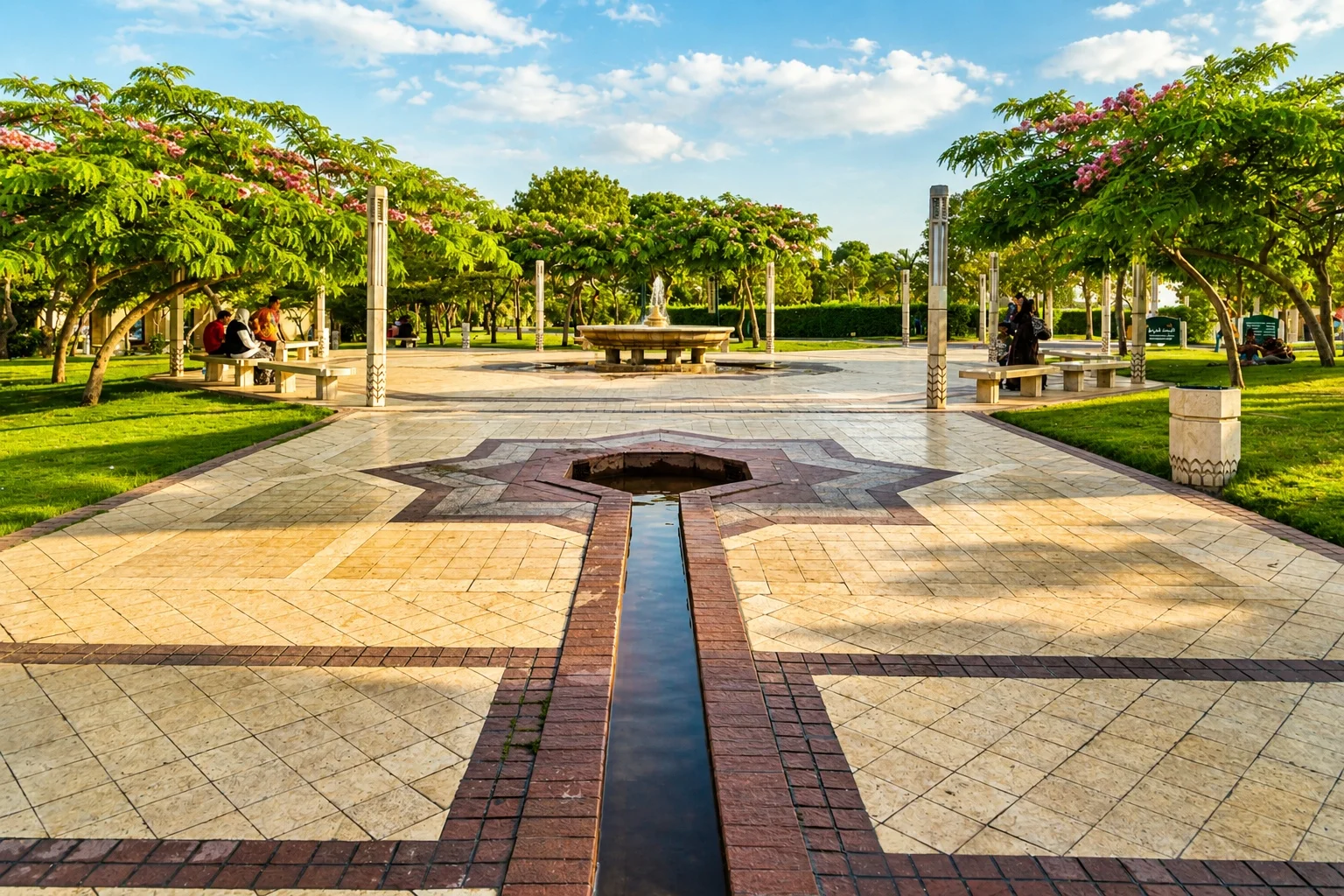
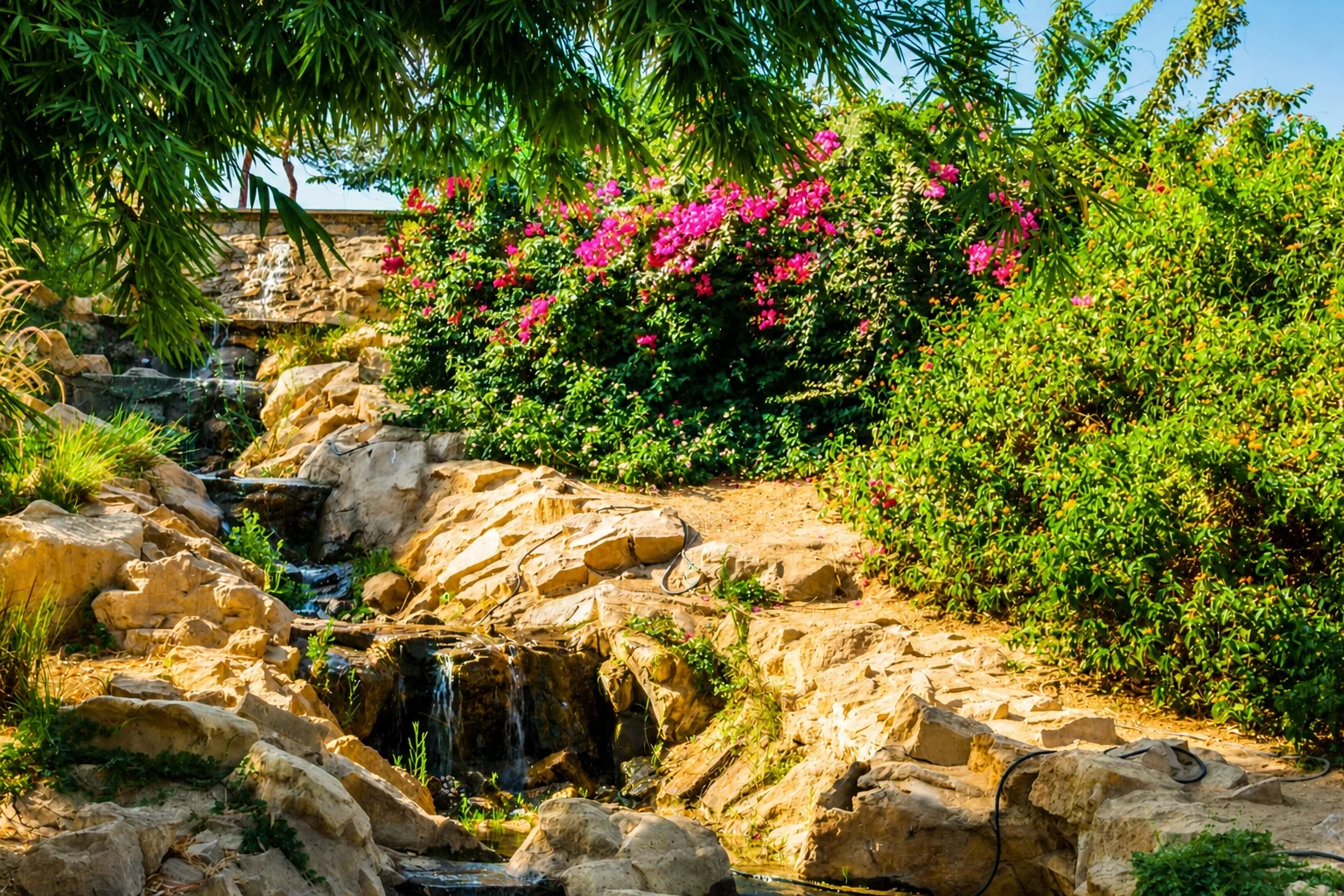
Formal Fatimid-style gardens, royal palms, citrus groves, jasmine trellises, and a serpentine lake stitching the whole park together.
Fine-dining terrace on the highest point of the park — Egyptian cuisine, sunset views over a thousand minarets.
A 1.5-km section of the 12th-century city wall built by Saladin, uncovered during construction and restored as part of the park.
A taste of what Al-Azhar Park looks like from every angle.
How a 500-year-old rubbish tip became Cairo's greatest public space.
For 500 years the site was the city's main rubbish tip. By the 1980s it was a 45-metre artificial mound of debris, dust, and refuse — the highest point in central Cairo and a public health concern for the surrounding Darb al-Ahmar district.
During a public lecture at the American University in Cairo, His Highness the Aga Khan announced he would donate a public park to Cairo to mark the city's shortage of green space. He chose the Darassa Hills.
The Aga Khan Trust for Culture removed 80,000 truckloads of rubble, uncovered the lost Ayyubid wall, and built three reservoirs for the city water network beneath the park. Total cost: US$30 million.
Al-Azhar Park opened to the public. Within a year it was named one of the world's 60 great public spaces by the Project for Public Spaces, and it has since hosted the Aga Khan Award for Architecture and become a cultural anchor of the rehabilitated Darb al-Ahmar quarter.
The park takes its name from the nearby Al-Azhar Mosque (founded 970 AD), one of the oldest universities in the world and the highest authority in Sunni Islam. "Al-Azhar" (الأزهر) means "the most resplendent" — a fitting word for both the mosque and the park's view at sunset, when the golden light makes every dome and minaret in the old city glow.
Everything you need to know before you go.
Address: Salah Salem Road, Cairo Governorate — between Al-Azhar Mosque and the Citadel.
7 ways to make the most of an afternoon in the park.
Climb to the Citadel View terrace 30 minutes before sunset. As the call to prayer echoes across the city, the dome of Sultan Hassan, the Mohammed Ali Mosque, and a thousand minarets light up in gold. This is the view that put the park on UNESCO postcards.
The 1.5-km section of Saladin's 12th-century wall runs along the park's western edge. You can walk it from end to end, peer through the original arrow slits, and look down on the rooftops of Darb al-Ahmar — one of the oldest inhabited neighbourhoods in the world.
The serpentine lake is the park's social heart. Families spread blankets on the lawn, kids feed the fish, and on summer evenings musicians play near the water. The Lakeside Café rents simple picnic baskets.
The fine-dining option — Egyptian and Lebanese cuisine on a terrace that overlooks the Citadel. Reservations recommended for sunset (call +20 2 2510 9151). Mains EGP 250–500.
The casual option — Egyptian breakfast, mezze, sandwiches, sheesha, and proper Turkish coffee on a terrace at the water's edge. Open from 9 AM. Mains EGP 80–180.
The Hilltop, the Royal Palm Promenade, the formal Islamic-pattern parterre, and the lake from the dam at the south end — four perfect compositions. Best light: one hour before sunset.
The outdoor amphitheatre hosts concerts, Sufi nights, and Ramadan cultural evenings. Schedule: alazharpark.com/events or check their Facebook page.
Live, accurate prayer times for Cairo — the same ones used by Al-Azhar itself, calculated via the Egyptian General Authority of Survey method.
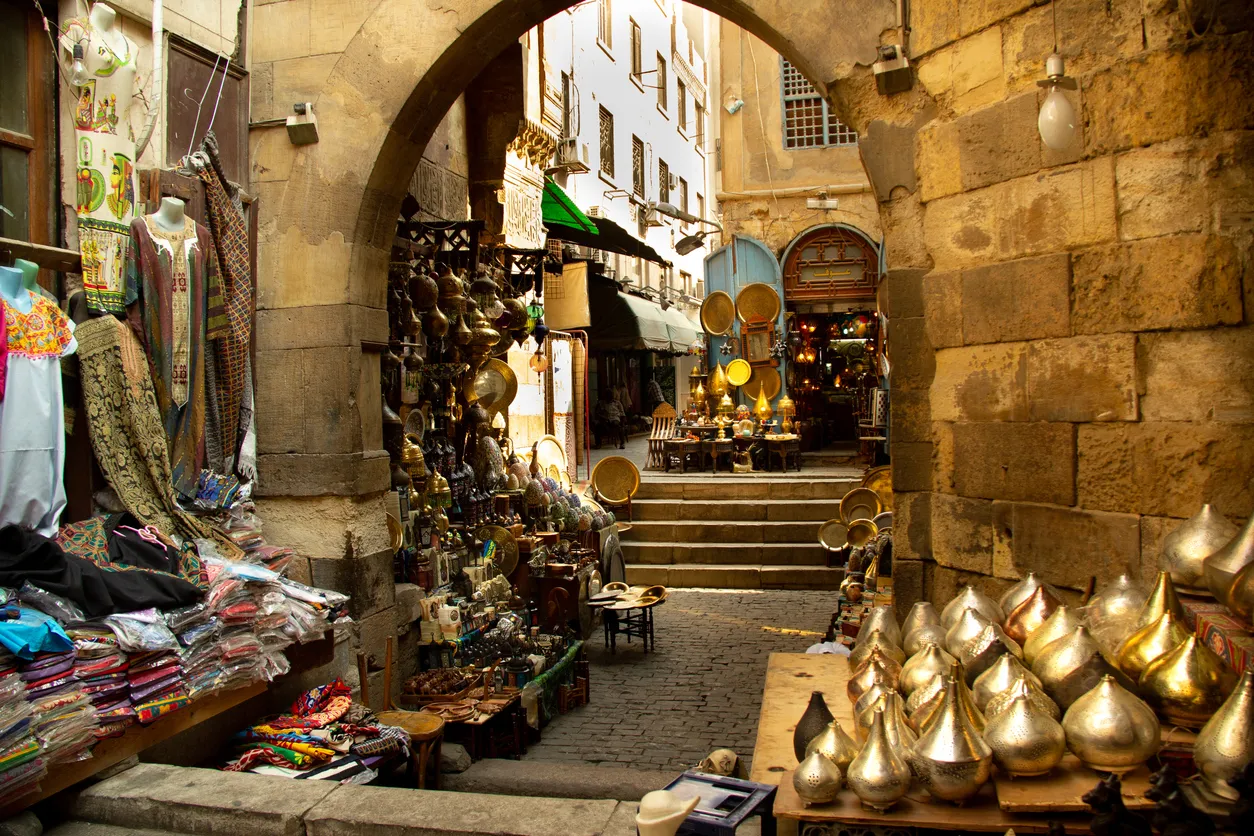
A short walk from the park gates — combine the park with these for a perfect day in Old Cairo.
Practical advice for first-time visitors.
Answers to the questions visitors ask most.
For Egyptians the Al Azhar Park entry ticket is EGP 30 on weekdays (Sunday–Thursday) and EGP 50 on Fridays, Saturdays and public holidays. Foreign visitors pay EGP 50 every day. Children under 6 enter free, and students with a valid card pay EGP 20 on weekdays. An annual pass is EGP 250 from the main gate office.
Al Azhar Park is open every day from 9:00 AM to 11:00 PM, and last entry is at 10:00 PM. During Ramadan, opening is extended until 1:00 AM and the park is especially busy and atmospheric after Iftar.
The closest metro station to Al Azhar Park is Bab El-Shaaria on Line 3 — about 1.6 km (18-minute walk) from the main gate. Exit and walk east along Al-Azhar Street, then turn right onto Salah Salem Road. Alternatively, take any line to a central station and use Uber or Careem; expect EGP 80–120 from Tahrir Square.
Al Azhar Park is on Salah Salem Road in Old Cairo, on a hilltop between the medieval Fatimid quarter (around Al-Azhar Mosque and Khan el-Khalili) and the Mamluk Citadel. GPS: 30.0411° N, 31.2641° E. The address in Arabic for taxi drivers: حديقة الأزهر، شارع صلاح سالم.
Yes — Al Azhar Park is consistently named one of the world's 60 best public spaces by the Project for Public Spaces. The combination of 30 hectares of gardens, the panoramic skyline of Islamic Cairo, the restored Ayyubid wall, and the Citadel View Restaurant makes Al-Azhar Park the single best urban park in Egypt and a highlight of any Cairo itinerary.
Watch the sunset over the Citadel and a thousand minarets, walk the restored Saladin-era city wall, picnic by the serpentine lake, dine at the Citadel View Restaurant inside Al Azhar Park, take coffee at the Lakeside Café, photograph the gardens, and attend cultural events at the outdoor amphitheatre.
Yes — picnicking on the lawns of Al Azhar Park is allowed and popular with Cairo families. Outside food is permitted (no glass containers). The Lakeside Café also rents simple picnic baskets if you arrive empty-handed.
Al Azhar Park has two restaurants: the fine-dining Citadel View on the highest terrace (Egyptian and Lebanese cuisine, EGP 250–500 mains, sunset reservations recommended) and the casual Lakeside Café at the water's edge (Egyptian breakfast, mezze, sandwiches, EGP 80–180).
Very — Cairo families are the biggest audience at Al Azhar Park. The lawns, the lake, the playground area, and the wide paths suit children of all ages. Strollers and wheelchairs roll easily on the main paths.
Al Azhar Park was a gift from His Highness the Aga Khan announced in 1984; construction took place between 1992 and 2005, including the removal of 80,000 truckloads of debris from the Darassa rubbish tip and the discovery of the lost Ayyubid wall. It opened to the public in March 2005.
Absolutely — Al Azhar Park is a public garden open to all, and there is no religious or dress requirement to enter. (The neighbouring Al-Azhar Mosque is also open to respectful visitors of all faiths outside prayer times.)
Prayer times follow the Egyptian General Authority of Survey method and change daily. Check our live Cairo prayer times page for the exact Fajr, Dhuhr, Asr, Maghrib and Isha times today, plus the full Ramadan Imsakia for 2026.